
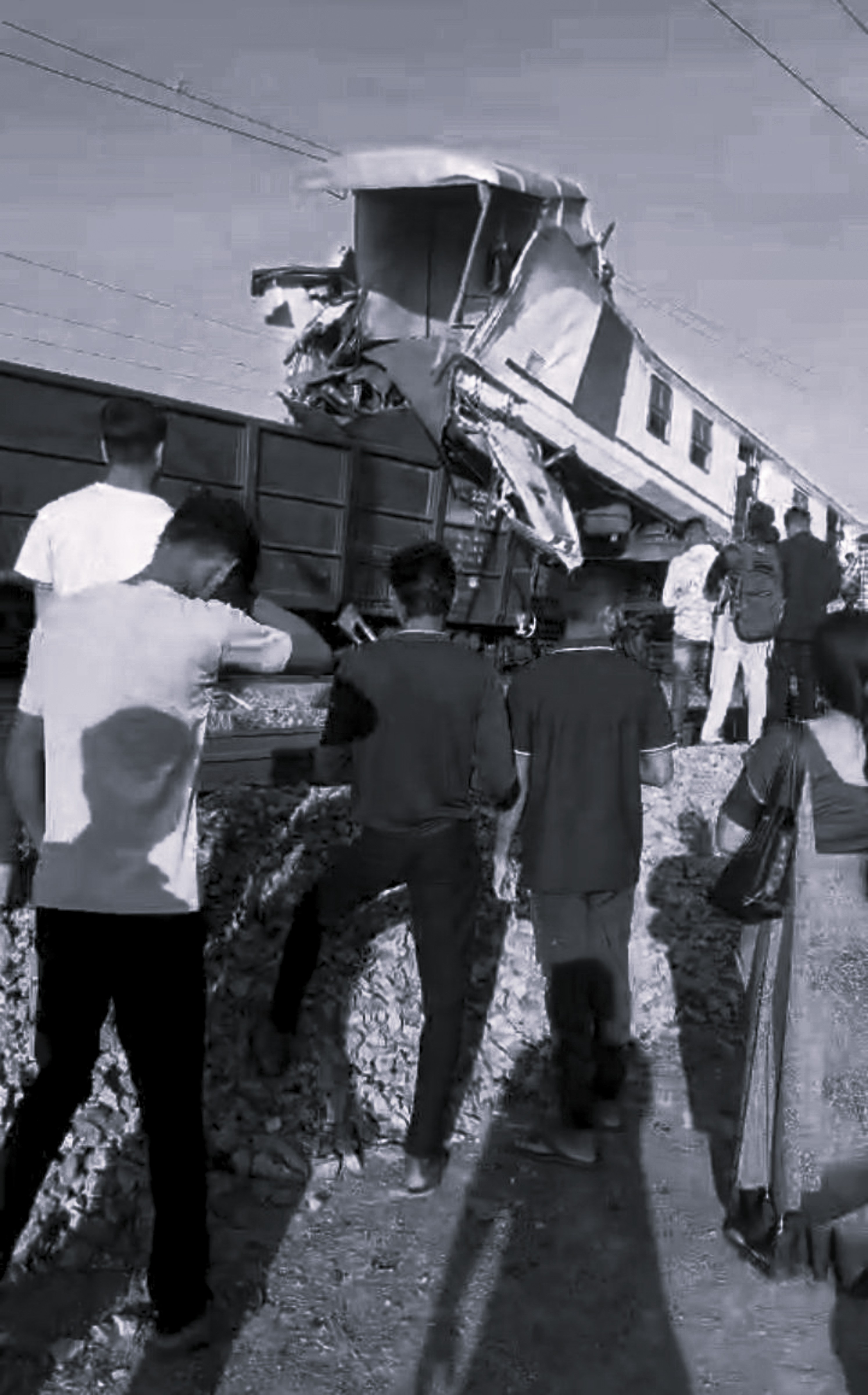
Bilaspur train tragedy - MEMU–Goods train collision kills eight, Kavach absence under lens
A grave railway disaster struck near Bilaspur on the evening of November 4, 2025, when a passenger MEMU train collided with a stationary goods train between Gatora and Bilaspur stations. The tragic accident occurred around 4 p.m., leaving at least eight people dead including a minor and over 14 passengers injured, some critically. Rescue teams, including NDRF personnel, rushed to the scene, working through the evening to extricate survivors still trapped within the mangled coaches.
Eyewitnesses describe chaos
According to passengers and eyewitnesses, the collision happened suddenly. A deafening sound rocked the area, and the severe impact toppled seats and hurled passengers across compartments. Many survivors recounted moments of panic, with some trapped for hours before being rescued by emergency responders.
Cause of the Collision: Human error and Missing safeguards
Initial investigations indicate that the passenger train ran past a red signal, an error known in railway parlance as "Signal Passed At Danger" (SPAD) and slammed into the rear of the goods train. This incident has thrown a spotlight on persistent issues of human error and systemic safety gaps in the Indian rail network.
Critically, the accident site was not equipped with the Kavach automatic train protection system. Kavach is designed to stop trains automatically if they attempt to pass a red signal, but it has only been rolled out on about 1,500–1,600 km of India’s more than 100,000 km network, mostly in select high-density corridors. Bilaspur remains outside its current coverage. Railway authorities acknowledged that if Kavach had been functional in this section, the collision could have been averted.
Immediate response and Rescue efforts
District officials, Indian Railways management, and police swung into action, deploying medical teams and heavy equipment at the site. Injured passengers were evacuated to local hospitals, including Apollo and CIMS. Rail services in the region were gravely disrupted, and several long-distance trains were delayed or rescheduled as a result.
Official Condolences and Relief measures
Prime Minister Narendra Modi expressed his shock and grief, tweeting: “Saddened by the loss of lives due to the Bilaspur train accident. My thoughts are with the affected families. Praying for the swift recovery of the injured.” The Prime Minister’s National Relief Fund announced ₹2 lakh ex-gratia for the deceased’s families and ₹50,000 for the injured.
Railway Minister Ashwini Vaishnaw conveyed his condolences and said all efforts were being made to assist those affected, promising a thorough and transparent investigation. He reiterated the government’s commitment to fast-tracking safety upgrades such as Kavach.
Chhattisgarh Chief Minister Vishnu Deo Sai visited the accident site and hospital, declaring that “the state government stands in full solidarity with the affected families.” The Chief Minister announced additional relief and praised local officials for their prompt response.
The South East Central Railway Board announced a compensation of ₹10 lakh for the families of the dead, ₹5 lakh for the seriously injured, and ₹1 lakh for those with minor injuries. Emergency helpline numbers were released for relatives and survivors seeking assistance at the following stations:
• Champa: 808595652
• Raigarh: 975248560
• Pendra Road: 8294730162
• Rescue site: 9752485499, 8602007202
Investigations and Timeline
A statutory probe by the Commissioner of Railway Safety (CRS) commenced immediately. While preliminary findings about the signal violation are expected within a week, the final detailed report outlining causes, accountability, and recommendations for corrective action is anticipated by late November 2025.
A Stark Reminder: Safety and Systemic change
This tragedy comes on the heels of recent major train accidents including the June 2023 Balasore triple train crash, which claimed 296 lives, raising urgent questions about the pace of rail modernization in India. Public calls for accountability trended on social media, with many demanding stronger crew vigilance and rapid adoption of automatic protection technologies.
Railway experts and government institutions have urged fast-tracking the Kavach system nationwide, comprehensive retraining of operating staff, and greater transparency in accident audits. Indian Railways has begun formulating a future safety framework that includes:
• Accelerated pan-India deployment of Kavach and other Automatic Train Protection (ATP) systems.
• Modernization of tracks, signalling, and real-time AI monitoring.
• Strict protocols for regular crew training and disaster management drills.
• Enhanced public safety audits and higher accountability for safety lapses.
The Bilaspur railway disaster is a sobering reminder of the stakes involved in India’s vast transportation system. As the nation mourns, it must also turn this crisis into a catalyst for genuine, lasting reform ensuring that every railway journey, anywhere in the country, is as safe as possible for all.