
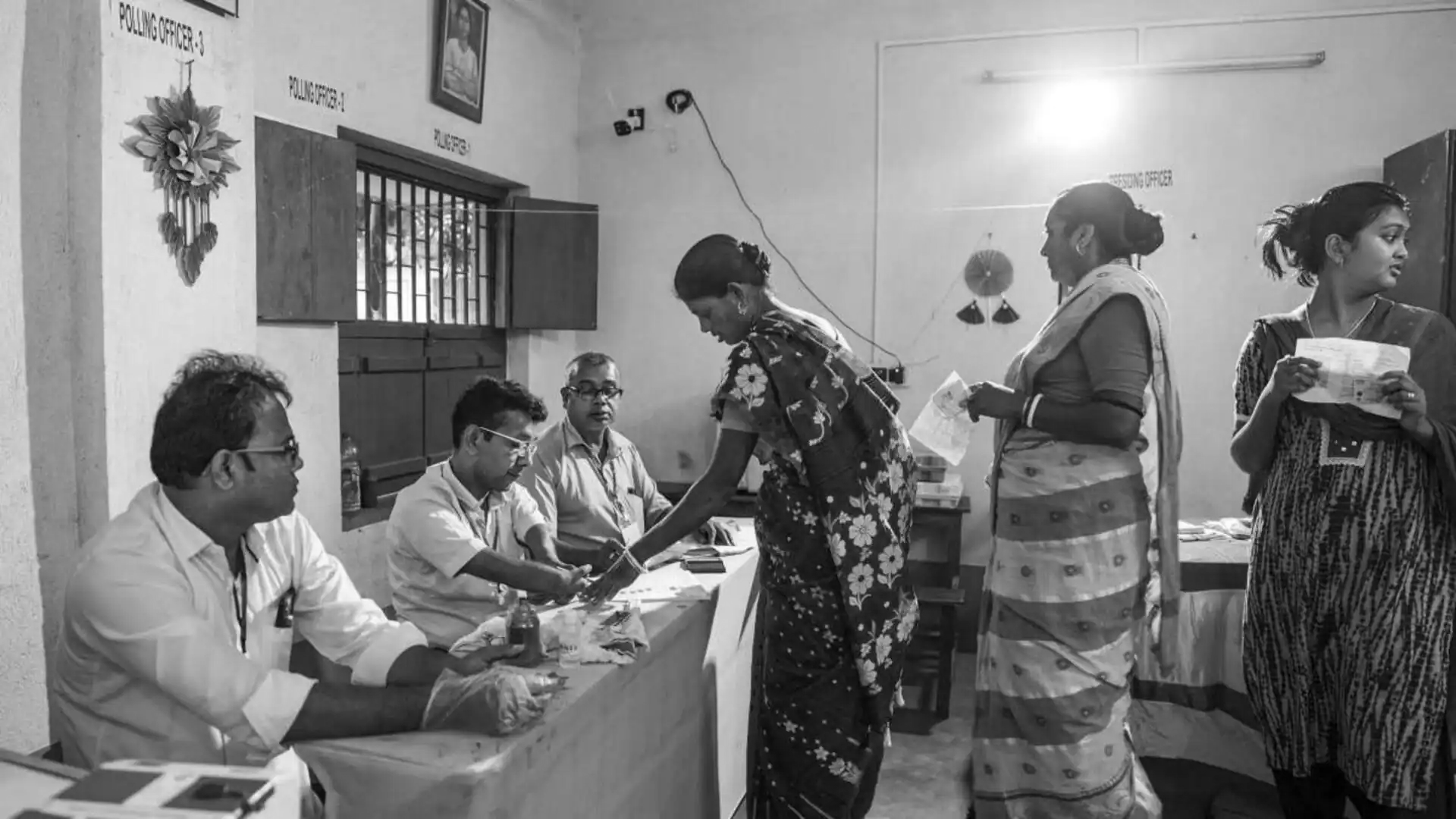
Bihar polls: Each booth limited to 1,200 voters
Chief Election Commissioner Gyanesh Kumar on Sunday announced key measures for the upcoming Bihar Assembly elections, aiming to make voting smoother, more transparent, and voter-friendly.
Speaking at a press conference in Patna, Kumar said, “No polling station will have more than 1,200 voters.” Earlier, polling stations in Bihar could accommodate up to 1,500-1,800 voters, depending on the area. This move aims to reduce crowding and ensure a more comfortable voting experience.
He added that booth-level officials will now carry identity cards for easy recognition, and voters’ mobile phones can be deposited outside the booth. “There will be 100 per cent webcasting at every polling station,” he noted.
The CEC further announced changes in the ballot papers for the upcoming election, stating that the serial number font would be larger nationwide, and candidates' photographs would be in colour."When the ballot paper is inserted into the EVM, the photo on it is black and white, making identification difficult, although the election symbol remains. The serial number should also be larger. Starting with the Bihar elections, the serial number font will be larger, and candidates' photographs will be in colour," he said.
Kumar further shared that the Election Commission is gradually rolling out ECI-NET, which will allow citizens to access digital index cards showing voter turnout, including gender-wise breakdowns, shortly after elections conclude.
The CEC confirmed that the Bihar Assembly elections will be held before November 22, 2025, when the current assembly’s term ends. He congratulated voters on completing the Special Intensive Revision (SIR) and urged everyone to treat voting as a festival of democracy, akin to the enthusiasm of Chhath.
Election Commission officials recently conducted a two-day review visit in the state to oversee preparations. During the visit, they inspected polling stations, checked EVM and VVPAT readiness, and ensured that training of booth-level offi cials was completed. They also reviewed voter facilitation measures, such as webcasting arrangements and mobile phone deposit facilities.