
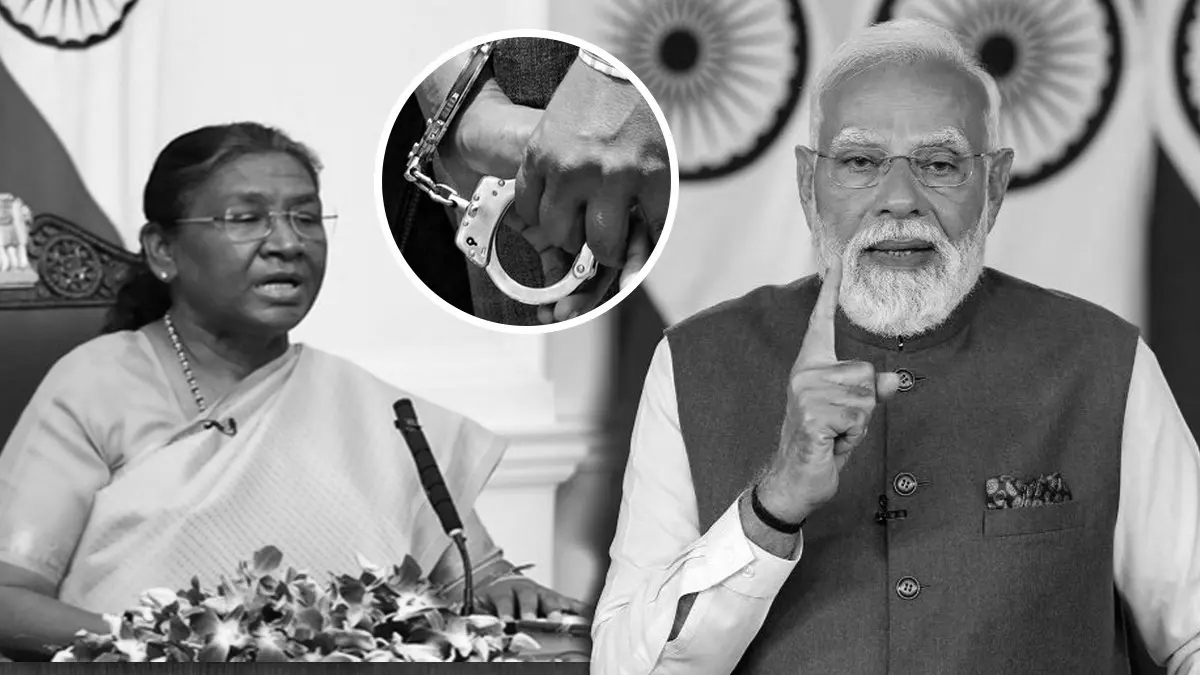
Bihar man arrested for sharing AI-generated fake content of PM, Prez
In the quiet lanes of Bhagwanpur village in Bihar’s Muzaffarpur district , a mobile phone became the centre of a serious national concern. Pramod Kumar Raj , a local resident, was arrested after police discovered that he had allegedly created and circulated AI-generated fake videos and audio clips of Prime Minister Narendra Modi and President Droupadi Murmu, India's two highest constitutional authorities.
The videos looked real. The voices sounded authentic. That is the danger of AI-generated fake content , often called deepfakes. Using advanced artificial intelligence tools, such content relies on techniques like machine learning, facial mapping, voice cloning and neural networks . These systems analyse thousands of real images, videos and audio samples to replicate facial expressions, lip movements, tone, and speech patterns with startling accuracy. To an untrained eye or ear the result appears genuine.
According to the police, Raj allegedly misused the names, images and voices of the Prime Minister and the President to fabricate content and circulate it on social media. The intention, authorities said, was not harmless experimentation. The objective was to mislead the public , undermine the dignity and prestige of constitutional offices , and create distrust towards democratic institutions .
Alarmed by the potential fallout, the district police formed a special team , which led to Raj’s arrest. The mobile phone allegedly used to create and circulate the fake content was seized , and a case was registered. Police also said they are verifying the criminal antecedents of the accused, while further investigation is underway.
Officials warned that such fabricated AI content can have grave implications for society. It can spread rumours, fuel anti-national sentiment, and trigger social unrest, ultimately disturbing law and order. In a democracy, where trust in institutions is vital, fake videos and audio clips can erode public confidence within minutes and also pose a threat to national sovereignty by undermining the authority and credibility of constitutional institutions .
The Muzaffarpur case serves as a stark reminder that while artificial intelligence is a powerful tool, its misuse can threaten social harmony and democratic stability . As technology advances, the line between reality and fabrication grows thinner, making vigilance, regulation, and awareness more important than ever. Strong AI governance is the need of the hour to prevent misuse and protect societal trust.