
Punjab, Haryana Should Follow Bihar’s Model for Banning Crop-Residue Burning
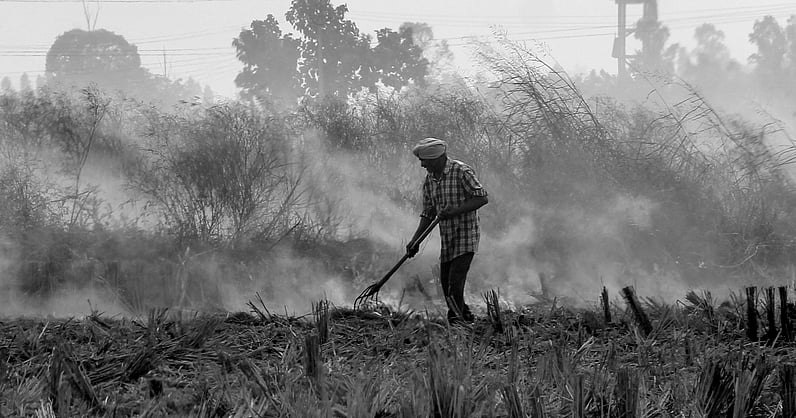
Bihar’s firm action against crop-residue burning linking farm subsidies to compliance and promoting sustainable alternatives is being seen as a policy model that Punjab and Haryana could adopt to curb seasonal air pollution and soil degradation caused by stubble burning.
A report tabled by the Agriculture Department in the Bihar Assembly shows that Direct Benefit Transfer (DBT) registrations of 1,807 farmers were suspended during 2025–26 for violating the state’s blanket ban on stubble burning. In 2025 alone, subsidies and incentives of 1,758 farmers were blocked , and 49 additional farmers have been penalised this year for similar violations.
DBT allows farmers to receive financial assistance directly under government agricultural schemes. By linking eligibility for these benefits to compliance with anti-burning norms, Bihar has moved beyond advisories to enforceable deterrence.
Chairperson of the Bihar State Pollution Control Board, Devendra Kumar Shukla, said the ban aims to curb air pollution and prevent long-term loss of soil fertility.
“The government had issued strict warnings that farmers found burning stubble would be denied financial assistance and subsidies under government schemes. The state provides electricity at concessional rates and diesel at subsidised prices, among other support,” Shukla said.
He urged farmers to take the issue seriously in the interest of public health and environmental protection , adding that the government has intensified awareness campaigns and is offering subsidies on farm equipment to encourage residue management practices.
Authorities are promoting alternatives such as selling green waste and organic residue for the production of biomass briquettes , which can be used as cooking and heating fuel. Officials say the initiative provides farmers with an additional income source while reducing open-field burning.
The Bihar Economic Survey 2025-26 reported that DBT registrations of 4,596 farmers were blocked in 2024 , while incidents of crop-residue burning declined in 2025 compared with the previous year, indicating improved compliance.
With Punjab and Haryana continuing to face criticism for farm fires that contribute significantly to winter smog across north India, policy observers say Bihar’s mix of enforcement, financial deterrence and alternative solutions offers a practical framework that other states could replicate to balance farmer welfare with environmental protection.