

Biggest Gold Scam In India? Chinese Rhenium Powder Could Adulterate Gold, Even Hallmark Tests Fail To Detect It
A new gold adulteration method involving rhenium powder allegedly smuggled from China has raised concerns over the reliability of gold purity testing in India. An investigation by Hindi newspaper Dainik Bhaskar found that gold mixed with the rare metal could pass conventional purity checks and even receive a 22-carat hallmark certification, despite containing considerably less actual gold.
The alleged method involves mixing rhenium powder with gold to increase the overall weight of jewellery without making the adulteration easily detectable through routine testing. Rhenium reportedly costs around Rs 600 per gram, significantly less than gold, making it an economically attractive adulterant for fraudsters.
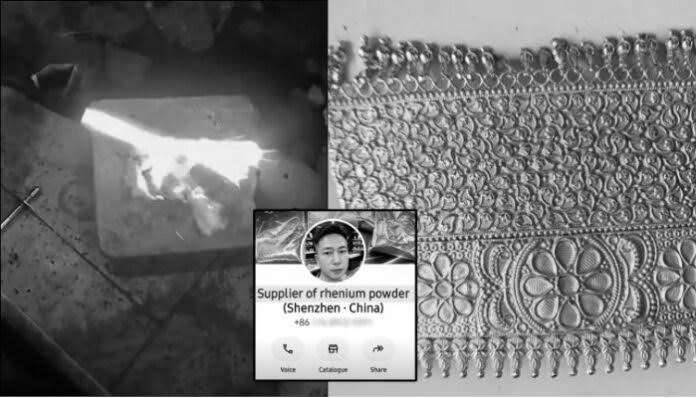
To test the method, investigators mixed one gram of rhenium with 7.830 grams of pure 24-carat gold and used the mixture to manufacture a traditional ornament. Additional alloying metals were added during the jewellery-making process, taking the finished ornament's weight to approximately 9.58 grams.
The jewellery was subsequently taken to jewellery showrooms and a hallmarking centre in Jodhpur for purity testing. The results raised serious concerns. A showroom's testing machine reportedly showed 93.70 per cent gold, 5.39 per cent silver and 0.90 per cent copper. Even the hallmarking centre failed to identify the rhenium and issued the ornament a 22-carat (916) hallmark.
According to the investigation's calculations, the finished jewellery contained approximately 81.7 per cent actual gold, equivalent to around 20 carats rather than the certified 22 carats. This could translate into a loss of approximately Rs 14,700 per tola for unsuspecting buyers, based on the gold prices used in the investigation.
The issue highlights the limitations of conventional gold purity testing. The first method is the touchstone or acid test, commonly performed by local jewellers. It primarily examines the surface of the metal and may fail to identify adulteration inside the jewellery.
The second method involves an X-ray fluorescence (XRF) machine, which analyses the metal's composition by examining the fluorescent X-rays produced when the sample is exposed to X-rays. However, its ability to identify specific metals depends on its capabilities, calibration and testing settings.
The third method is laboratory testing during hallmarking. Hallmarking centres use XRF equipment and prescribed procedures to determine gold purity. However, the Dainik Dainik Bhaskar experiment reportedly demonstrated that the adulterated sample passed the tests conducted at the centre. A more advanced fire assay test, which involves analysing a sample to determine its actual gold content, may help identify such adulteration, although it is more expensive and can be destructive.
Rhenium is a rare, heavy metal used in industrial applications. Its density is approximately 21 grams per cubic centimetre, compared with 19.3 grams per cubic centimetre for pure gold. This makes it possible to increase the weight of a gold mixture without creating an obvious difference through ordinary physical examination.
The findings have raised concerns among jewellery buyers, particularly those who rely entirely on hallmark certification. Consumers should ask jewellers for written buyback assurances based on the declared purity and retain their purchase invoices. Those purchasing jewellery in large quantities can consider additional purity testing at recognised laboratories.
Buyers should also verify the six-character Hallmark Unique Identification (HUID) code through the official BIS Care app. The application provides details associated with the registered hallmarking of jewellery, although HUID verification alone cannot establish whether an ornament contains an undeclared metal.
For those purchasing gold primarily as an investment, gold ETFs and other regulated gold investment options offer alternatives to physical jewellery. The reported findings have highlighted the need for stronger testing procedures and updated detection methods to protect consumers against emerging gold adulteration techniques.