
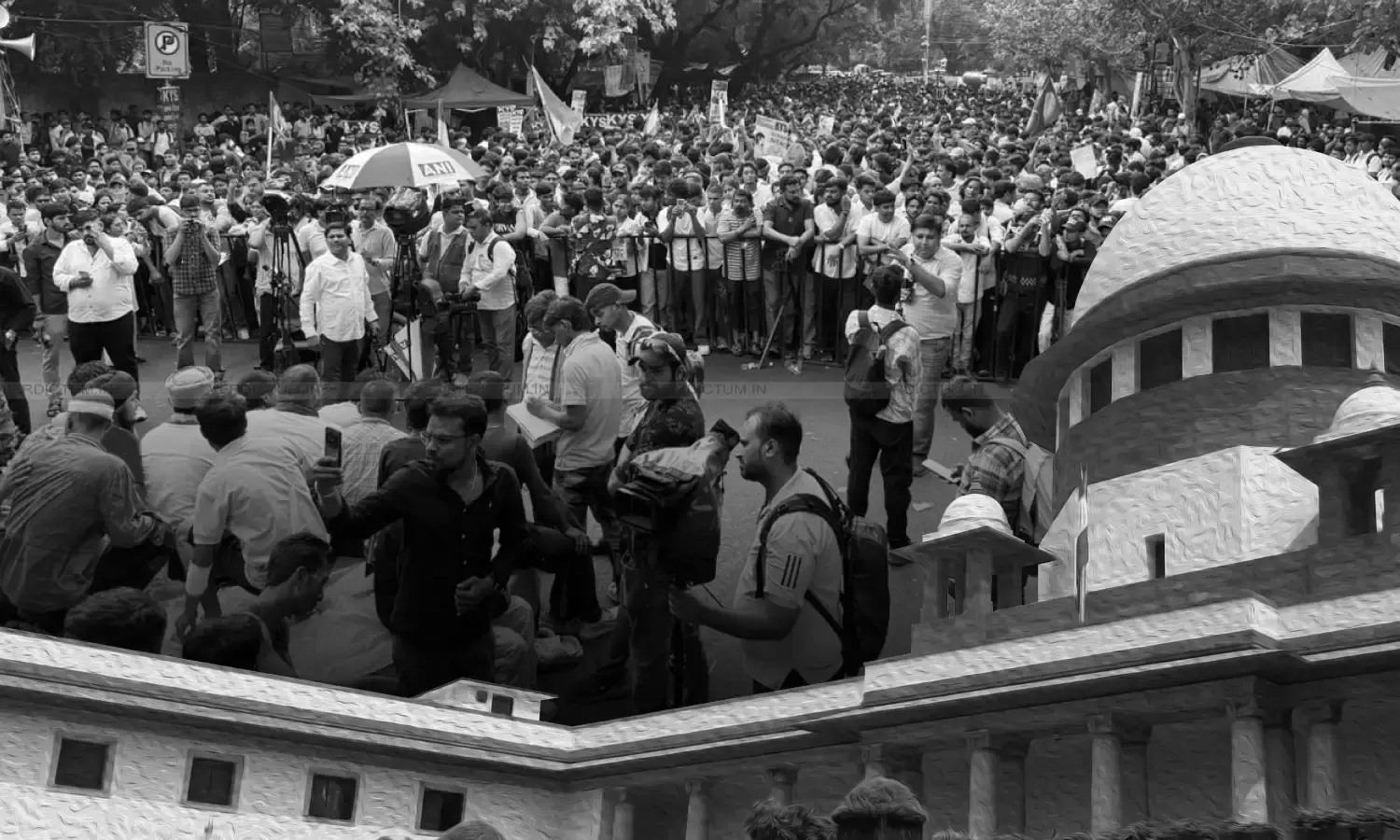
Big Hearing Today: SC to Examine Police Brutality Claims, SIT Demand in NEET Protest Row
The Supreme Court is set to hear a batch of petitions on Monday alleging police excesses during the nationwide protests over the NEET paper leak and examination irregularities, in a case that could determine whether an independent Special Investigation Team (SIT) will probe the violence and allegations surrounding the demonstrations.
A Bench comprising Chief Justice Surya Kant, Justice Joymalya Bagchi, and Justice V. Mohana will hear the matter after earlier observing that the allegations raised by protesters, injured students and police personnel warrant a fair, impartial and transparent investigation. The court had indicated that it may appoint an SIT headed by a former Supreme Court judge to examine both the claims of excessive force by police and the allegations that attacks on security personnel may have been carried out by "miscreants" rather than students.
During the previous hearing on July 28, the apex court directed all states to release detained protesters below 18 years of age who have no criminal antecedents, permitting release on a simple bond if required. It also barred authorities from taking any coercive action against protesting students, while clarifying that the protection would not extend to individuals with criminal records.
The court took serious note of allegations that protesters were subjected to pellet guns, rubber bullets, nail-studded lathis and electric batons, resulting in severe injuries, particularly among students and young women. At the same time, it stressed that anyone responsible for violence, whether protesters or officials, must be held accountable.
To ensure transparency, the Supreme Court directed authorities to preserve CCTV footage, drone recordings, body-camera videos, PCR logs, wireless communication records and other digital evidence, while also restraining police from disclosing protesters' personal data.
The petitions stem from the July 20 CJP-led march in Delhi, where clashes erupted as protesters demanding the resignation of then Union Education Minister Dharmendra Pradhan attempted to march towards Parliament. The agitation later spread across several states before ending after the government accepted key demands, including Pradhan's resignation, compensation for families of those who died by suicide, and assurance that no FIRs would be filed against protesters.