
Big Cats, Big Mission: India Gears Up for Global Conservation Summit With Nationwide Events
India’s conservation story has long been defined by its forests, rivers, and extraordinary wildlife. But in recent years, the country has increasingly emerged as the world’s most influential guardian of big cats, a position built through decades of political commitment, scientific intervention, and community-driven conservation. As New Delhi prepares to host the first-ever summit of the International Big Cat Alliance in 2026, the Union government is now turning the global spotlight toward India’s remarkable journey of protecting its most iconic predators.
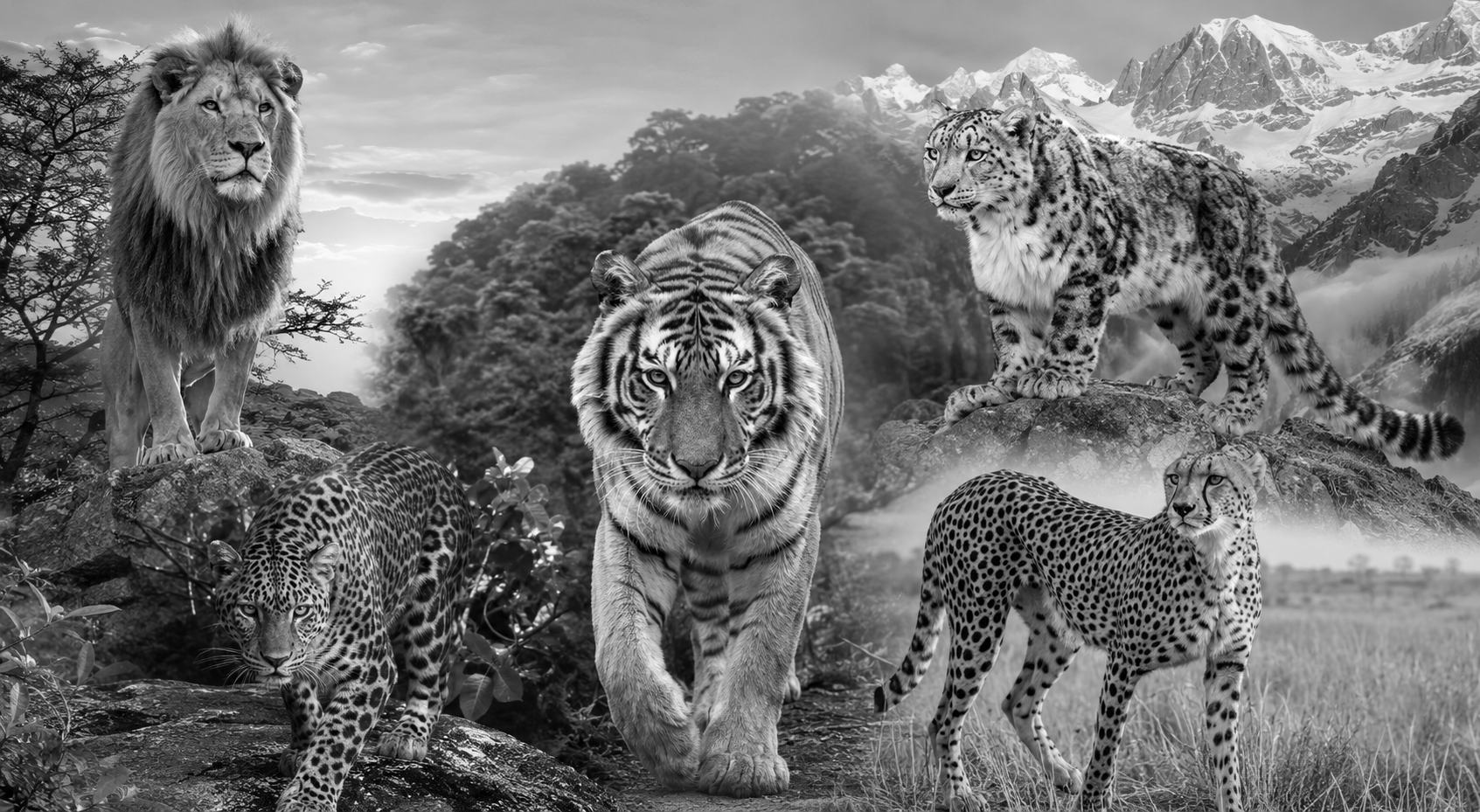
In a major precursor to the summit, the Ministry of Environment, Forest and Climate Change has announced five thematic conservation events across the country dedicated to India’s five wild big cat species Tiger, Asiatic Lion, Leopard, Snow Leopard, and Cheetah . The programmes, to be held in Gir , Chandrapur , Bhubaneswar , Gangtok , and Bhopal , are designed not merely as awareness campaigns but as a showcase of India’s global leadership in wildlife conservation.
Five Events, Five Ecosystems, One Conservation Vision
What makes the government’s upcoming initiative particularly significant is that each event has been built around a distinct conservation theme reflecting the ecological realities and challenges faced by each species.
The Gir, Gujarat programme on Asiatic Lions will be organised under the theme “India’s Unique Conservation Success” , celebrating the country’s globally recognised effort in saving the Asiatic Lion from near extinction. The event will focus on habitat expansion, scientific monitoring, disease surveillance, and the role of local Maldhari communities in lion conservation.
The Chandrapur, Maharashtra event dedicated to Tigers carries the theme “Flagship of India’s Forest Conservation” . The programme is expected to highlight how India became home to nearly 75% of the world’s tiger population through sustained political support, Project Tiger, anti-poaching operations, and technology-driven monitoring systems. It will also address increasing human-tiger conflict in central Indian landscapes.
In Bhubaneswar, Odisha , the Leopard conservation event organised alongside the International Day for Biological Diversity will revolve around the theme “Coexistence in Human-Dominated Landscapes” . The focus will be on conflict mitigation, biodiversity restoration, and strategies to manage leopards living near villages, farms, and urban settlements.
The Gangtok, Sikkim programme on Snow Leopards has been designed around the theme “Sentinel of the Himalaya” , highlighting the species as an indicator of ecological health in fragile mountain ecosystems increasingly threatened by climate change and habitat degradation.
Meanwhile, the Bhopal, Madhya Pradesh event on cheetah conservation carries the theme “Restoring India’s Grassland Ecosystems” , emphasising how Project Cheetah is not merely about bringing back a species but also about reviving neglected grassland habitats and biodiversity systems.
Together, the five events are expected to present a unified narrative that India’s conservation strategy extends beyond protecting animals and increasingly focuses on ecosystem restoration, scientific management, climate resilience, and community participation.
A Nation Home to Five Big Cat Species
The events will bring together policymakers, conservationists, scientists, forest officials, and local communities to highlight both the achievements and challenges in protecting big cats across vastly different ecosystems from the dense forests of central India to the fragile Himalayan landscape and the grasslands being revived for cheetahs.
India occupies a uniquely powerful position in global conservation because it is one of the few countries that hosts five major big cat species in the wild. More importantly, the country today shelters nearly 75% of the world’s tiger population , making its conservation model globally significant.
Indira Gandhi’s Wildlife Legacy
The foundation of this success story was laid more than five decades ago during the tenure of former Prime Minister Indira Gandhi, whose environmental vision transformed wildlife protection in the country. During the late 1960s and early 1970s, India’s wildlife population was collapsing under the pressure of rampant hunting, shrinking forests, and illegal trade. Tigers were being killed at alarming rates, and many feared the species could disappear entirely from India.
Responding to the crisis, the government enacted the landmark Wildlife Protection Act, 1972 , which became the backbone of India’s environmental legislation. The law banned hunting of endangered species, created legal safeguards for wildlife habitats, and strengthened anti-poaching enforcement.
Soon after, India launched the historic Project Tiger in 1973 a programme that would later become one of the world’s most successful wildlife recovery initiatives.
Tiger Recovery Becomes Global Conservation Model
The tiger population at the time had fallen drastically. What began with just nine tiger reserves has now expanded into a nationwide network of more than 50 tiger reserves spread across over 75,000 square kilometres . Despite severe setbacks, including poaching crises in reserves such as Sariska and Panna during the 2000s, India rebuilt its tiger conservation framework through scientific monitoring, stronger enforcement, and institutional reforms.
Today, the country’s tiger population stands at 3,682 , according to the latest official estimate under the All India Tiger Estimation exercise. The recovery has elevated India into a global conservation leader, but it has also created fresh challenges. Rising tiger numbers have increased encounters between humans and wildlife, particularly in states such as Maharashtra, Uttarakhand, and Madhya Pradesh.
The upcoming tiger conservation event in Chandrapur, Maharashtra , will therefore focus not only on India’s success in increasing tiger numbers but also on managing human-tiger conflict , wildlife corridors, and coexistence models. Conservation authorities now rely heavily on modern technologies such as camera traps, AI-enabled monitoring systems, drone surveillance, satellite collars, wildlife forensics, and the M-STrIPES patrolling system to monitor tiger movement and strengthen anti-poaching operations.
Gir Lions and Gujarat’s Conservation Success
Equally significant is India’s success with the Asiatic Lion , a species found nowhere else in the wild. The lion conservation programme in Gir, Gujarat , will celebrate one of the world’s rarest wildlife recovery stories.
At the beginning of the 20th century, the Asiatic Lion population had reportedly fallen to fewer than 50 animals due to hunting and habitat destruction. Today, that number has crossed 674 lions , thanks to sustained habitat protection, prey-base development, disease surveillance, and community involvement.
The Gir landscape has become an international conservation model because authorities managed not only to protect lions inside forests but also to expand their presence into surrounding areas. Local Maldhari pastoral communities have played a major role in coexistence efforts, while the Gujarat government introduced livestock compensation systems and rapid response teams to reduce conflict.
Leopard Conservation in Human Landscapes
Another important focus area is the conservation of Leopards , India’s most adaptable and widely distributed big cat species. Unlike tigers and lions that largely depend on protected forests, leopards frequently survive in human-dominated landscapes, often near villages, farms, and even urban outskirts.
This adaptability has also increased conflict situations, making leopard conservation one of India’s most complex wildlife challenges.
The leopard conservation event in Bhubaneswar, Odisha , coinciding with the International Day for Biological Diversity, will emphasise coexistence and biodiversity management. India’s leopard population is estimated at around 13,000–14,000 , with states investing heavily in rescue infrastructure, conflict mitigation teams, tracking technology, and awareness programmes.
Snow Leopards and the Climate Challenge
In the Himalayan region, the focus shifts to one of the world’s most elusive predators — the Snow Leopard . The conservation programme in Gangtok, Sikkim , will highlight how climate change is rapidly threatening fragile mountain ecosystems.
India’s first scientific snow leopard survey estimated around 718 snow leopards , spread across Ladakh, Himachal Pradesh, Uttarakhand, Sikkim, and Arunachal Pradesh.
Conservationists increasingly describe snow leopards as indicators of ecological health in the Himalayas. Melting glaciers, habitat fragmentation, infrastructure expansion, and shrinking prey populations are now placing enormous pressure on high-altitude biodiversity. India’s Snow Leopard Population Assessment in India (SPAI) programme and community-led conservation models have drawn international attention for combining scientific research with local participation.
Project Cheetah and Grassland Restoration
Perhaps the most globally watched of all India’s recent wildlife initiatives is Project Cheetah. Declared extinct in India in 1952, cheetahs returned to the country in 2022 under the world’s first intercontinental translocation project involving a large carnivore.
African cheetahs brought from Namibia and South Africa were relocated to protected habitats in Madhya Pradesh as part of an ambitious plan to restore grassland ecosystems.
The cheetah conservation programme in Bhopal will highlight the scientific complexity and global significance of the project. While the initiative has faced criticism over cheetah deaths and habitat limitations, it has also recorded successful births, pushing the total population beyond 50 animals across Kuno and Gandhi Sagar landscapes.
Authorities are continuing to expand prey bases, strengthen veterinary support systems, and improve long-term habitat management.
India’s Push for Global Wildlife Diplomacy
The thematic events are ultimately aimed at building momentum for the IBCA Summit 2026, where India hopes to deepen global cooperation on issues such as illegal wildlife trade, habitat fragmentation, poaching, and climate threats.
The alliance itself was launched by Prime Minister Narendra Modi during the 50th anniversary celebrations of Project Tiger in 2023.
Officials believe the initiative could emerge as a major pillar of India’s environmental diplomacy, much like the International Solar Alliance did in the climate sector. More than a wildlife initiative, the IBCA reflects India’s attempt to position conservation as both a global responsibility and a diplomatic strength.
From Conservation Mission to Global Leadership
From the forests protected under Indira Gandhi’s vision to AI-driven monitoring systems and international wildlife alliances, India’s big cat conservation story today represents a rare combination of political continuity, scientific innovation, and grassroots participation.
As the country prepares to host the world for the IBCA Summit, it is also sending a broader message that conservation, when backed by long-term commitment, can become one of the strongest instruments of global leadership.