
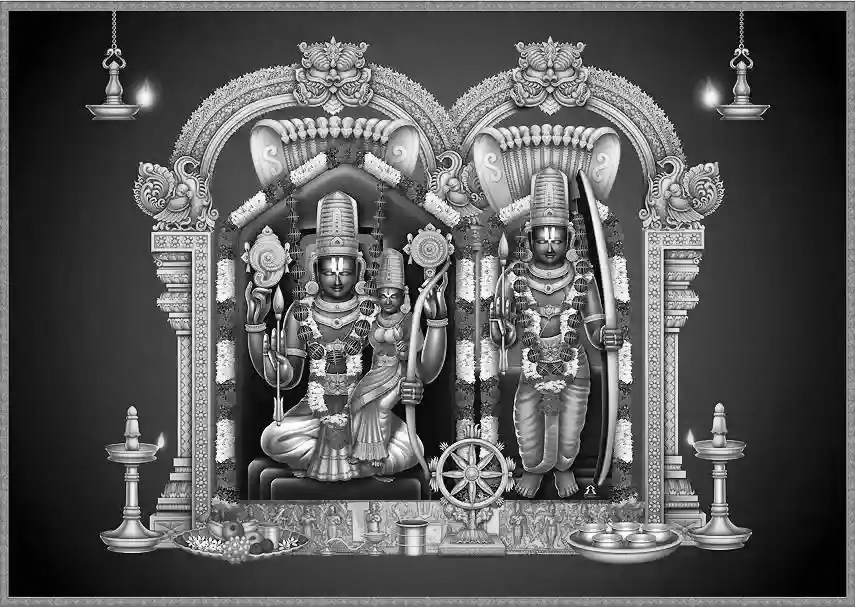
Bhadradri Sita Rama Temple - The Spiritual Pride of Telangana
On the sacred banks of the Godavari stands one of South India’s most emotionally powerful pilgrimage centres, Sree Seeta Ramachandraswamy Temple . Popularly known as Bhadrachalam or Bhadradri, this shrine is revered as Dakshina Ayodhya (Southern Ayodhya). More than a temple, it is a living confluence of devotion, mythology, music, royal tradition, and people’s faith that has flowed continuously for centuries.
At the heart of its spiritual identity is the Sri Seeta Rama Kalyana Mahotsavam , the celestial wedding of Lord Rama and Sita, celebrated annually with unmatched grandeur. This is not merely a ritual festival, it is a historic tradition where devotion meets governance, and where rulers across eras have symbolically offered their service to the divine couple.
A Temple Rooted in the Ramayana
The region around Bhadrachalam is deeply associated with the Ramayana. Tradition holds that during their 14-year exile, Rama , Sita , and Lakshmana lived in the Dandakaranya forests along the Godavari. Nearby areas are linked to episodes such as Sita’s abduction by Ravana , giving the landscape deep sacred memory.
The presiding deity here appears in a rare form known as Chaturbhuja Vaikuntha Rama, a four-armed manifestation of Vishnu as Rama, holding the conch and discus along with the bow and arrow. Sita sits on Rama’s left thigh, while Lakshmana stands beside them. According to legend, this form manifested in response to the penance of Sage Bhadra, from whom the hill Bhadragiri derives its name.
Discovery of the Deity
Local lore speaks of a tribal devotee, Pokala Dhammakka, who discovered the idol in an anthill after receiving a divine vision. She worshipped the deity and built a small shrine with villagers’ help. This humble beginning later evolved into one of the most celebrated Rama temples in India.
The Ramadasu Era - Devotion Beyond Power
The temple’s modern history is inseparable from Kancherla Gopanna , better known as Bhadrachala Ramadasu. A 17th-century devotee and composer, Gopanna served as Tahsildar under the Golconda Sultan Abul Hasan Qutb Shah , also called Tana Shah.
Moved by the temple’s neglected condition, Ramadasu used state tax revenues to reconstruct it, believing service to Rama was his highest duty. This act led to his imprisonment for nearly 12 years. In jail, he composed soul-stirring devotional songs that remain integral to Carnatic music and temple worship.
Legend narrates that Rama and Lakshmana appeared in Tana Shah’s dream and repaid the treasury in gold coins, leading to Ramadasu’s release. Deeply moved, the Sultan began the royal tradition of sending pearls and offerings for Rama Navami - a custom that continues through successive governments.
A Tradition Carried by the State
One of Bhadrachalam’s most unique features is the official presentation of pearl talambralu, silk clothes, turmeric, and gifts by the State during the celestial wedding. From the Qutb Shahi rulers and Nizams to modern administrations of Andhra Pradesh and Telangana, this gesture symbolizes the State acting as a relative of the divine bride.
It is a rare instance in India where political authority humbly participates in a sacred wedding, reflecting continuity of cultural respect beyond religious boundaries.
Sri Seeta Rama Kalyanam – A Divine Wedding
Celebrated on Chaitra Shuddha Dwadashi, the Kalyanam draws thousands of devotees. Amid Vedic chants, traditional instruments, and cries of “Jai Sri Ram,” the deities are ceremonially united on a golden platform. Devotees believe witnessing this wedding grants spiritual merit and marital harmony.
The temple’s Brahmotsavams, Vaikuntha Ekadashi celebrations, Vasanthotsavam, and Vijaya Dashami festivals further enrich its ritual calendar.
Ramadasu’s Musical Legacy
Ramadasu stands among the great Bhakti composers. His kirtanas, structured in Pallavi–Anupallavi–Charanam format, blend classical ragas with emotional surrender. His Dasharathi Shatakamu remains a literary gem. Later saint Tyagaraja revered Ramadasu and composed kritis in his honour.
Historical and Political Journey
Though once part of the Hyderabad State, Bhadrachalam’s surrounding territories passed through British administration before reorganization. After regional movements and boundary changes, the town today lies in Bhadradri Kothagudem district of Telangana, retaining its identity as a spiritual landmark of the region.
Places Around Bhadrachalam
Papi Hills (Papikondalu)
A scenic boat journey through forested hills and the Godavari offers breathtaking views.
Parnasala
Believed to be the forest dwelling of Rama, Sita, and Lakshmana during exile. Evening aarti on the Godavari banks and tribal cultural experiences enrich the pilgrimage.
Travel & Facilities
Bhadrachalam is well connected by road from Hyderabad, Vijayawada, and Visakhapatnam. The nearest railway station is Bhadrachalam Road (Kothagudem). Airports at Hyderabad, Vijayawada, and Rajahmundry serve travelers.
Temple guest houses, vegetarian eateries, and Annaprasadam services cater to pilgrims, while river-view lodgings offer scenic stays.
A Living Sacred Landscape
Bhadrachalam is where mythology breathes through geography, where music was born from prison walls, and where rulers bow before divinity. The Godavari flows past not just as a river, but as a witness to centuries of devotion.
A visit here is not merely tourism, it is a journey into India’s spiritual memory, where faith, history, and nature meet in timeless harmony.