
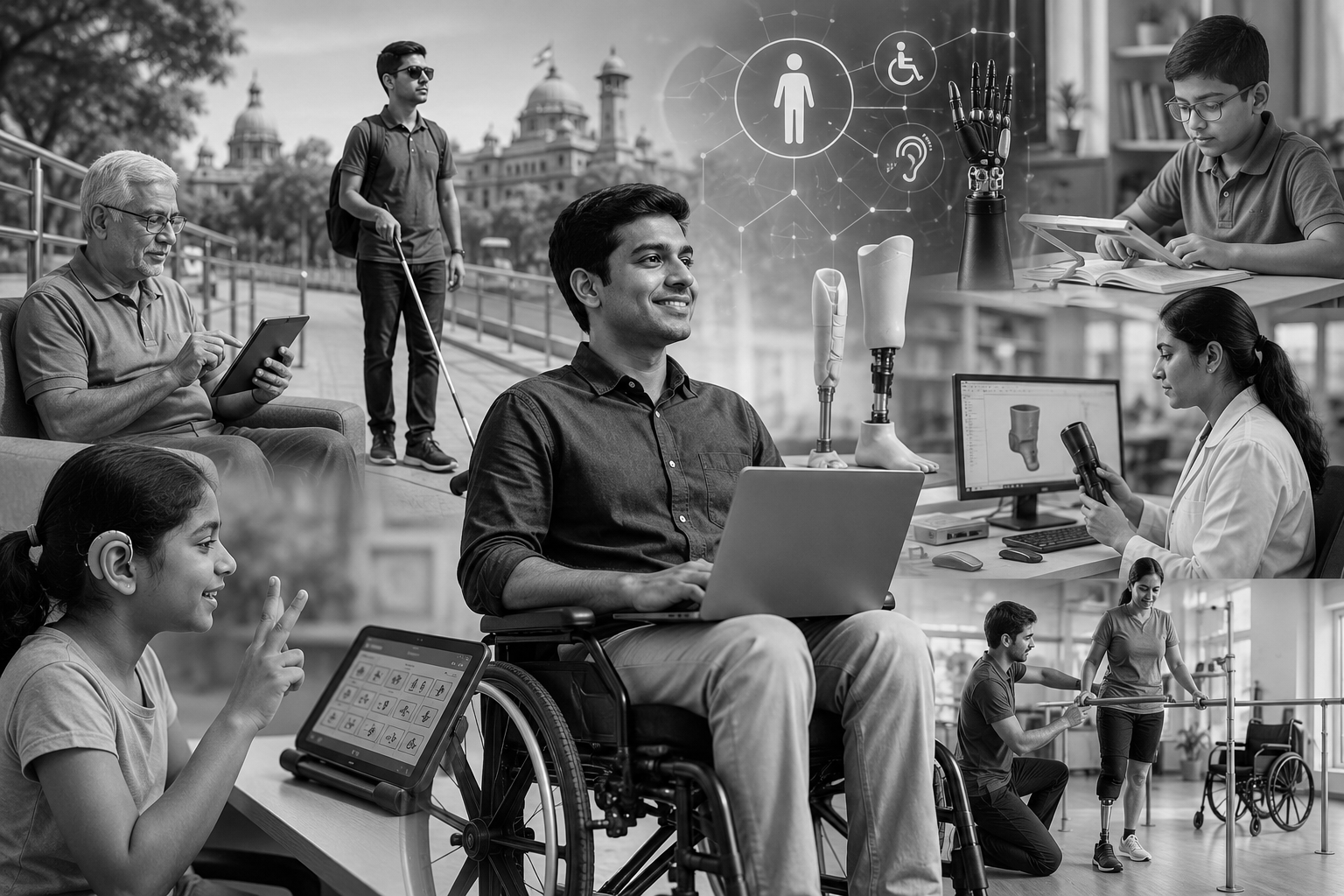
Beyond Welfare: Assistive Technology as India's Next Inclusion Engine
India's disability inclusion landscape could be poised for a major transformation as the National Centre for Promotion of Employment for Disabled People (NCPEDP) prepares to unveil a landmark policy paper calling for a dedicated national framework on Assistive Technology (AT) . Supported by Mphasis , the report, titled "Assistive Technology in India: A Systems and Investment Approach for Inclusion, Independence, and Economic Participation of Persons with Disabilities," will be launched on June 24 and aims to redefine assistive technology as a critical driver of social and economic development rather than a welfare intervention.
The initiative comes amid growing global demand for assistive products and services. According to the World Health Organization (WHO) , more than 2.5 billion people worldwide require at least one assistive technology product, including wheelchairs, hearing aids, prosthetics, eyeglasses, communication devices and digital accessibility tools. However, less than 10 percent of people in low- and middle-income countries have adequate access to these technologies.
In India, the need is particularly pressing. The country is home to 2.68 crore persons with disabilities , with more than 70 percent living in rural areas , where access to assistive devices, rehabilitation services and maintenance support remains limited. Experts also warn that demand is likely to rise significantly as India's elderly population grows and more people live with chronic illnesses and age-related functional limitations.
According to Arman Ali , Executive Director of NCPEDP, assistive technology should be viewed as essential infrastructure that enables access to education, employment, healthcare, mobility and independent living. The policy paper argues that the current approach, largely centred on device procurement and one-time distribution, is inadequate to meet the diverse and evolving needs of users.
India already has a strong legal foundation through the Rights of Persons with Disabilities (RPwD) Act, 2016 , the Accessible India Campaign , the National Education Policy (NEP) 2020 , and the ADIP Scheme , which supports the provision of aids and appliances to persons with disabilities. Yet, assistive technology delivery remains fragmented across ministries and programmes, often lacking long-term support, repairs, upgrades and user training.
The report proposes a National Assistive Technology Policy Framework that would create a coordinated ecosystem for innovation, financing, service delivery and manufacturing. It also highlights the growing role of artificial intelligence, wearable technologies, smart hearing devices, screen readers, rehabilitation robotics and digital accessibility solutions in empowering persons with disabilities.
Importantly, the paper estimates that India's assistive technology market could reach USD 8-10 billion by 2030 , creating opportunities for domestic manufacturing, startups and investment. Industry experts believe the sector can align with flagship initiatives such as Make in India , Digital India and Startup India .
The launch event will bring together policymakers, technology experts, disability rights advocates, researchers and persons with disabilities to discuss the future of assistive technology in the country. As India advances its vision of inclusive growth, the NCPEDP paper makes a compelling case that expanding access to assistive technology is not merely a social obligation but an economic necessity that can unlock opportunities, productivity and independence for millions.