
Bengaluru metro fare hike put on hold amid Shivakumar–Tejasvi Surya row
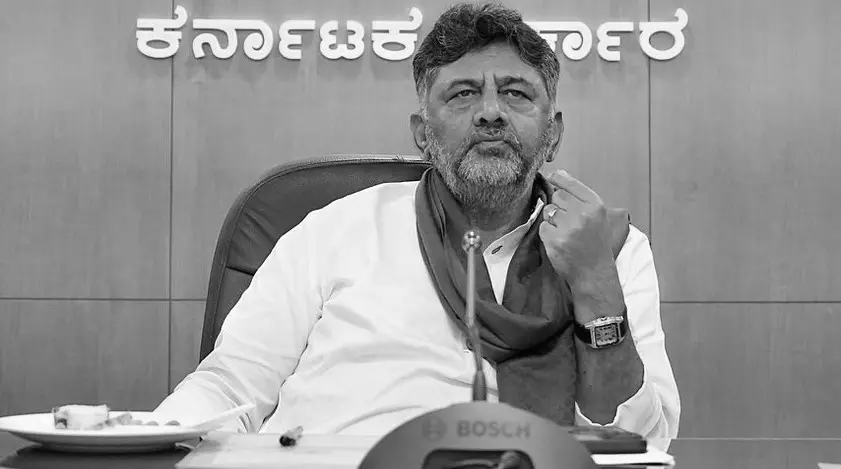
Karnataka Deputy Chief Minister D K Shivakumar and Bengaluru South MP Tejasvi Surya on Monday locked horns over the Bengaluru Metro fare hike, a day after the Bangalore Metro Rail Corporation Limited (BMRCL) put the proposed increase on hold.
The BMRCL was to implement a five per cent annual fare hike from Monday but announced late Sunday night that the revision would be deferred. On Monday morning, Surya was detained by police while staging a protest at Jayanagar Metro station demanding affordable public transport. The BJP MP alleged that the fare hike was put on hold due to the Centre’s intervention and accused the state government of suppressing dissent.
Rejecting the charge, Shivakumar said the Centre had no authority to interfere in Metro fare fixation and that any communication from Central officials was only advisory. He said the decision to defer the hike was taken independently by the state government.
Shivakumar said a Fare Fixation Committee (FFC) , constituted in 2020 and chaired by the Union Housing and Urban Affairs Secretary, submitted its report in December 2024. Revised fares were implemented on February 9, 2025, with a provision for an annual increase of up to five per cent from February 9, 2026.
Meanwhile, Namma Metro has grown steadily since operations began in 2014, crossing the 100-crore passenger mark by late 2023 and serving an average of over 6 lakh riders daily then. On peak days in 2025, daily footfall exceeded 9 lakh passengers , with occasional figures above 10 lakh after the opening of new corridors, though ridership dipped temporarily following fare increases. As the network expands toward full Phase 2 and beyond, daily ridership is expected to increase further, especially once key lines such as the Pink and Blue (including the airport link) are complete, potentially serving well over 10 lakh commuters daily and possibly higher depending on future extensions. However, Namma Metro’s expansion has been slow and costly: Phase 2, originally sanctioned in 2014 with an estimated cost of around ₹26,405 crore, has seen delays and cost overruns pushing estimates above ₹40,000 crore, largely due to land acquisition issues, train shortages, supply chain disruptions, pandemic-related slowdowns, and complex design changes — factors that have set Bengaluru’s timeline further back compared with cities like Delhi, where metro expansion progressed much faster and now records daily ridership in the tens of millions , and Hyderabad, whose metro also faces its own operational challenges but opened its network more swiftly.