
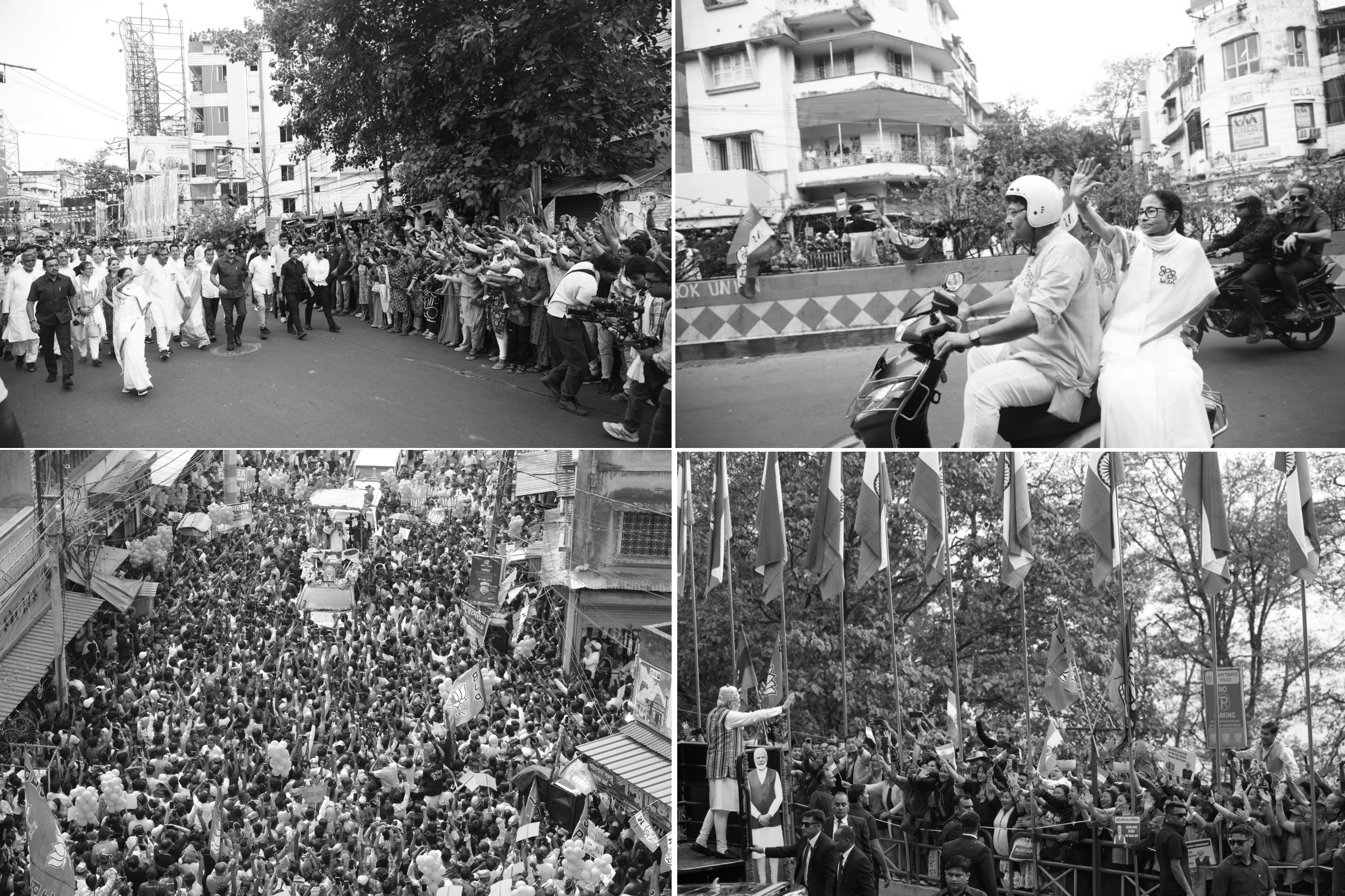
Bengal’s Second Phase Campaign Ends, Stage Set for Key Electoral Test
West Bengal is heading into a decisive electoral moment after the conclusion of campaigning for the second and final phase of Assembly elections, with the political contest between the Bharatiya Janata Party (BJP) and the ruling All India Trinamool Congress (TMC) reaching peak intensity. The end of campaigning on Monday evening triggered the mandatory 48-hour silence period ahead of polling on April 29, shifting the focus from rhetoric to voters.
The second phase covers 142 constituencies out of the total 294 seats in the Assembly, making it crucial in determining the final outcome. The elections are being held in two phases April 23 and April 29 with counting scheduled for May 4 . Campaigning in this phase was marked by sharp ideological divisions, aggressive messaging, and intensified outreach by top national and regional leaders.
A total of 32,173,837 voters , including 16,435,627 men, 15,737,418 women, and 792 third-gender voters , are eligible to vote in this phase across 41,001 polling stations . The Election Commission of India has deployed 2,321 companies of central forces , along with 142 general observers, 95 police observers, and 100 expenditure observers , supported by drone surveillance to ensure a secure polling process. Heightened security measures follow reports of violence, recovery of crude explosives in some areas, and concerns over law and order during campaigning.
The first phase of polling on April 23 recorded a turnout of over 93 percent , one of the highest in recent electoral history, reflecting strong voter mobilisation and political engagement across the state. Analysts attribute the high turnout to factors such as intense campaigning, security deployment, and anti-incumbency dynamics in certain regions.
The campaign witnessed participation from top leaders including Prime Minister Narendra Modi, Union Home Minister Amit Shah, Defence Minister Rajnath Singh, Chief Minister Mamata Banerjee, and Congress leader Rahul Gandhi. The political discourse remained sharply polarised, with both BJP and TMC engaging in direct attacks over corruption, governance, women’s safety, infiltration, and political violence .
Prime Minister Modi, addressing rallies including in Barrackpore, expressed confidence that the BJP would form the government and stated he would return after May 4 for the swearing-in ceremony. His campaign focused on the vision of a “developed Bengal,” governance reforms, and eastern India’s strategic importance, while also invoking historical and cultural symbolism. The BJP also emphasized issues such as illegal infiltration and promoted the Citizenship Amendment Act as part of its outreach to refugee communities like the Matuas.
The party’s campaign combined governance criticism with welfare promises, including financial assistance for women and unemployed youth, alongside commitments to job creation and administrative transparency. It also alleged the existence of “syndicate raj” and political violence under the TMC government.
The TMC, led by Mamata Banerjee and supported by senior leader Abhishek Banerjee, countered by highlighting its welfare schemes and questioning the BJP’s delivery on past national promises. Mamata Banerjee intensified grassroots outreach through roadshows and direct public engagement, including market visits aimed at reinforcing her connect with voters. The party also raised concerns about voter list revisions and alleged attempts to influence the electoral process.
The campaign period also saw rising tensions on the ground. Incidents such as the reported attack on a TMC leader’s vehicle and allegations of politically motivated violence added to the charged atmosphere. Additionally, controversies over campaign messaging, posters, and rhetoric further underscored the intensity of the contest.
Key constituencies such as Bhabanipur, Barrackpore, Dum Dum, Jadavpur, and Ballygunge have emerged as critical battlegrounds, reflecting a mix of urban influence, industrial voter bases, and community-driven political dynamics. The presence of influential voter groups, including refugee-origin communities, has further heightened the stakes in these regions.
Security agencies remain on high alert, with central forces expected to continue deployment even after polling to maintain order. The combination of heavy security, high turnout trends, and intense campaigning has made this phase particularly significant in shaping the final electoral verdict.
As Bengal moves into polling day, the broader political question remains whether the TMC will retain its dominance, as seen in the previous election where it secured a strong majority, or whether the BJP can convert its expanding support base into a decisive breakthrough in eastern India. The outcome on May 4 is expected to have implications not only for state politics but also for the national political landscape.