
Bengal DGP appointment process hits hurdle as UPSC returns panel to government
A major administrative and constitutional hurdle has stalled the appointment of a new Director General of Police in West Bengal after the Union Public Service Commission returned the panel of names submitted by the state government, citing serious procedural irregularities and unexplained delays, and advised it to seek directions from the Supreme Court.
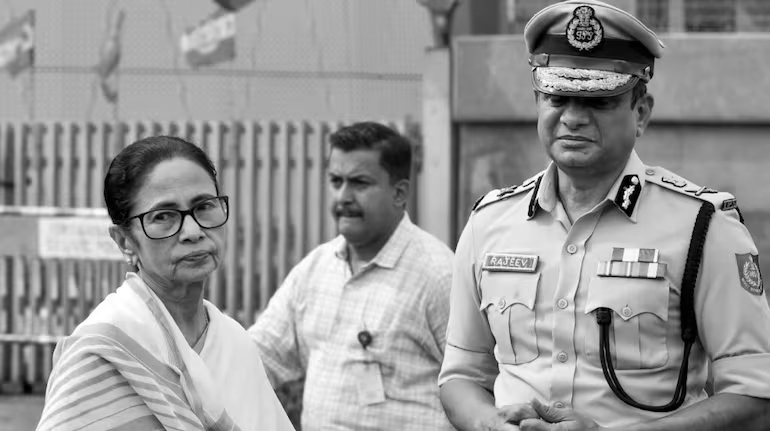
The development assumes significance as the tenure of the current DGP (In Charge), Rajeev Kumar , is set to end on January 31, with the state heading into an election year. Officials said the UPSC declined to process the proposal as the mandatory timeline prescribed by the apex court for initiating the DGP selection process had been violated by a wide margin.
In a communication dated December 31 to the state Chief Secretary, the UPSC referred to the Supreme Court’s 2018 judgment in Prakash Singh versus Union of India , which mandates that states must forward proposals for appointing a DGP at least three months before the retirement of the incumbent to ensure a transparent and merit-based process. The Commission noted that the vacancy for the post of Head of the Police Force in West Bengal arose on December 28, 2023, following the retirement of Manoj Malviya .
Although the state government appointed Rajeev Kumar as DGP (In Charge), it forwarded a panel of 10 eligible IPS officers to the UPSC only in July 2025, more than 18 months after the vacancy arose and well beyond the court-mandated deadline. Officials said the Empanelment Committee Meeting was eventually convened on October 30, 2025, during which members examined the state’s explanation for the delay.
However, divergent views emerged among committee members on the date of occurrence of the vacancy due to the delayed submission, prompting the UPSC to seek the opinion of the Attorney General of India. The Attorney General termed the delay “excessive” and observed that there was no provision empowering the UPSC to condone such an inordinate lapse and proceed as though no irregularity had occurred. He cautioned that accepting the delayed proposal could create serious anomalies and deprive legitimate aspirants of fair consideration for empanelment.
Based on this legal opinion, the UPSC concluded that it could not proceed with the empanelment process and advised the West Bengal government to approach the Supreme Court for appropriate directions. A senior bureaucrat said the Commission had also indicated that no appointment could be regularised under the present circumstances, adding that technically Manoj Malviya remains the last permanent DGP of the state.
The issue has also triggered legal action. In early December, senior IPS officer Rajesh Kumar , a 1990-batch officer, moved the Central Administrative Tribunal alleging that he was illegally excluded from the panel and denied a fair opportunity due to what he described as a delayed and irregular process adopted by the state government. Taking cognisance of the plea, the Tribunal directed the UPSC to expedite its decision on the empanelment.
With the panel now returned and the UPSC advising judicial clarification, the future of the state’s top police appointment remains uncertain, placing the issue squarely before the Supreme Court at a politically sensitive moment for West Bengal.