
Beijing issues advisory to Chinese students in Japan following PM’s Taiwan remarks
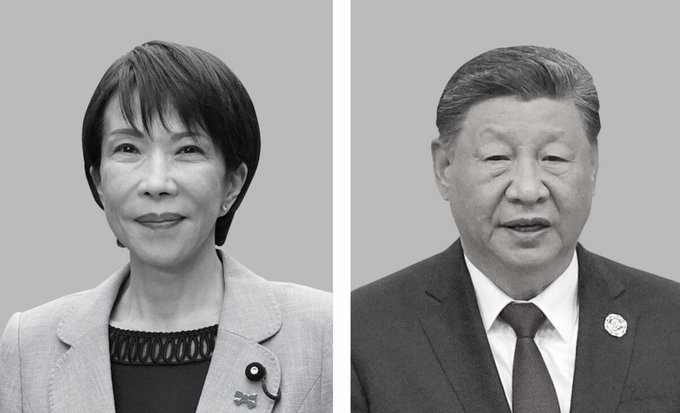
China urged its students to reconsider studying in Japan, citing an “unstable security environment” following remarks by Japan’s new Prime Minister Sanae Takaichi regarding Taiwan. The advisory, issued by China’s Ministry of Education and reported through official media, highlighted rising safety risks for Chinese nationals, including deteriorating public security, a surge in crimes targeting Chinese citizens, and an overall unfavourable study environment.
However, analysts and experts note that the stated reasons are largely a formal justification, rather than the actual motivation behind the advisory. The timing, immediately after Takaichi’s parliamentary comments about Japan potentially deploying its Self-Defence Forces in a Taiwan contingency, strongly suggests that the advisory is primarily a geopolitical move, aimed at signaling Beijing’s seriousness on Taiwan-related issues and escalating pressure on Japan. Japan remains generally safe for international students, with no independent evidence of a spike in crimes specifically targeting Chinese citizens.
In what appeared to be a retaliatory move, China also advised its citizens to avoid traveling to Japan and summoned the Japanese ambassador, demanding that Takaichi retract her remarks. Japan, in turn, lodged a protest over a social media post by a Chinese diplomat criticizing the Prime Minister’s comments. Chinese state media, including Xinhua and the Global Times, sharply warned that Japan risked turning itself into a battlefield if it intervened militarily in the Taiwan Strait. Editorials accused Takaichi of violating the one-China principle, undermining post-World War II international norms, and deliberately destabilizing regional security.
Amid the escalating tensions, Chinese coastguard vessels conducted patrols around the disputed Diaoyu/Senkaku Islands, describing the operation as a “rights-protection patrol conducted in accordance with the law.”
The advisory comes at a time when over 123,000 Chinese students are enrolled in Japanese universities, forming the largest group of foreign students in the country. Their presence provides Japan with significant economic benefits: tuition fees, living expenses, and part-time work inject hundreds of billions of yen annually into local economies. Many universities, particularly private institutions, rely heavily on this tuition revenue to maintain operations. Chinese students also contribute to research output, academic competitiveness, and cultural exchange, while strengthening long-term people-to-people ties that support Japan’s soft power.
Japan has actively encouraged international students, including Chinese nationals, to address its declining domestic population and labour shortages. Policies have included visa extensions for graduates, recruitment programs, and financial or academic support. However, there is scrutiny regarding the concentration of Chinese students in Japan, with debates over security and geopolitical implications, as well as the fair distribution of scholarships and support for postgraduate research. Universities see these students as critical for financial and academic sustainability, but policymakers are conscious of the potential risks associated with geopolitical tensions.
China’s advisory is widely perceived as a major diplomatic escalation. Normally, countries refrain from issuing such warnings over political rhetoric to maintain diplomatic stability and avoid economic fallout.China’s decision reflects the unique sensitivity of the Taiwan issue. For Beijing, any perceived threat to Taiwan’s status or security, including statements from foreign leaders, is treated as a core national security concern. By issuing the advisory, Beijing is signaling that even students abroad are considered part of the national security equation, a stance that is unusual compared with how other nations typically handle diplomatic disagreements.
As tensions over Taiwan continue to simmer, the Chinese government is closely monitoring the situation and prioritizing the protection of its citizens abroad, while Japan balances its need for international students against broader economic, academic, and security considerations. The unfolding situation underscores the fragility of regional stability and the far-reaching implications of statements made by political leaders on sensitive geopolitical issues.