
Battle for Hormuz begins as Trump moves to seal Strait, Iran warns of Gulf firestorm
The deadlock in the Islamabad talks has put the fragile two-week ceasefire in limbo, and Donald Trump, never one to absorb a diplomatic embarrassment quietly, has responded the only way he knows how: by escalating.
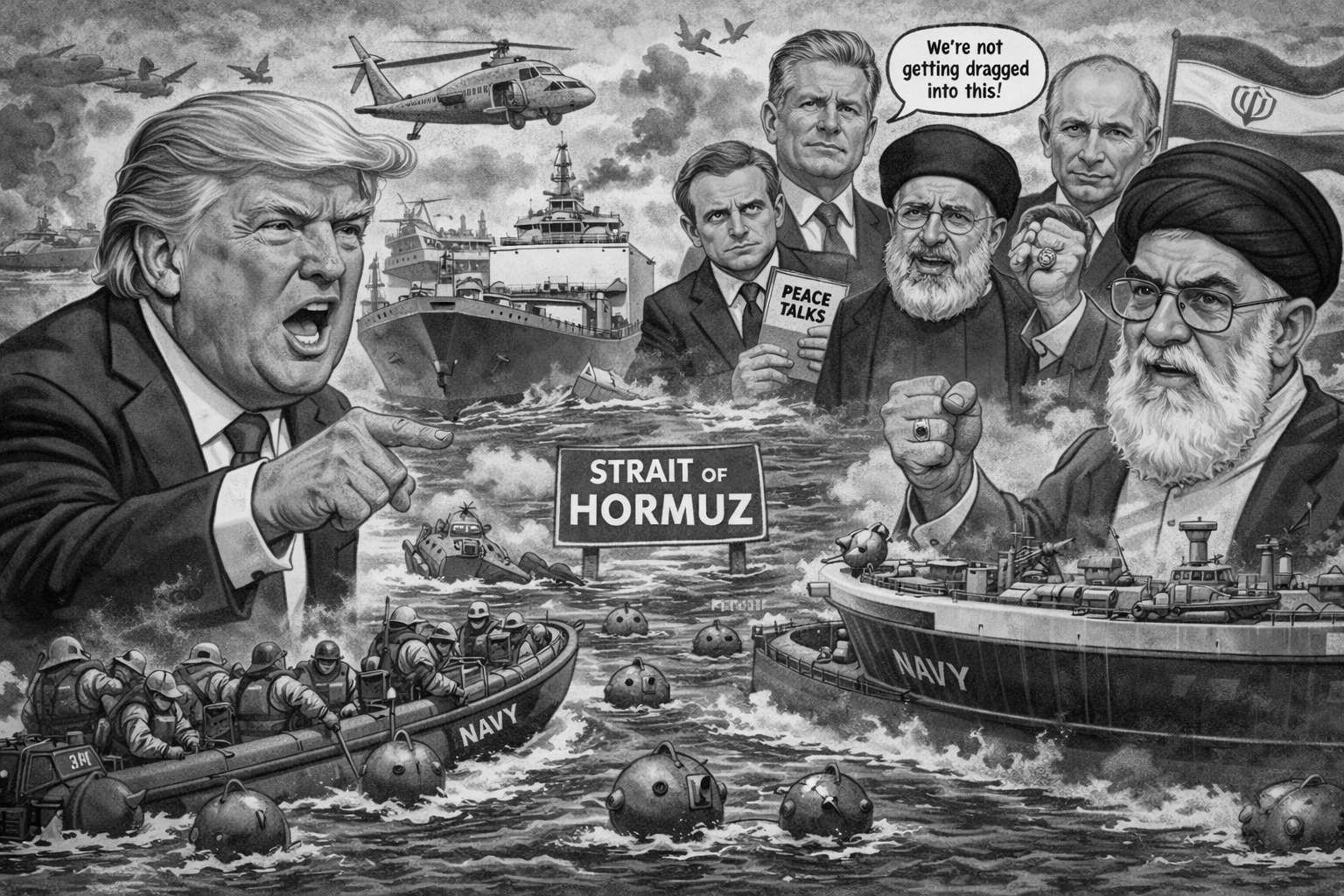
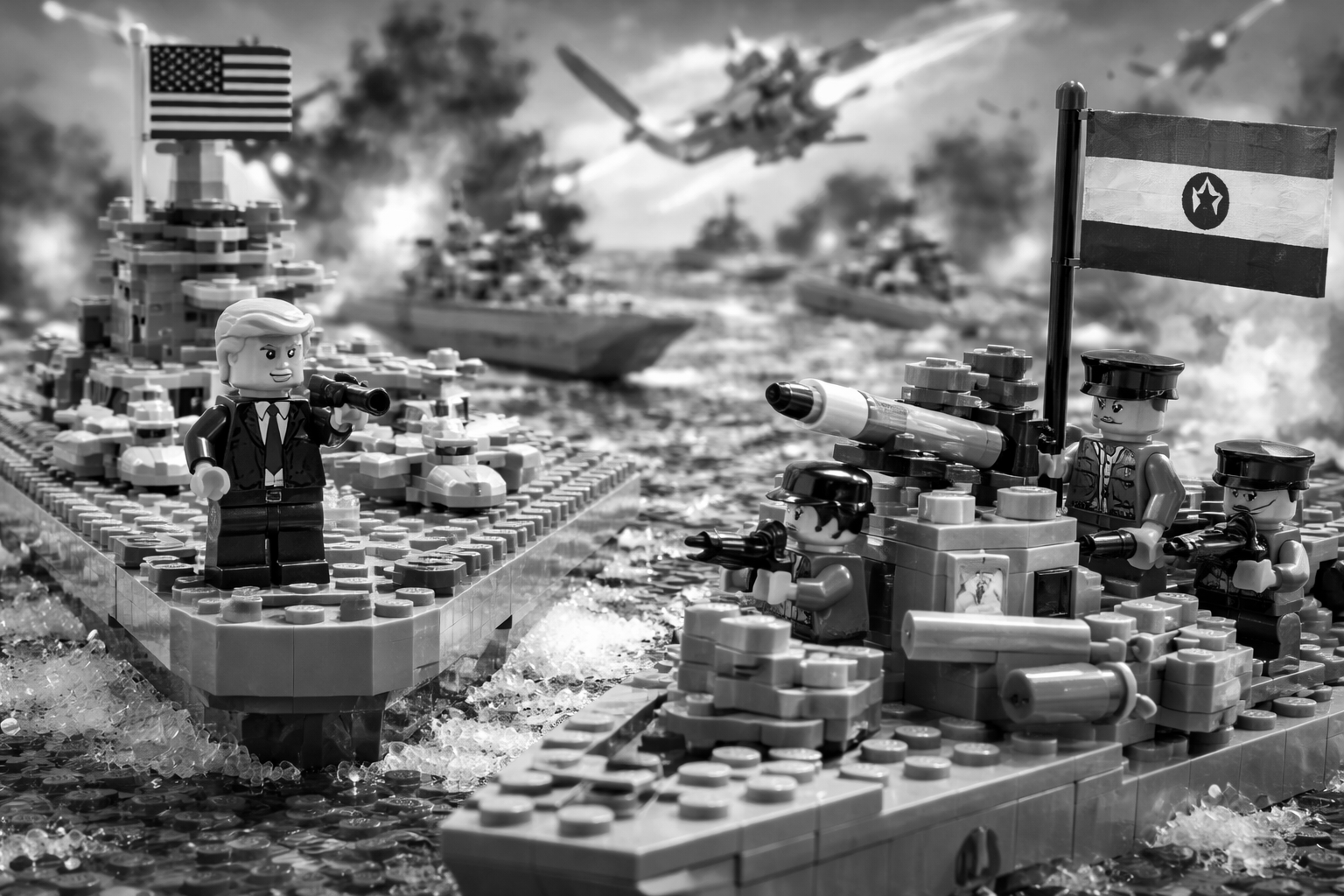
Trump posted on Truth Social on Sunday morning: "Effective immediately, the United States Navy, the Finest in the World, will begin the process of BLOCKADING any and all Ships trying to enter , or leave, the Strait of Hormuz ." He instructed the Navy to "seek and interdict every vessel in International Waters that has paid a toll to Iran," and promised that the US would begin clearing the mines Iran had laid in the strait. As for any Iranian vessel that dares challenge the operation, Trump's message was characteristically blunt: they will be " ELIMINATED " if they come anywhere close to the blockade. Anyone who fires at American forces or peaceful vessels will be, in Trump's words, "BLOWN TO HELL."
CENTCOM formalized the order, announcing the blockade would be enforced "impartially against vessels of all nations entering or departing Iranian ports and coastal areas , including all Iranian ports on the Arabian Gulf and Gulf of Oman." It is a grand naval chokehold , not merely of the strait itself, but of every Iranian port on both sides of the waterway, aimed at severing Tehran's last functioning economic artery.
Iran's response was immediate and unambiguous. The Iranian military's Khatam Al-Anbiya command declared the blockade illegal and tantamount to piracy, warning: "If the security of the Islamic Republic of Iran's ports in the waters of the Persian Gulf and the Arabian Sea is threatened, no port in the Persian Gulf and the Arabian Sea will be safe ." "Security in the Persian Gulf and the Sea of Oman is either for everyone or for NO ONE ," the IRGC statement read. This is not a negotiating posture. This is a declaration of symmetric threat , every Saudi terminal, every Emirati oil platform, every Kuwaiti port within range of Iranian drones and missiles now carries a target on its back. Iran went further still, announcing it intends to implement a permanent mechanism to control the Strait of Hormuz, transforming what had been a wartime posture into an explicitly stated permanent strategic objective.
What makes this moment so particularly volatile is that neither side has an exit . The Western response to Trump's blockade has been a study in studied distance . UK Prime Minister Keir Starmer said Monday that Britain will not be part of the US blockade of Iranian ports, adding that Britain is " not getting dragged into war. " Despite Trump 's earlier suggestion on Fox News that the UK was sending minesweepers to assist his operation , Starmer quietly but firmly contradicted his American counterpart. France and the UK announced instead that they plan to organize a conference in the coming days with countries willing to contribute to a "peaceful, multinational mission" aimed at restoring free transit through the strait . Macron specified this mission would be " strictly defensive and separate from the warring parties ," a formulation designed to keep Paris and London diplomatically viable with both Tehran and Washington simultaneously, which is a tightrope that grows narrower by the hour.
China , which has the most to lose from any prolonged Hormuz disruption , has been vocal and visibly alarmed. Beijing called for unimpeded access through the strait, insisting the waterway is a critical international trade route whose security and stability serve the entire global community. US intelligence agencies obtained information suggesting China may have sent a shipment of shoulder-fired missiles to Iran in recent weeks, though officials acknowledged the intelligence was not definitive. China's embassy flatly denied the allegations . Trump had already warned that any country supplying military weapons to Iran would be immediately hit with 50 percent tariffs .
Russia , meanwhile, offered what it has been offering for weeks: a quiet, practical solution that no one has acted on . The Kremlin confirmed Monday that Moscow remains ready to take in Iran's enriched uranium as part of a future peace deal , with spokesman Dmitry Peskov noting the offer "still stands, but has not been acted upon." Russia also criticized Trump's blockade as likely to continue negatively impacting international markets. It is the kind of sober, transactional diplomacy that tends to get drowned out when the principal parties are busy threatening to blow each other to hell.
Lebanon , as always, bleeds in the margins. Israeli warplanes struck two Lebanese towns over the weekend, while a third came under artillery fire, and Iranian state media reported a strike on a house in the town of Maaroub that "targeted a family of more than seven members," resulting in deaths and injuries. The southern Lebanese frontier remains the most combustible secondary front in this war.
History has a stubborn tendency to remind us what energy blockades actually are . They are acts of war dressed in the language of economic pressure. The oil embargo of 1941 that cut off Japan's fuel supply did not produce Japanese capitulation, it produced Pearl Harbor . The lesson the twentieth century taught, and that every subsequent generation seems to need to relearn , is that cornered powers with something left to lose do not negotiate from positions of absolute deprivation: they escalate. Blockades in history have rarely produced the surrender their architects imagined. They have, with depressing regularity, produced the wars their architects claimed to be avoiding.