
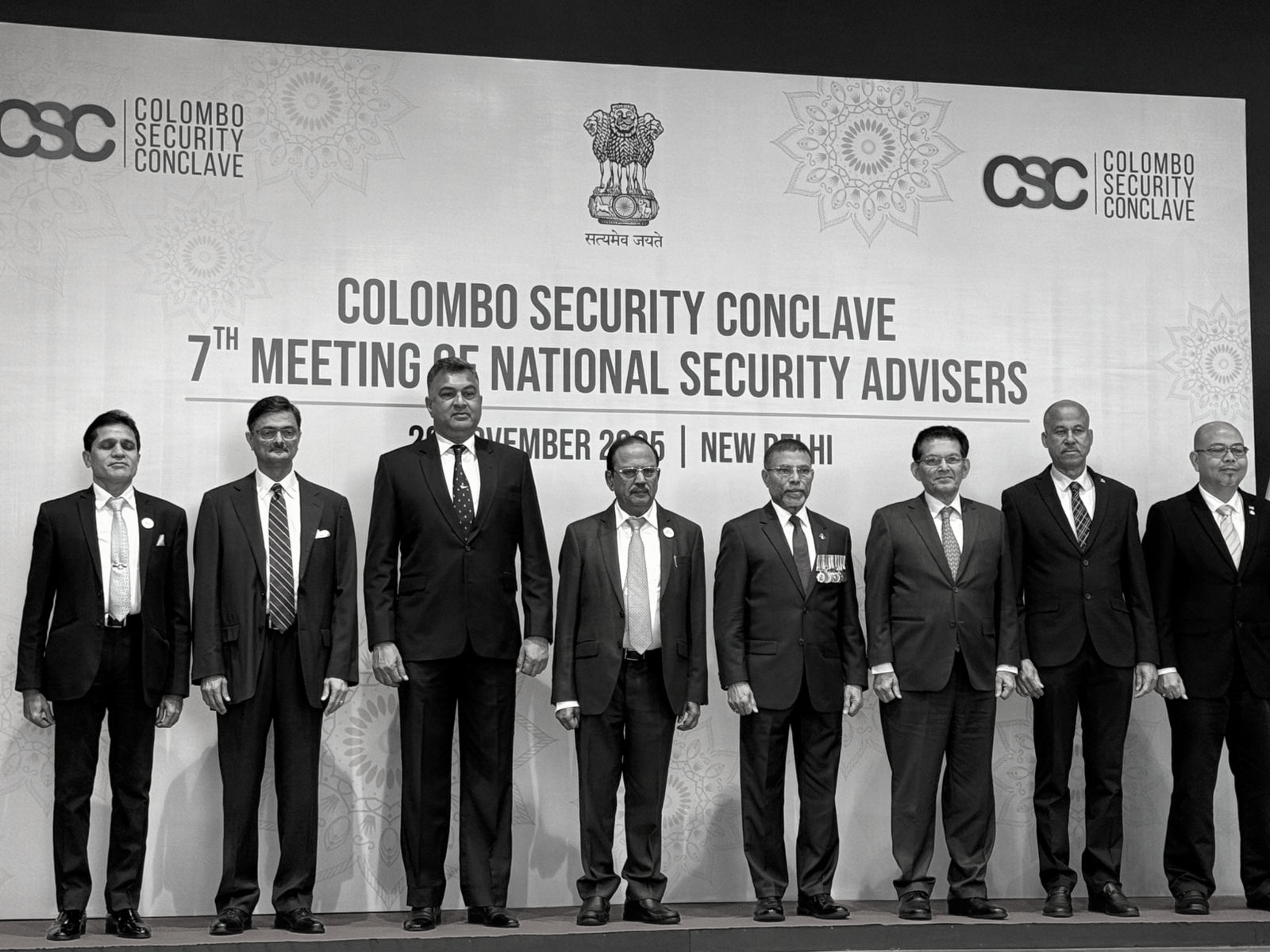
Bangladesh's NSA participates in Colombo security conclave meeting hosted by Ajit Doval
India on Thursday hosted the 7th National Security Adviser–level meeting of the Colombo Security Conclave (CSC) in New Delhi, bringing together top security officials from Bangladesh, Sri Lanka, the Maldives and Mauritius, with Seychelles joining as an observer and Malaysia as a guest. The meeting, chaired by India’s National Security Adviser Ajit Doval, took place against the sensitive backdrop of strained diplomatic ties between India and Bangladesh following the recent death sentence handed to ousted Bangladesh Prime Minister Sheikh Hasina.
The meeting focused on enhancing regional cooperation in the Indian Ocean region through joint efforts in maritime security, counter-terrorism, cybersecurity, combating organised crime, and humanitarian assistance. Ajit Doval emphasised the shared responsibility of regional nations to maintain peace, stability and a rules-based maritime order, reiterating India’s commitment to strengthening collaborative mechanisms in the Indian Ocean.
Bangladesh’s participation drew special attention due to ongoing political tension between Dhaka and New Delhi. The former Prime Minister of Bangladesh, Sheikh Hasina, who has been living in exile in India since her ouster in August 2024, was recently sentenced to death in absentia on charges of crimes against humanity, including alleged incitement and failure to prevent violence during the 2024 student protests. Dhaka has formally urged India to extradite Hasina, putting additional strain on bilateral relations. India has so far maintained a cautious stance, saying it would continue engaging constructively with all stakeholders while prioritising the welfare of the Bangladeshi people.
Despite the diplomatic strain, Bangladesh’s National Security Adviser Khalilur Rahman attended the conclave and held a bilateral meeting with Ajit Doval ahead of the main session. His presence signalled Dhaka’s intention to remain engaged in regional security cooperation despite political sensitivities. Analysts believe Bangladesh’s continued involvement in the CSC reflects both strategic necessity and a desire to avoid isolation amid internal upheaval.
The Colombo Security Conclave, originally established in 2011 as a trilateral meeting between India, Sri Lanka and the Maldives, has evolved into a broader regional platform focused on enhancing maritime and security cooperation in the Indian Ocean region. Mauritius later joined as a full member, and Bangladesh became the fifth member in 2024. With rising geopolitical competition and emerging non-traditional threats such as cybercrime, maritime trafficking and transnational extremism, the conclave has gained increasing relevance.
The New Delhi meeting is seen as significant not only for advancing regional maritime cooperation but also for testing whether political tensions between India and Bangladesh might impact collective security initiatives. While cooperation continues at institutional levels, the demands for Hasina’s extradition and the fallout from her conviction could challenge mutual trust in the months ahead.
The conclave reaffirmed the importance of building resilient regional security architecture and maintaining open and secure sea lanes. However, the shadow of political discord between India and Bangladesh added a diplomatic undertone to an otherwise strategic gathering, highlighting the delicate balance between regional partnership and political realities.