
Bangladesh tribunal sentences two former policemen to death over 2024 student killing
A special tribunal in Bangladesh on Thursday sentenced two former police officers to death for their role in the 2024 killing of a university student , an incident that became a flashpoint in mass protests that ultimately led to the collapse of the government led by Sheikh Hasina of the Awami League.
The verdict was delivered by the International Crimes Tribunal Bangladesh (ICT-BD), which found assistant sub-inspector Amir Hossain and constable Sujan Chandra Roy Abu guilty of crimes against humanity for the killing of 23-year-old student Abu Sayeed on July 16, 2024, at Rangpur University. Tribunal chairman Justice Nazrul Islam Chowdhury declared that the two “ will be hanged by the neck until death .”
The tribunal also sentenced three other former police personnel to life imprisonment , while 25 additional individuals including the university’s vice chancellor, police officials, teachers, doctors, and student activists linked to the now-disbanded student wing of the Awami League received varying prison terms. Only six of the accused were present in court, while several others remain absconding .
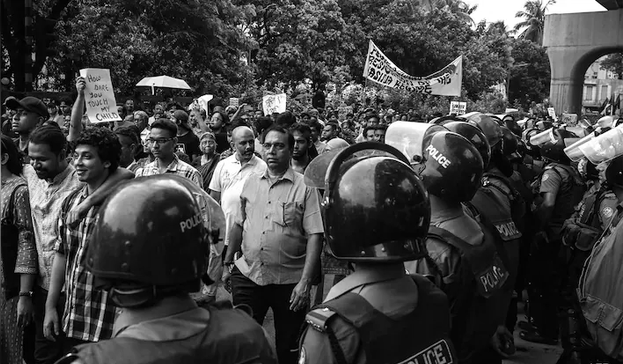
Sayeed’s death had drawn widespread attention after images and videos showed him standing with arms outstretched in defiance moments before he was killed. The incident intensified nationwide protests that evolved into a broader anti-government movement.
Chief prosecutor Aminul Islam said the tribunal convicted 30 individuals, describing Sayeed as having “ sacrificed his life to free the country from autocratic rule .” He added that the trial proceedings had been completed prior to his appointment.
However, defence lawyer Azizur Rahman questioned the prosecution’s case, alleging there was “ no sign of bullet shots ” on Sayeed’s body or the clothes he wore at the time of his death. The ICT-BD, originally established to prosecute collaborators from the 1971 Liberation War, has increasingly handled cases tied to political violence. Under its provisions, defendants tried in person can appeal before the Supreme Court .
In a separate case, the tribunal had earlier sentenced Sheikh Hasina to death on November 17 last year, finding her guilty of incitement and ordering the killing of around 1,400 people during the student-led July Uprising. The protests culminated in the toppling of her government on August 5, 2024, after which she fled to India and now faces charges of crimes against humanity.