
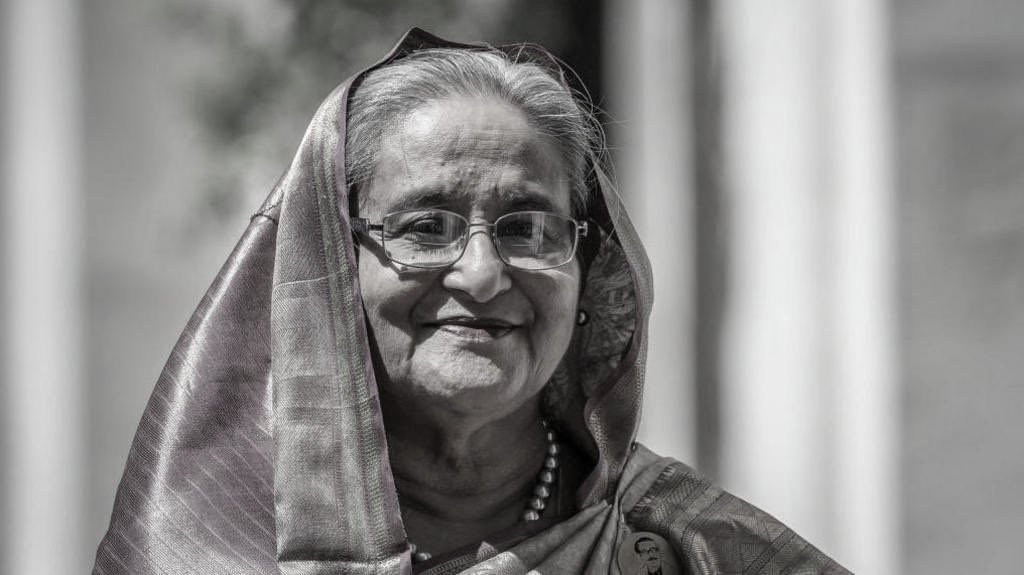
Bangladesh tribunal sentences Sheikh Hasina to death for crimes against humanity, raising diplomatic tensions with India
A special international crimes tribunal in Bangladesh has sentenced ousted Prime Minister Sheikh Hasina to death in absentia, finding her guilty of “crimes against humanity” over her government’s handling of the student-led protests in July–August 2024. The verdict, delivered by a three-member bench of the International Crimes Tribunal (ICT), also handed a death sentence to former Home Minister Asaduzzaman Khan Kamal, while a former police chief was sentenced to five years in prison after cooperating with prosecutors.
The tribunal’s 453-page judgment accuses Hasina of instigating violence, giving orders to kill protesters, and failing to restrain lethal force, including the use of drones, helicopters and live ammunition. According to the court, she made inflammatory remarks referring to students as “Razakars’ grandchildren” and gave directives to “shoot anywhere” at protestors. Prosecutors have described Hasina as the “mastermind and principal architect” behind the crackdown. The tribunal also ruled that she bore command responsibility over security forces that committed killings, torture and other inhumane acts during the unrest.
Hasina, now 78, has strongly condemned the verdict. Speaking from exile in New Delhi, she called the tribunal “biased, politically motivated and rigged,” arguing that she had lost control of the protests but never intended a “premeditated assault” on students. She further accused the interim government, led by Nobel laureate Muhammad Yunus, of seeking “vengeful prosecution” to permanently remove her and weaken her Awami League party.
The tribunal’s decision followed a long trial in which the prosecution presented extensive evidence, including audio recordings. In one such recording, Hasina allegedly ordered the use of lethal force. The court also found that she failed to take preventive or punitive measures against those under her command who carried out the violence.
Bangladesh’s interim government has fully backed the tribunal’s verdict, calling it “a necessary step to ensure justice for the hundreds of young lives lost during the 2024 protests.” Officials said the ruling demonstrates Bangladesh’s commitment to accountability regardless of political stature. The government has also moved to seize Hasina’s assets and announced that it will seek a renewed Interpol Red Notice to secure her return from India. Dhaka maintains that “no individual, however senior, can be exempt from responsibility for mass atrocities,” and has urged the international community to respect the court’s findings.
The verdict has sparked a tense response both domestically and internationally, raising questions about due process, political motivations and the stability of the nation’s fragile transition.
Hasina and Kamal remain in India, having fled Dhaka in August 2024 after the regime change. Dhaka has formally called on New Delhi to extradite them to face the sentences. But legal experts warn that India may refuse extradition, citing its own laws and constitutional protections.
Under India’s Extradition Act, 1962, the country is reluctant to hand over individuals facing the death penalty unless there are “binding assurances” that the sentence will not be carried out. Indian courts have consistently reviewed such requests and often seek clarity on due process and human rights guarantees. Moreover, legal analysts note that the charges against Hasina may be considered “political offences,” giving India further grounds to deny extradition under the bilateral treaty.
Critics argue that Hasina’s trial was politically charged, and rights groups have raised concerns that the tribunal was influenced by the interim government, which lacks an electoral mandate. If India is asked to extradite her, the new death sentence could become a major legal and diplomatic stumbling block—one that New Delhi is expected to handle cautiously as it balances legal obligations with regional stability.