
Bangladesh sees sharp rise in Islamist violence, civil society warns of cultural ‘Purge’
A wave of concern has been expressed by eminent Bangladeshi civil society members after the arrest of a Abul Sarkar singer on allegations of hurting public religious sentiments was followed by attacks on fellow mystic minstrels by Islamist groups.
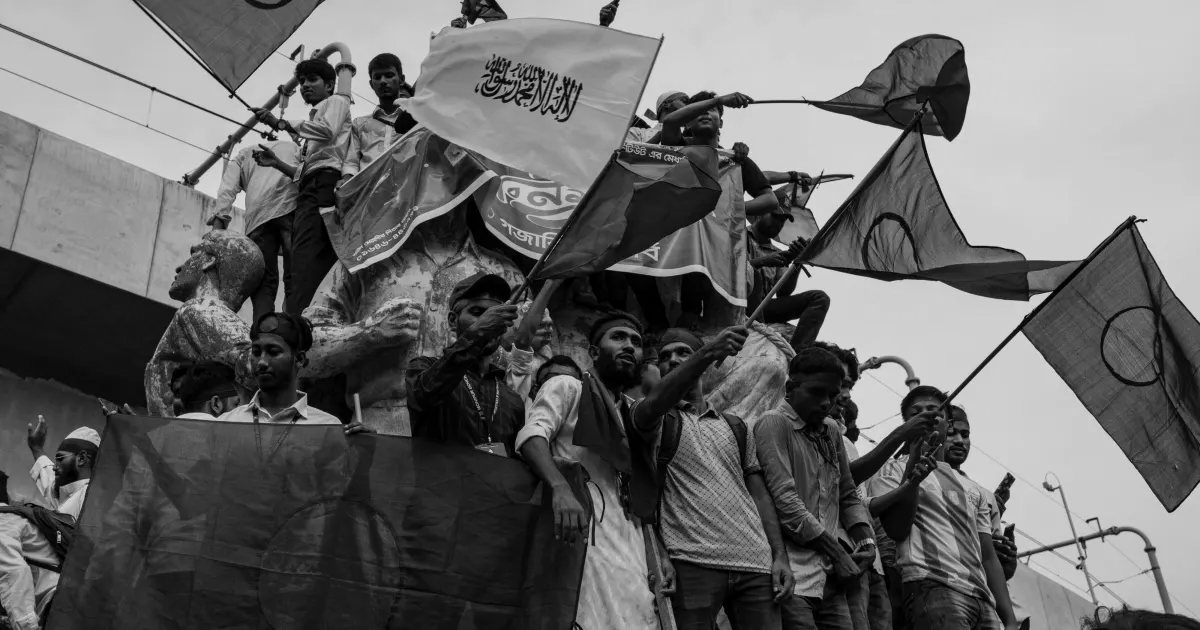
In a statement signed by 250 distinguished citizens, it was asserted that religious strife had increased since the 2024 ouster of the Sheikh Hasina led Awami League government. It was stated that, in the period following the July mass uprising, a surge in religious extremism had been observed. A particular group was described as having positioned itself as the sole arbiter of Islam, with a “purge” across the country said to have been undertaken.
A “suffocating situation” was described as having been created through the repeated invocation of claims of wounded public sentiment. It was alleged that more than 200 shrines had been demolished, individuals had been branded murtad, kafir and shatim, bodies had been exhumed and burnt, and Abul Sarkar and fakirs had had their hair forcibly cut in public. Restrictions on women and disruptions of cultural events were also said to have been carried out as part of attempts to eliminate differing beliefs and practices.
The signatories, mostly academics critical of the previous regime, including Professor Anu Mohammad and Professor Salimullah Khan said that law-enforcement agencies had not taken effective steps to curb mob violence or vigilantism. Silence by authorities was described as having encouraged the violence, while detentions of victims and fabricated cases against survivors were alleged.
Rights group Ain o Salish Kendra expressed “deep concern” over attacks on followers of singer Abul Sarkar after his arrest. The Bangladesh chapter of Transparency International stated that a worrying rise in hostility to religious harmony was being reflected in recent developments.
Poet-activist Farhad Mazhar warned at a Dhaka rally that “religious fascism” was emerging, saying the arrest of baul singer Abul Sarkar was unacceptable. Sarkar was detained by the detective branch in Madaripur for allegedly provoking riots and hurting religious sentiment, and was jailed the same day. Two days later, Islamists under the banner of Tawhidi Janata attacked fellow singers during a rally demanding his release, injuring four.
Academics noted that Abul Sarkar, rooted in the syncretic traditions of Lalan Shah, long pre-dated the puritan movements associated with groups like Tawhidi Janata. Protests and torch marches were held by student and cultural groups in Dhaka and Jahangirnagar University, while baul artistes demonstrated outside the National Press Club.
Tawhidi Janata-linked mobs have reportedly been disrupting cultural events, demolishing Sufi shrines, and attacking minority communities since last year. Legal expert Sara Hossain questioned why such cases were being accepted so readily despite ongoing debates on freedom of expression.
Cultural Affairs Adviser Mostofa Sarwar Farooki said the Home Ministry was handling a sensitive matter, acknowledging that Abul Sarkar had faced repression under multiple governments. Interim government spokesperson Shafiqul Alam condemned the violence and said efforts were underway to identify attackers. However, The Business Standard noted that mere condemnation lacked credibility as the attackers appeared to be acting openly and with impunity, calling Farooki’s defence inadequate for a government that promised reform.