
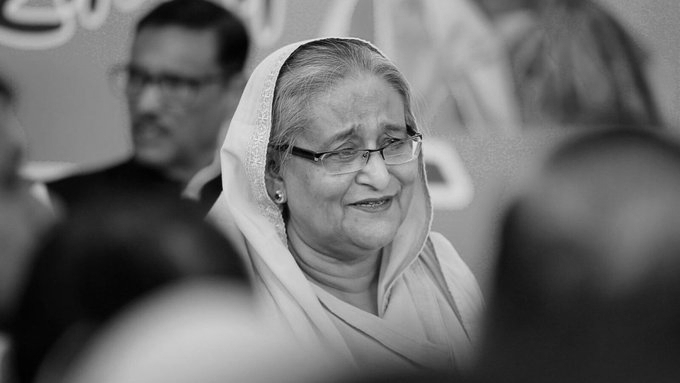
Bangladesh May Take Sheikh Hasina Extradition Dispute With India To ICJ, Says Speaker
Bangladesh may approach the International Court of Justice (ICJ) if India refuses to extradite former prime minister Sheikh Hasina, Parliament Speaker Hafiz Uddin Ahmed has said, escalating tensions between New Delhi and Dhaka as the former leader prepares for a possible return on December 16.
Ahmed made the remarks during a six-day visit to Pakistan, telling BBC Urdu that Bangladesh could approach the international court if India failed to hand over Hasina. He also said she would be sent directly to prison if she returned. Dismissing her proposed December homecoming, Ahmed claimed she would not return for another 10 years and suggested the announcement was intended to keep her supporters hopeful.
However, Hasina's aides have indicated that she remains determined to return on December 16, Bangladesh's Victory Day. Her spokesperson, Syed Mozammel Ali, had requested that the government arrange a flight from Delhi to Dhaka through national carrier Biman Bangladesh Airlines.
In a fresh development, close aide Abu Obaidah Arin told the BBC that Hasina was prepared to walk across the India-Bangladesh border if arrangements for a commercial flight failed. He claimed the Awami League was preparing to mobilise millions of supporters to welcome her, potentially forming a human chain stretching from the border to Dhaka. According to him, party leaders had identified at least nine possible border-crossing points and were surveying the routes.
Dhaka, however, has rejected her request for a government-arranged flight. Bangladesh's State Minister for Foreign Affairs Humaiun Kobir has maintained that Hasina can return only through the extradition treaty, under arrest and strict surveillance.
India has said it is examining Bangladesh's extradition request under established procedures. External Affairs Ministry spokesperson Randhir Jaiswal has also distinguished between formal extradition and Hasina's possible voluntary return.
Hasina, who fled Bangladesh in August 2024 following a student-led uprising that ended her 15-year rule, was sentenced to death in absentia in November 2025 for crimes against humanity linked to the crackdown on protesters. She has denied the charges. The United Nations estimated that up to 1,400 people were killed during the unrest.
Ahmed also accused India of treating Bangladesh like a "colony" during Hasina's tenure, questioned its role in the 1971 Liberation War and raised the Kashmir dispute.