
Bangladesh Deploys AI Surveillance to Curb Dhaka Traffic Gridlock, Violations Auto-Fined
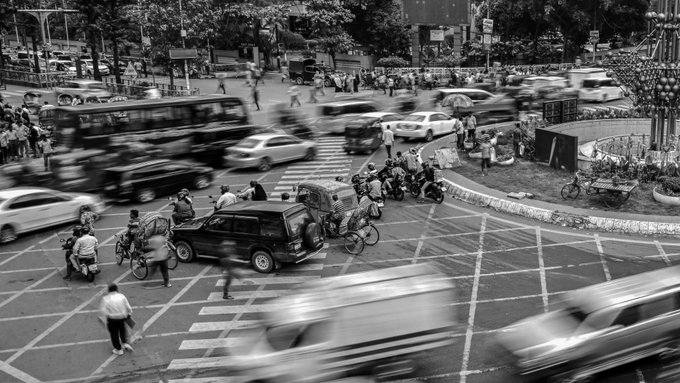
Dhaka, a city of more than 22 million people, has long been notorious for gridlock so severe that buses, cars, motorcycles, and pedal rickshaws jostle for space, treating traffic signals, pedestrian crossings, and even police officers as mere obstacles. Confrontations between enforcement personnel and defiant drivers were routine, officers were sometimes struck by vehicles refusing to obey commands. Now, Bangladesh is turning to artificial intelligence for an answer.
In April, Dhaka Metropolitan Police linked existing traffic-monitoring camera feeds to AI software designed to automatically detect violations, ranging from signal and lane offences to illegal parking. The cameras have been installed at 22 key intersections, including Bijoy Sarani, Gulshan, Shahbagh, and Karwan Bazar, and are paired with a new e-prosecution system that files digital cases against violators.
The human impact is already visible. Motorist Hannan Rahman Jibon, among the first caught, ran a red light and received an automatic 2,000 taka fine , delivered by text message to the vehicle's owner at home. "I am more careful now," he said. Traffic Sergeant Nazim Uddin echoed the shift: "Since AI was introduced, people have started obeying the law and we have been spared the everyday quarrels." Inside police headquarters, analyst Sharmin Afroze monitors live feeds flagged by the system, which records around 800 violations daily. Police are currently fining only the worst offenders while issuing warnings to others. So far, at least 300 vehicles have been prosecuted.
Yet challenges persist. Some camera feeds show blurred or unreadably small number plates , and pedal rickshaws, a defining feature of Dhaka's roads, remain outside the system's current enforcement scope. The deeper question, however, may be institutional. Professor Hasib Mohammed Ahsan of Bangladesh University of Engineering and Technology warned that long-term success depends less on technology and more on sustained enforcement and accountability : "We have spent huge amounts on traffic signals, but those efforts were never sustained."