
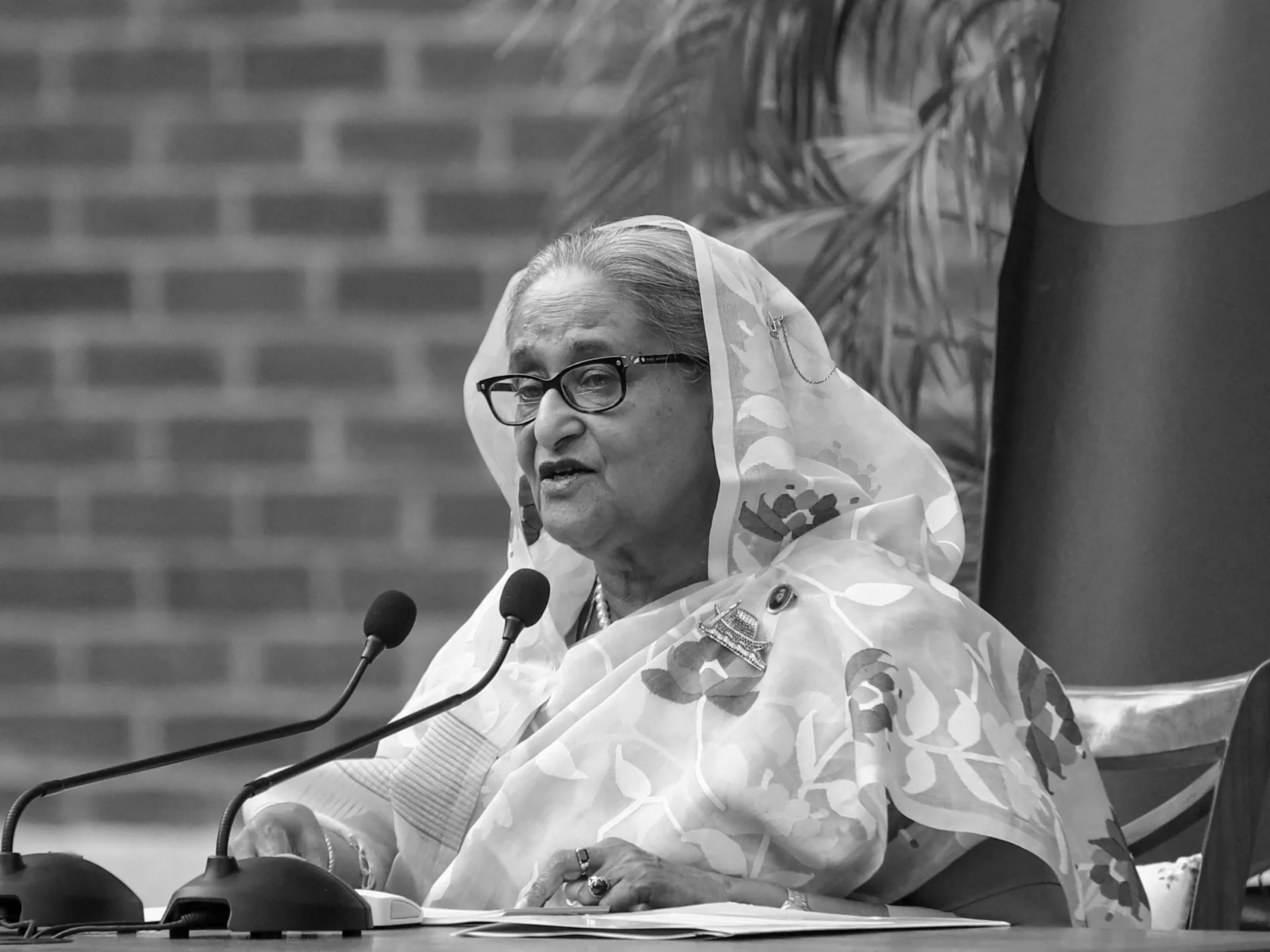
Bangladesh court to frame charges against Sheikh Hasina in sedition case on January 21
A Bangladesh court on Monday fixed January 21 for the framing of charges in a sedition case against deposed former prime minister Sheikh Hasina and 285 others , marking a key step towards the start of trial proceedings.
The case is based on allegations that Hasina and several hundred leaders and supporters of the Awami League participated in a virtual meeting in December 2024 organised by a group known as the ‘Joy Bangla Brigade’ . During the meeting, the accused allegedly plotted to overthrow or destabilise the interim government headed by Nobel laureate Muhammad Yunus , according to a report by news portal tbsnews.net .
The Joy Bangla Brigade is described as a strong supporter of the Awami League and the political legacy of Bangladesh’s founding father Sheikh Mujibur Rahman , Hasina’s father.
Following the hearing, Judge Abdus Salam of Dhaka Special Judge’s Court-9 announced January 21 as the date for framing of charges. Framing of charges is the stage at which the court formally specifies the offences and decides there is sufficient prima facie evidence to proceed with a full trial.
Hasina has been living in India since August 5, 2024 , after she fled Bangladesh amid massive, student-led nationwide protests against her government. Muhammad Yunus assumed charge as head of the interim government on August 8, 2024 .
The sedition case was filed in March 2025 by the Criminal Investigation Department (CID) , which submitted a charge sheet on July 30 , naming 286 accused . The court accepted the charge sheet on August 14 and issued arrest warrants against all accused.
Subsequently, a travel ban was imposed on September 11. On October 14, the court ordered newspaper notices directing 261 “absconding accused” , including Hasina, those who have failed to appear before the court despite warrants to surrender.
In November 2025 , the case was transferred from the Dhaka Metropolitan Magistrate’s Court to the Dhaka Metropolitan Sessions Judge’s Court after it was declared ready for trial.
Separately, Hasina was sentenced to death in absentia in November by a special tribunal for alleged crimes against humanity , linked to her government’s violent crackdown on student-led protests last year.