
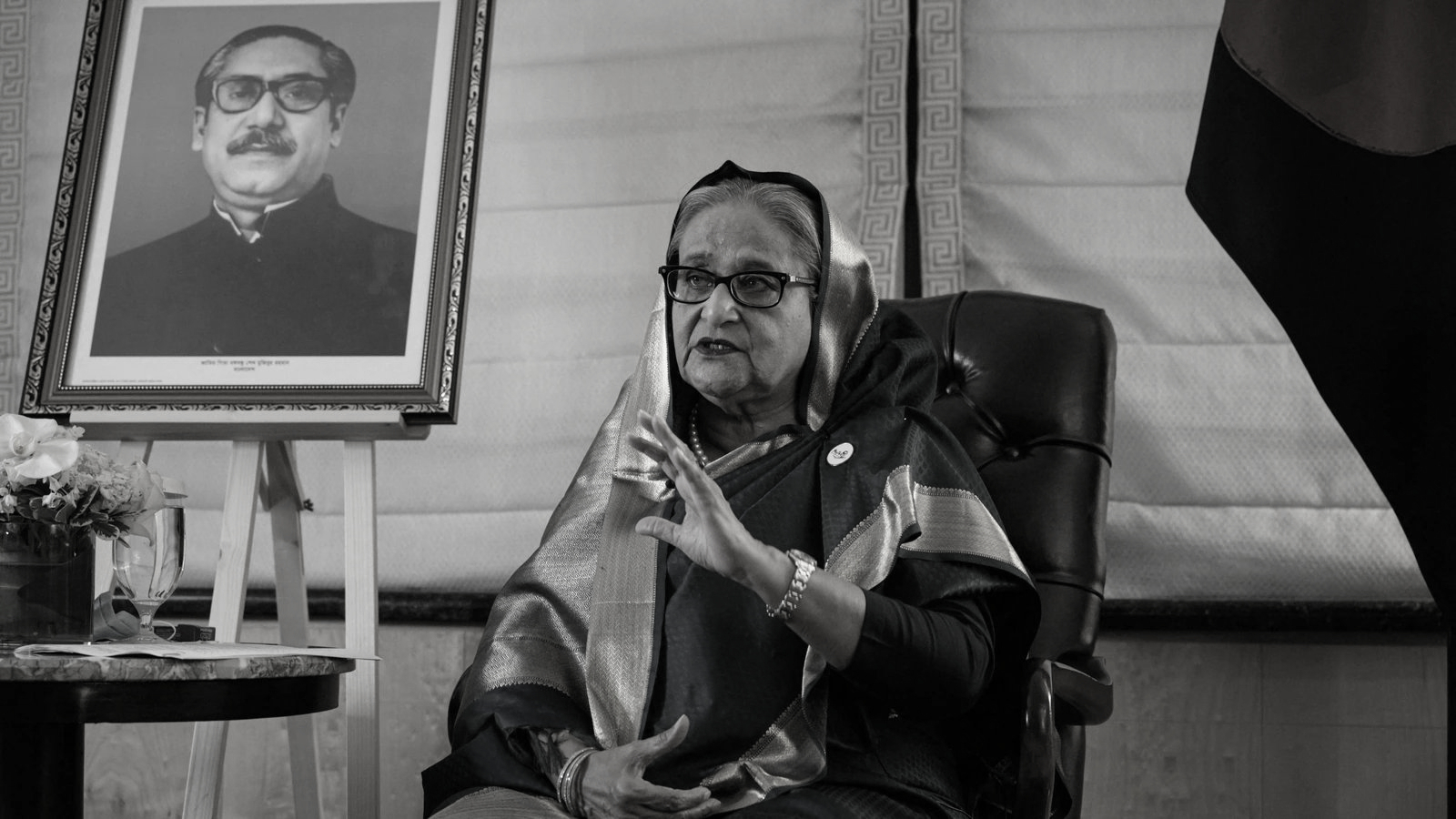
Bangladesh court sentences ousted PM Hasina to 21 years in jail in 3 corruption cases
A Bangladesh court on Thursday sentenced former Prime Minister Sheikh Hasina to 21 years in prison after finding her guilty in three corruption cases linked to irregularities in land allocations under the RAJUK New Town Project in Purbachal, near Dhaka. The Special Judge Court-5 delivered the verdict in her absence, as Hasina is currently not in Bangladesh and was tried in absentia. The court awarded seven years’ imprisonment in each of the three cases, to be served consecutively.
The Anti-Corruption Commission had accused Hasina of misusing her authority as prime minister to illegally obtain multiple residential plots in the Purbachal project for herself and her family, bypassing legal procedures and eligibility rules. The court observed that the plots had been allotted without a proper application and in violation of established regulations. Her children, Sajeeb Wazed Joy and Saima Wazed Putul, were also convicted in connection with one of the cases and sentenced to five years in prison each.
This ruling comes just days after a separate tribunal sentenced Hasina to death in a case related to alleged crimes against humanity during the crackdown on a student-led uprising in 2024, intensifying the legal and political storm surrounding the former leader.
Following the convictions, the Bangladesh government formally requested India to extradite Hasina under the existing bilateral extradition arrangements. India has responded cautiously, stating that it is examining the request in accordance with its domestic legal procedures, while emphasizing the importance of upholding legal norms and maintaining stability in relations with Bangladesh.
With national elections scheduled for February 2026 under an interim government, questions are rising over whether Hasina’s party, the Awami League, will be able to participate fully and field candidates given the legal restrictions and leadership uncertainty. Analysts say that the verdicts have thrown the political landscape into turmoil, and speculation is rife over how the party will mobilize support, whether opposition groups may capitalize on the situation, and how voters will respond, leaving Bangladesh’s political climate tense and highly uncertain in the months leading up to the elections.