
Bangladesh Accuses Sheikh Hasina Of Fueling Garment Workers’ Unrest As Protests Turn Violent
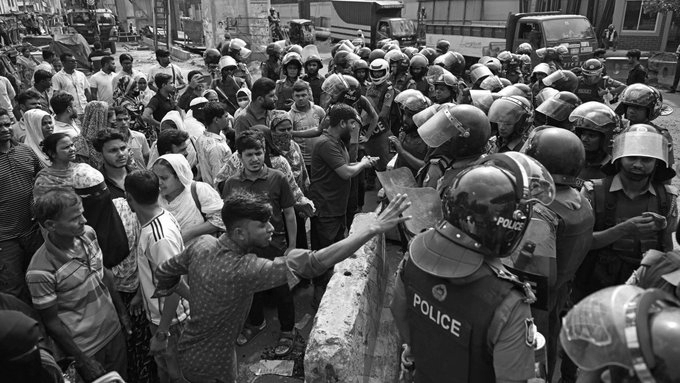
Bangladesh's government has accused deposed prime minister Sheikh Hasina of fuelling labour unrest as violent protests by garment workers demanding higher wages entered their fourth day on Tuesday, November 3. The demonstrations have forced nearly 1,000 garment factories to suspend operations, disrupted production across major industrial areas and prompted authorities to deploy additional paramilitary forces.
According to the Bangladesh Garments Manufacturers and Exporters Association (BGMEA), another 300 factories were forced to shut down following fresh violence, taking the total number of affected units to nearly 1,000 since the latest protests began on October 31. The unrest has spread across Dhaka, Gazipur, Ashulia, Mirpur, Narayanganj and Mymensingh, with workers clashing with police, blocking roads and disrupting industrial activity.
The workers are demanding a minimum monthly wage of 30,000 taka (approximately Rs 23,000), more than double the existing 12,500 taka (around Rs 9,507). They say rising costs of food, housing, transport and healthcare have severely affected their purchasing power.
Prime Minister Tarique Rahman's Information Affairs Adviser Zahedur Rahman accused Hasina of orchestrating the unrest, alleging that her supporters were attempting to destabilise the government. "I do not believe Sheikh Hasina will let the government remain in peace as long as she is alive. As long as Hasina would remain alive, acts of sabotage could continue," he said at a media briefing.
Home Minister Salahuddin Ahmed also alleged that garment factory owners linked to Hasina's Awami League were fuelling the protests. Labour and Employment Adviser Mahdi Amin claimed the government had found evidence of the infiltration of "fugitive evil powers" into the workers' movement, warning that those involved would face legal action.
Police have arrested more than 100 people in connection with the violence, including around 50 allegedly linked to Awami League politics. Hasina fled to India after her government was ousted in a student-led uprising on August 5, 2024. A special tribunal subsequently sentenced her to death in absentia.
The government has constituted a six-member minimum wage board to review workers' salaries and recommend a revised pay structure. However, the board is yet to hold its first meeting as demonstrations continue.
Clashes have been reported in Narayanganj, Ashulia and Mirpur, with protesters allegedly throwing stones and bricks at police. Security personnel used batons, tear gas and sound grenades to disperse crowds. Authorities have also deployed additional Border Guard Bangladesh (BGB) personnel, including 12 platoons in Gazipur and two in Narayanganj. The force is monitoring the situation using drones and body-worn cameras.
The unrest threatens Bangladesh's crucial readymade garment industry, which employs around four million people and contributes more than 80 per cent of the country's export earnings. Bangladesh is the world's second-largest garment exporter after China, supplying international brands including H&M, Zara and Gap.