
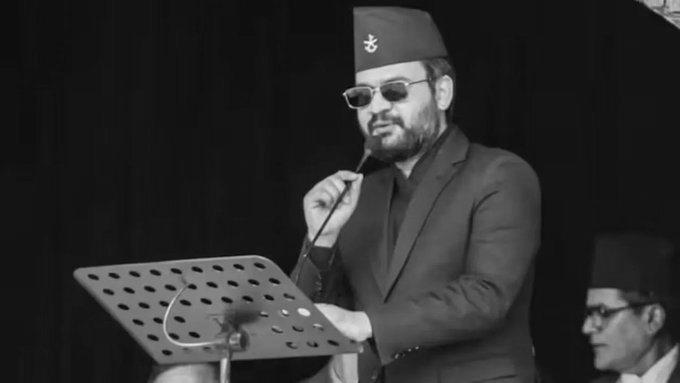
Balen Shah sworn in as Nepal’s youngest Prime Minister, Modi extends congratulations
Balendra Shah, popularly known as ‘Balen’ , was sworn in as the new Prime Minister of Nepal on Friday, marking a significant generational shift in the Himalayan nation’s political landscape. Soon after his swearing-in, Indian Prime Minister Narendra Modi congratulated him and expressed hope for strengthening bilateral ties.
In a message, Modi said he looked forward to working closely with Shah to further deepen India-Nepal friendship and cooperation for the mutual benefit of both nations.
A 35-year-old leader of the Rastriya Swatantra Party (RSP) , Shah rose from an unconventional background to the country’s top political office. A trained structural engineer and former rapper, he first gained prominence as the independent mayor of Kathmandu before emerging as a national figure amid growing public demand for political reform.
The RSP secured a sweeping mandate in the March 5 House of Representatives elections, winning 182 out of 275 seats, enabling it to form a majority government. Shah’s ascent follows months of political instability that led to the ouster of the government headed by K P Sharma Oli.
His campaign, however, stood out for its striking simplicity and brevity. Over a two-week election period, Shah reportedly delivered speeches totaling just 26 minutes across 4–5 public meetings nationwide. Despite the limited speaking time, the party garnered approximately 52 lakh votes under the proportional representation system.
Observers noted that each speech lasted only a few minutes and was markedly different from traditional political rallies. Shah adopted an informal, conversational tone often engaging audiences with everyday questions about food, lifestyle, and local concerns rather than delivering lengthy political rhetoric.
He also tailored his outreach linguistically, speaking in Maithili in Janakpur, using Doteli expressions during his western Nepal tour, and addressing other audiences in Nepali. His messaging avoided criticism of political opponents and refrained from making sweeping promises, focusing instead on local issues and governance.
In a notable departure from convention, Shah did not explicitly ask for votes during his campaign. At one rally, he said he was seeking an opportunity to work rather than electoral support, while at another, he urged voters to choose candidates based on merit rather than identity.
His speeches also emphasised national pride and local potential, highlighting Nepal’s natural and cultural richness instead of drawing comparisons with foreign models. At campaign events, Shah was often seen ringing a small metal bell—the party’s symbol before speaking, reinforcing his distinct campaign style.
Political observers say Shah’s concise, issue-focused, and non-confrontational approach resonated strongly with voters, particularly the youth, contributing to his party’s decisive electoral victory.
With his swearing-in, expectations are high that Shah will translate his reform-oriented campaign into governance, addressing key challenges including economic stability, employment, and institutional accountability while navigating Nepal’s relations with regional partners.