
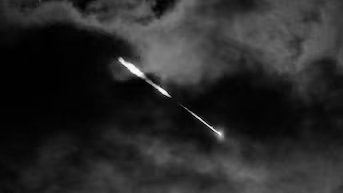
Bahrain Rocked By Explosions As Iran Launches Second Drone Attack In Three Days, Targets US Radar
Bahrain was rocked by explosions and air raid sirens on Sunday after Iran launched its second drone attack in three days, raising fresh concerns about an escalation of the nearly nine-month-old US-Israeli war against Iran.
Bahrain issued its first threat alerts since September, urging residents to remain calm and move to safe locations. The country's military said its air defences intercepted several incoming attacks. Iran's Islamic Revolutionary Guard Corps (IRGC) claimed six drones targeted a US air defence radar at the Al-Riffa helicopter base in retaliation for American aggression. However, there was no immediate independent confirmation that the radar was hit or that Sunday's attack caused casualties or damage. On Friday, US Central Command said it had intercepted two Iranian drones without damage or casualties.
Bahrain, which hosts the US Navy's Fifth Fleet, condemned Tehran's actions and said it would not allow its territory to become an arena for settling disputes between Washington and Tehran. The IRGC warned of stronger retaliation against further American military action and maintained that the Strait of Hormuz remained closed.
Meanwhile, US intelligence estimates that Iran still possesses between 1,500 and 2,500 missiles, according to officials cited by The Wall Street Journal. Although described as a low-confidence assessment, the figures suggest Tehran retains significant strike capabilities despite months of US-Israeli attacks. A separate Western assessment estimated at least 1,700 ballistic missiles remain, with Iran reportedly producing around 50 missiles monthly. The arsenal is influencing President Donald Trump's deliberations over further strikes.
Trump has reportedly told advisers he may hold off on attacking Iran if Tehran and its Houthi allies avoid fresh provocations. However, Israeli Prime Minister Benjamin Netanyahu is reportedly pushing for renewed military action.
Amid the tensions, Iran has opened a military training centre for women volunteers at Tehran's Azadi Square. Under the Janfada campaign, IRGC personnel are training women from different age groups in firearms handling, rifle shooting, rappelling and ziplining. The programme, launched under the Basij militia, aims to prepare civilians for national defence and emergency support, including a possible US ground assault.
Iranian Foreign Ministry spokesperson Esmaeil Baqaei also rejected Trump's claim that Tehran had been waging war against Washington since the 1979 Islamic Revolution. Citing the 1953 CIA-backed coup, US support for Iraq during the Iran-Iraq War, the 1988 downing of an Iranian passenger aircraft that killed 290 people and the assassination of Qassem Soleimani, he accused Washington of rewriting history to escape responsibility for its actions. Trump had defended the military campaign by saying the US was seeking a "total victory".
In Yemen, Saudi-backed government forces withdrew from Dhubab Airport and the Bab el-Mandeb area, redeploying towards Aden and leaving Iran-aligned Houthis with greater control over the strategic passage. The withdrawal follows a Houthi offensive in September and a government counteroffensive in October. The Houthis have also intensified attacks on Saudi ports, airports and oil facilities. On Sunday, Saudi-led coalition forces said they intercepted two Houthi ballistic missiles targeting Riyadh and three drones over the Eastern Province.
Jordan and Egypt condemned Iran's attacks on Bahrain, warning that violations of Gulf sovereignty threaten wider Arab security and regional stability.