
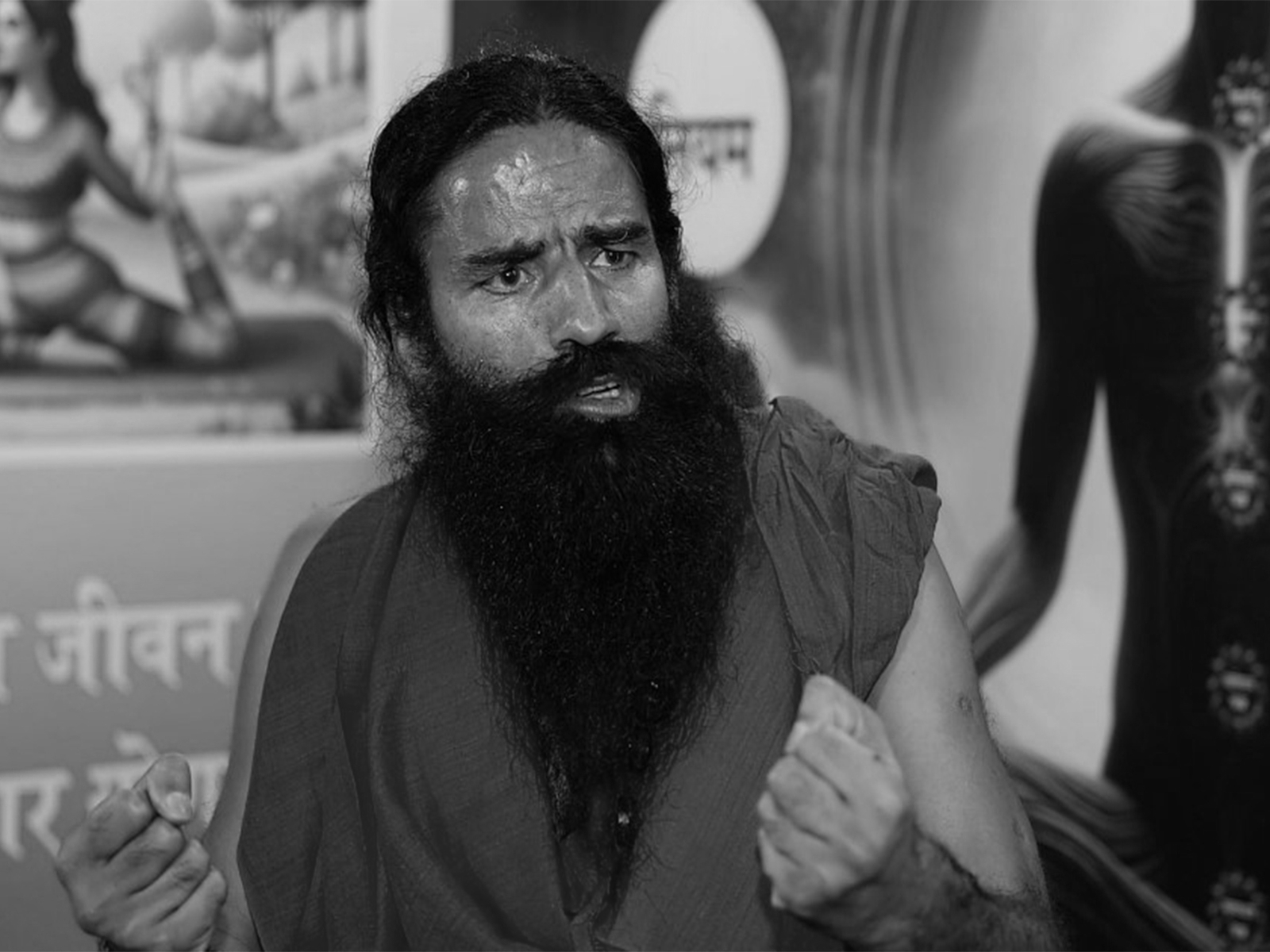
Baba Ramdev defends RSS as ban debate resurfaces, calls critics ‘anti-national forces’
As the debate over banning the Rashtriya Swayamsevak Sangh (RSS) intensifies, Yoga Guru Baba Ramdev has strongly defended the organisation, calling it a pillar of nationalism and accusing its critics of pursuing “selfish and anti-national motives.”
In an interview with ANI, Ramdev likened the RSS to the Arya Samaj, crediting leaders like Dr K. B. Hedgewar and M. S. Golwalkar for their lifelong service to the nation. Dr Hedgewar, who founded the RSS in 1925, envisioned it as a movement to unite Indians through cultural nationalism, while Golwalkar, his successor, shaped its ideology and organisational discipline.
“The RSS, like the Arya Samaj, is a nationalist organisation. From Hedgewar to Golwalkar, many great men have practised penance for the country. Even today, millions of Sangh workers are working for the nation,” Ramdev said, adding that “anti-national and anti-Sanatana forces oppose the RSS for their hidden agendas.”
His remarks come amid a renewed political row over the RSS, following Congress president Mallikarjun Kharge’s reference to Sardar Vallabhbhai Patel’s 1948 decision to ban the organisation. Kharge claimed the RSS has historically been linked to law and order problems and reiterated his personal opinion that the organisation should once again be banned, calling for tighter restrictions on its activities.
In Karnataka, minister Priyank Kharge recently sought a ban on RSS activities in government schools, colleges, and temples, arguing that such involvement violates secular principles. However, the Dharwad bench of the Karnataka High Court has temporarily stayed the state government’s order, which had declared gatherings of more than ten RSS members in public premises illegal without prior permission. The state has also indicated it is considering new legal measures to regulate RSS activity in public institutions.
Responding to the criticism, RSS General Secretary Dattatreya Hosabale said the organisation has nothing to hide and questioned the rationale behind such demands. “There must be a reason behind the ban. What will be gained by banning an RSS that is engaged in nation-building? The public has already accepted the RSS,” he stated during a press conference in Jabalpur.
Founded nearly a century ago, the RSS describes itself as a cultural and social organisation dedicated to national service, though its ideology inspired the formation of the Bharatiya Janata Party (BJP) in 1980. The organisation has been banned three times in independent India, in 1948 (after Gandhi’s assassination), 1975 (during the Emergency), and 1992 (after the Babri Masjid demolition), but each time the ban was later lifted after inquiries found no direct evidence of wrongdoing.
As political voices grow louder on both sides, the question of banning the RSS has once again become a flashpoint, between those who view it as divisive and those who see it as the backbone of Indian nationalism.