
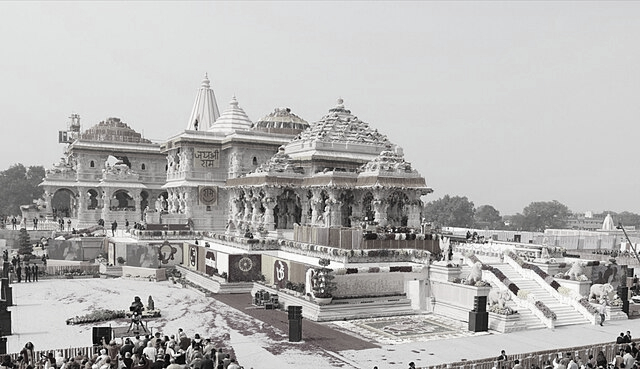
Ayodhya prepares for heavy footfall as Ram Temple activities gather pace
Ayodhya continues to remain at the centre of national attention as the city witnesses a surge in religious activity, large-scale administrative preparations, and rapid infrastructure development following the inauguration of the Ram Temple.
The Shri Ram Janmabhoomi Teerth Kshetra Trust has intensified preparations to manage an ever-growing influx of pilgrims visiting the Ram Temple. With major religious observances and anniversaries approaching, authorities expect footfall to reach levels comparable to large religious congregations. Arrangements are being strengthened to ensure smooth crowd movement, safety and convenience for devotees.
As part of these efforts, the Trust is constructing large footwear storage facilities capable of handling thousands of visitors at a time, while additional security infrastructure, including a boundary wall around parts of the temple complex, is also underway. Inputs from central security agencies have been incorporated into the planning to enhance safety.
Adding to the religious calendar, Ayodhya is set to host five-day rituals later this month to mark the second anniversary of the Ram Temple consecration ceremony. The programme will feature devotional events, Ram Katha recitations and cultural performances, with senior political leaders expected to attend the main ceremony.
The city’s transport infrastructure has also seen focused attention. The Maharishi Valmiki International Airport has stepped up winter preparedness, particularly to deal with fog-related disruptions, amid a steady rise in passenger traffic driven by pilgrimage tourism. Officials say improved coordination and passenger facilities are being put in place to minimise inconvenience.
On the cultural front, Uttar Pradesh Chief Minister Yogi Adityanath recently highlighted Ayodhya’s connection to Diwali, following UNESCO’s recognition of the festival as an intangible cultural heritage, reiterating the city’s symbolic importance in India’s civilisational narrative.
Ayodhya has also featured in political and diplomatic discourse. The recent saffron flag hoisting ceremony at the Ram Temple, attended by Prime Minister Narendra Modi, drew international attention, prompting a strong rebuttal from India to critical remarks made by Pakistan.
Meanwhile, local political developments have unfolded with the Samajwadi Party dissolving its district and city units in Ayodhya, citing organisational shortcomings. Law-and-order issues have also remained in focus, with authorities tightening security during sensitive dates and investigating recent road accidents involving pilgrims on highways leading to the temple town.
Parallel to religious developments, urban transformation continues at pace. Ayodhya is witnessing major upgrades in roads, rail connectivity, public amenities and tourism infrastructure as part of a long-term master plan aimed at positioning the city as a global spiritual and cultural destination.
With sustained pilgrim inflow, high-profile events and ongoing construction, Ayodhya is entering a new phase where faith, governance and development intersect, reshaping the historic town’s role on India’s national and global map.