
Awami League questions interim govt intentions to conduct democratic election
Bangladesh’s Awami League on Saturday alleged that it has been barred from contesting the upcoming parliamentary elections because the interim government fears the party’s continued popularity, and questioned the administration’s ability to restore democracy in the country.
Addressing a media briefing in New Delhi, senior Awami League leaders Hasan Mahmud and Mohibul Hasan Chowdhury said the Muhammad Yunus-led interim government in Dhaka was incapable of conducting free and fair elections and had denied the party a level playing field.
“Under this administration, a level playing field for the Awami League will never be possible,” said Mahmud, a former minister in the Sheikh Hasina-led government . He maintained that the party remains committed to democratic processes. “We want to participate in the election. We have always come to power through elections and we believe in people’s power,” he said.
While the interim government has publicly stated that its mandate is to stabilise the country and restore democratic order following last year’s political upheaval, Awami League leaders argued that its actions contradict those claims. They said that excluding a major political party from the electoral process undermines democratic norms and raises serious questions about the credibility of the transition.
Mahmud alleged that the decision to bar the Awami League from the polls was taken in view of the party’s popularity. “ There must be rule of law . We shall definitely return to the country along with Sheikh Hasina, our leader,” he said.
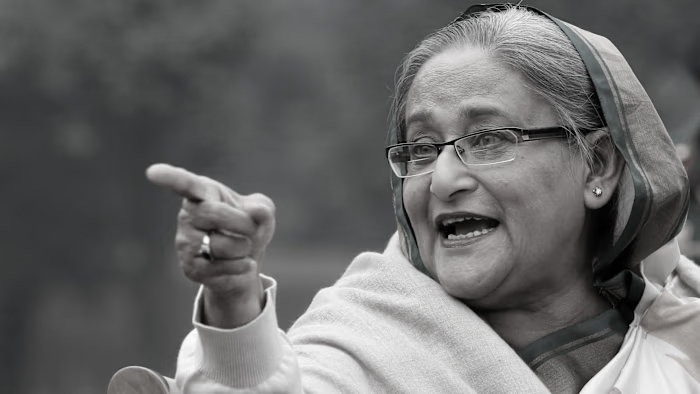
Former prime minister and Awami League chief Sheikh Hasina (78) has been living in India since August 2024 after fleeing Dhaka following the collapse of her government amid massive anti-government protests.
The Awami League leaders also accused the interim dispensation of failing to protect minorities in Bangladesh, claiming that law and order had deteriorated under the current administration.
Political observers note that while the interim government may be aiming to restore democracy, its methods remain under serious dispute, and its credibility will ultimately hinge on whether upcoming elections are inclusive, competitive and conducted within a clear and transparent framework.
The interim government has not yet responded to the allegations.