
Autism Inclusion Takes Centre Stage with Govt, Schools and NGOs Leading Efforts
As global attention intensifies during Autism Awareness Month , fresh research and policy discussions are converging on a common goal building more inclusive systems for individuals with Autism Spectrum Disorder (ASD). Experts say the conversation is shifting from awareness to action , with education reform, early intervention, and community support taking centre stage.
Observed worldwide, the campaign begins with World Autism Awareness Day, which this year emphasises acceptance, inclusion, and rights-based approaches . In India, authorities are reinforcing commitments under the Rights of Persons with Disabilities Act 2016, focusing on early diagnosis, inclusive education, and accessibility . Across April, schools, hospitals, and public institutions are hosting awareness drives, training workshops, and outreach programmes aimed at parents, teachers, and healthcare professionals.
Complementing these efforts, a study by SMART Technologies in collaboration with the University of Melbourne highlights a persistent gap between diverse classrooms and standardised teaching methods . The report outlines 36 evidence-based recommendations , calling for flexible learning models, visual engagement tools, structured collaboration, and psychologically safe environments to support neurodivergent learners.
Autism, a lifelong neurodevelopmental condition, affects communication, behaviour, and sensory processing across life stages. Children often face barriers in rigid school environments, while adolescents may experience anxiety and social challenges . In adulthood, limited workplace flexibility can restrict opportunities. Experts also note that many individuals engage in “masking” to fit social norms, which can lead to stress and burnout . Co-occurring conditions such as Attention Deficit Hyperactivity Disorder (ADHD) further underline the need for personalised support systems .
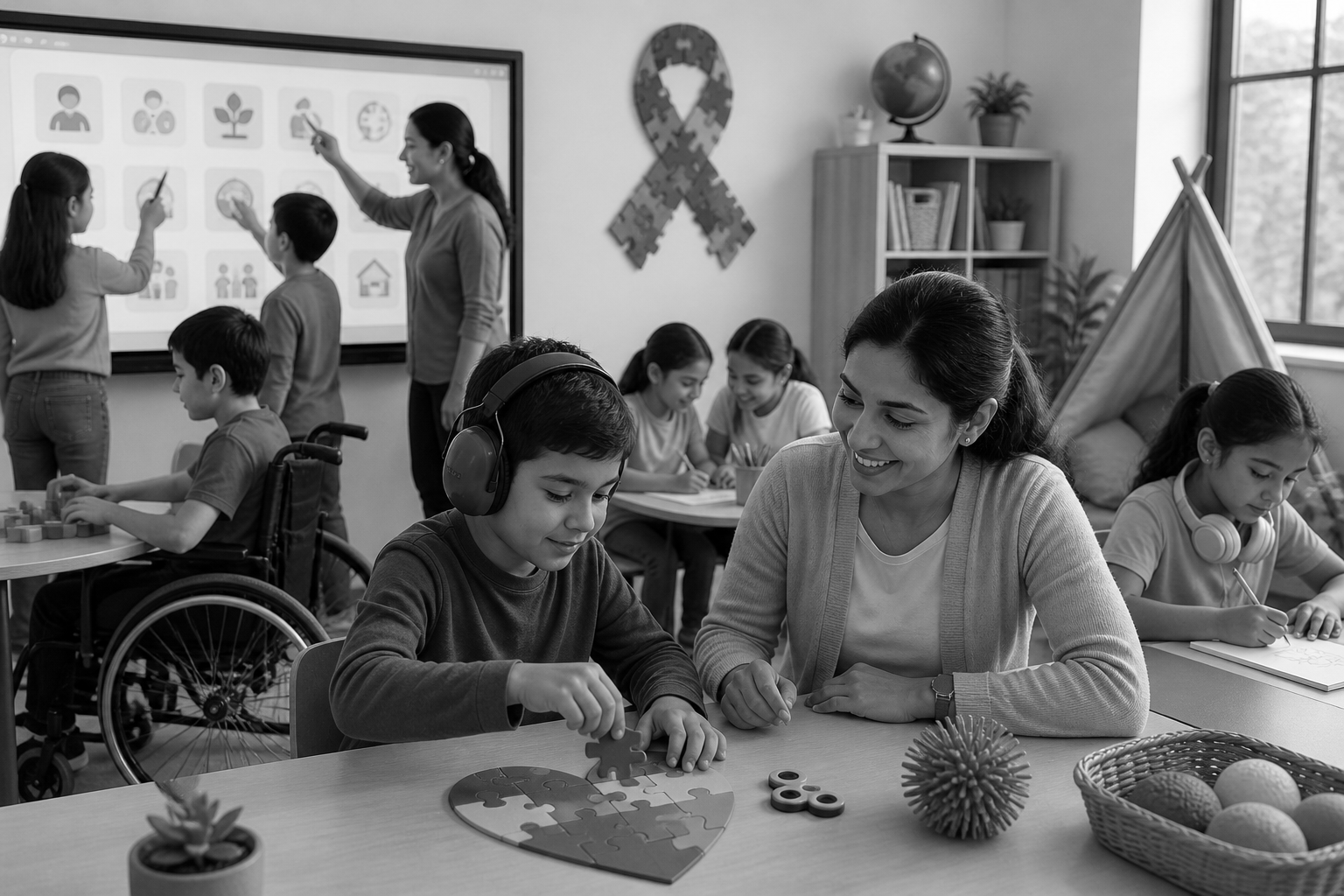
Practical solutions are gaining traction, including assistive technologies, multimodal learning tools, and sensory-friendly classrooms . Platforms like Lumio and SMART Board demonstrate how digital innovation can enable more inclusive participation. Experts emphasise early identification and interventions , including therapies such as speech support and approaches like Applied Behavior Analysis (ABA), to improve long-term outcomes.
Alongside government initiatives, non-governmental organisations (NGOs) are playing a pivotal role in bridging gaps in awareness and services. In India, organisations such as Action for Autism, India Autism Center, and Forum for Autism are driving education, therapy access, and policy advocacy . Institutions like Communication DEALL and Sweekaar Academy of Rehabilitation Sciences focus on early intervention and rehabilitation , while global groups such as Autism Speaks continue to lead awareness campaigns and research funding .
Despite progress, challenges remain in India, including underdiagnosis, limited trained professionals, and social stigma . Experts argue that sustained investment in teacher training, healthcare infrastructure, and public awareness is essential to translate policy into practice.
Importantly, the evolving narrative is also highlighting strengths many autistic individuals demonstrate strong memory, attention to detail, and deep focus , traits increasingly valued in modern workplaces. As governments, educators, and NGOs align efforts, autism awareness is emerging as a catalyst for systemic transformation , ensuring inclusion is not just an idea, but a reality.