
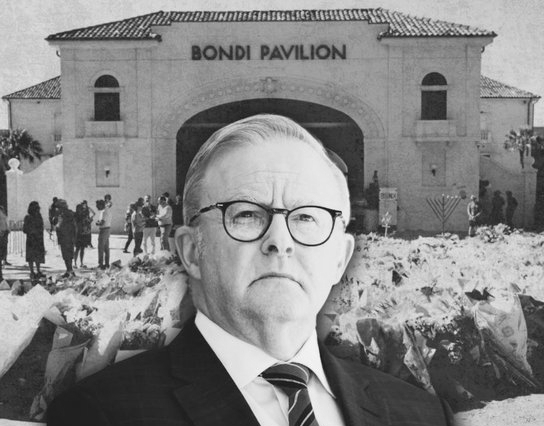
Australia launches commission into antisemitism after Bondi Beach massacre
Australia’s prime minister Anthony Albanese has announced a wide‑ranging federal royal commission into antisemitism and social cohesion following the December 14 Bondi Beach massacre that killed 15 people at a Jewish Hanukkah event. Albanese said the inquiry, the most powerful form of independent public investigation in Australia, will be led by former High Court judge Virginia Bell and will examine the rise of antisemitism, intelligence and law‑enforcement failures, and community tensions . The report is due by December 14, 2026 , exactly one year after the attack.
The Bondi Beach shooting , widely described as a terrorist act inspired by the Islamic State group, targeted a Chanukah(Hanukkah) celebration on Sydney’s iconic beach and wounded more than 40 people . One suspect, 24‑year‑old Naveed Akram , faces multiple charges including murder and terrorism; his father, Sajid Akram, was shot dead by police during the incident. Authorities have reported no evidence so far that the two acted as part of a broader terror cell, though questions remain about possible intelligence failures.
A royal commission in Australia has broad powers to compel testimony and documents and is reserved for matters of the highest public importance. The inquiry will not only scrutinise the specifics of the Bondi attack but also investigate the nature, prevalence and drivers of antisemitism across the country , evaluate how police, intelligence and security agencies responded before and after the attack, and recommend reforms aimed at strengthening social cohesion, countering extremism, and improving law enforcement cooperation.
Albanese initially resisted calls for a full federal commission, suggesting the process might take too long and cautioning against giving extremists a platform. After consultations with victims’ families, Jewish community leaders and survivors , he reversed course and expanded his earlier review of security agencies into the national inquiry. “I have listened,” he said, adding that in a democracy listening to communities is important.
The announcement followed intense public and political pressure . Letters from victim families described a belief that antisemitic hatred had gone unchecked and demanded accountability and truth. Former judges, senior lawyers and public figures had also called for a royal commission rather than a state‑level inquiry. Polls indicated that a majority of voters support the federal probe.
However, the decision has not been universally welcomed . Some critics, including Muslim community leaders, argue that focusing solely on antisemitism risks overlooking other forms of racism, such as Islamophobia, and have urged broader terms of reference that address hatred in all its forms. Others have criticized media coverage, saying certain depictions trivialised the tragedy or reinforced harmful tropes.
In the wake of the massacre, police in New South Wales significantly boosted counterterrorism operations aimed at protecting vulnerable communities and monitoring hate‑related incidents. Funded under “Operation Shelter,” these efforts involve proactive patrols and intelligence gathering at sites like places of worship and crowded public areas.
Albanese has also signalled legislation to strengthen Australia’s stringent gun laws and tighten hate speech provisions , including potential new offences for extremist rhetoric that currently falls short of prosecution thresholds. The royal commission’s findings are expected to shape national policy on social cohesion, law enforcement, immigration and community safety for years to come.