
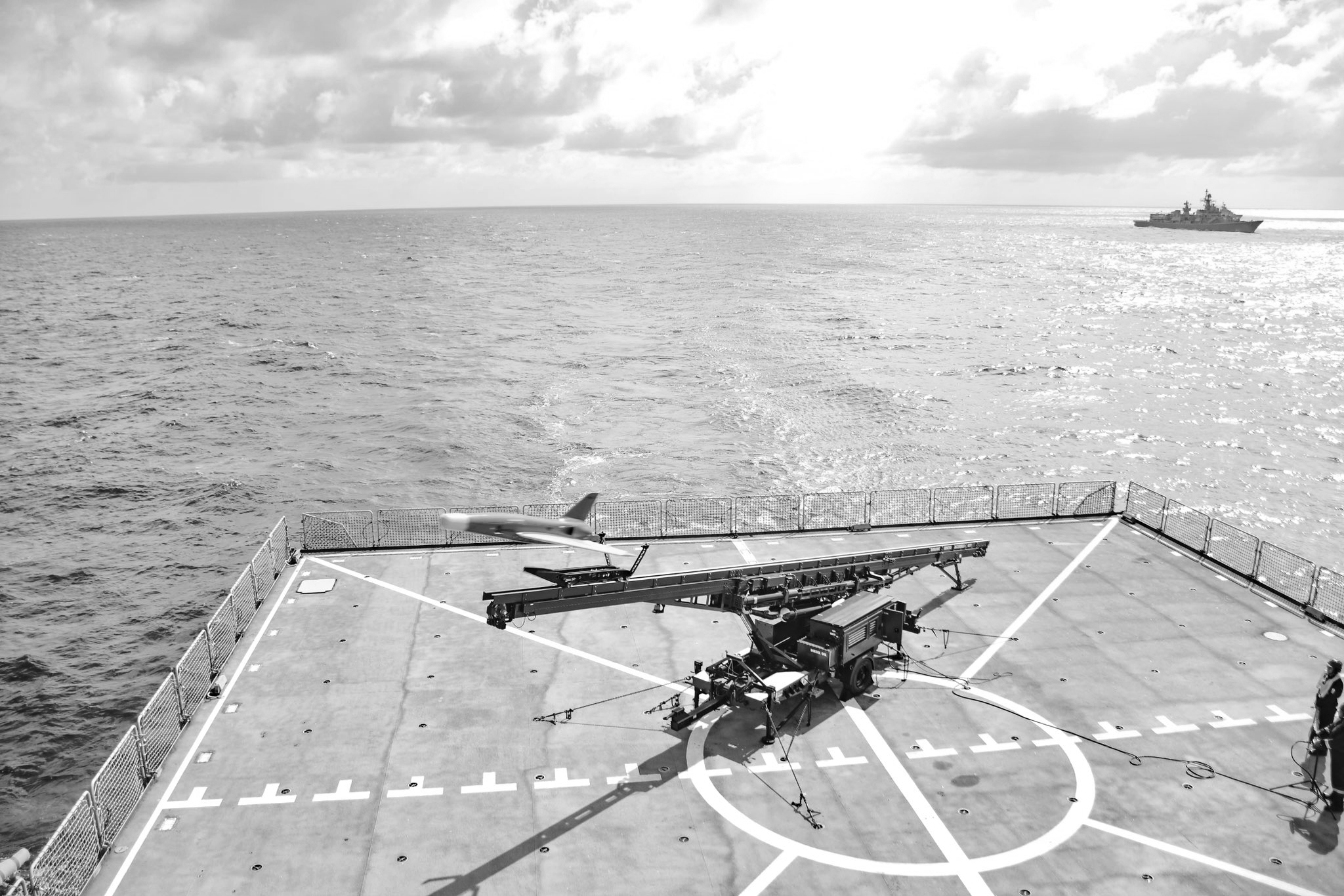
Australia joins Quad partners for Exercise Malabar 2025 to strengthen Indo-Pacific security
Australia has joined India, Japan, and the United States for Exercise Malabar 2025, a major Indo-Pacific naval drill aimed at enhancing interoperability, operational readiness, and maritime security cooperation among the four Quad nations. The exercise is being held in the West Pacific training area from November 10 to 18, according to Australia’s Ministry of Defence.
The Royal Australian Navy’s (RAN) Anzac-class frigate HMAS Ballarat and a Royal Australian Air Force (RAAF) P-8A Poseidon maritime patrol aircraft are representing Australia in this year’s edition. The Poseidon is operating from Andersen Air Force Base in Guam, while the frigate, equipped for air defence, surface and undersea warfare, surveillance, and reconnaissance, participates in complex sea drills.
Earlier, the Indian Naval Ship INS Sahyadri, an indigenously designed Guided Missile Stealth Frigate, arrived in Guam to take part in the exercise. The ship, a product of India’s Aatmanirbhar Bharat initiative, has participated in multiple bilateral and multilateral operations across the Indo-Pacific.
First held in 1992 as a bilateral India–US naval exercise, Malabar has gradually evolved into a key Quad maritime engagement involving India, the US, Japan, and Australia. Japan became a permanent member in 2015, and Australia rejoined in 2020, completing the grouping.
The exercise underscores the Quad’s role in promoting a free, open, and rules-based Indo-Pacific, where the freedom of navigation and respect for international maritime law, particularly the UN Convention on the Law of the Sea (UNCLOS), are upheld.
Australia’s participation in the 2025 edition is particularly significant as it reinforces the Quad’s unity, brings advanced surveillance and anti-submarine capabilities to the joint force, and demonstrates Canberra’s continued commitment to regional security and deterrence.
Through initiatives like Exercise Malabar, the Quad nations continue to signal their collective resolve to safeguard the Indo-Pacific’s maritime commons, ensuring stability and cooperation in an increasingly complex strategic environment.