
Attacks on Ebola Centres Intensify in Eastern DRC Amid Outbreak Fears
In the killing fields of eastern Congo, where armed conflict has already hollowed out the architecture of trust between communities and the state, a new and devastating front has opened. Ebola treatment centres are under attack, not by militia, but by grieving fathers, anguished neighbours and communities consumed by rumour and the consequences could be catastrophic.
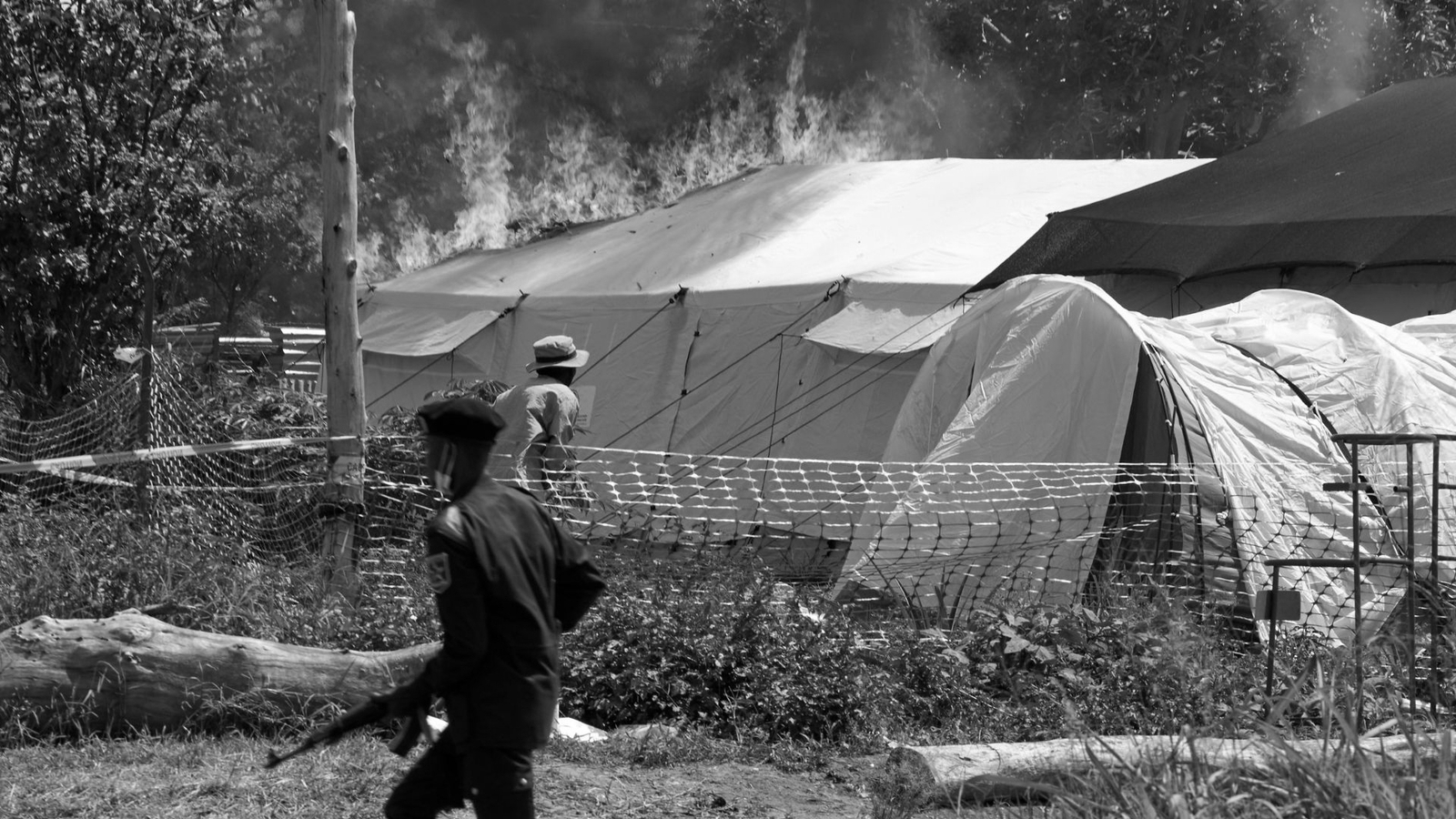
The Rwampara health centre was stormed by angry residents demanding the bodies of their relatives who had died from Ebola. A day later, a tent provided by Doctors Without Borders at a hospital in Mongbwalu in Ituri province was set ablaze. The fires did not just destroy canvas and equipment. They scorched the fragile membrane separating a containable outbreak from a regional catastrophe.
At the heart of the violence lies a collision of grief and protocol that no policy memo can easily resolve. In eastern DRC, it is customary for relatives and neighbours to gather at the home of the deceased, and some mourners touch the body as a final act of farewell. Ebola's brutal arithmetic makes this an act of love that kills . "When my daughter died of Ebola last month, the medical team came to bury her. We didn't get to say our final goodbyes. I had to watch her funeral helplessly without our cultural rites," said one 40-year-old resident of Mongbwalu.
The mistrust runs even deeper than grief. "Some people here believe that Ebola is a business," said one witness. "When healthcare providers refuse to hand over the bodies of those who have died from Ebola, people think they might be trafficking their organs." Against decades of exploitation and neglect , such suspicions are not born in a vacuum.
The numbers are unforgiving in their trajectory . As of Saturday, nearly 180 people had died and close to 800 cases had been recorded. A senior Congolese official involved in the response said treatment centres were overwhelmed, receiving new confirmed cases almost every day, with resources nowhere near adequate for the scale of the outbreak.
Amid a sharp decline in international aid, Congolese authorities say the national treasury is covering a large share of the response, and shortages are becoming more visible. The world, distracted by wars elsewhere, is looking away at precisely the wrong moment . The Africa CDC has placed 10 African countries on high alert, while the DRC, Uganda and South Sudan have agreed to strengthen cross-border coordination on surveillance and early warning systems.
But coordination agreements mean little when a burning tent is the loudest voice in the room . As Congo's health minister Roger Kamba pleaded on radio: "The dead must not take others with them into the grave." In Ituri, that appeal is echoing into an increasingly dangerous silence .