
Athachamayam Marks the Beginning of Kerala’s 10-Day Onam Celebrations
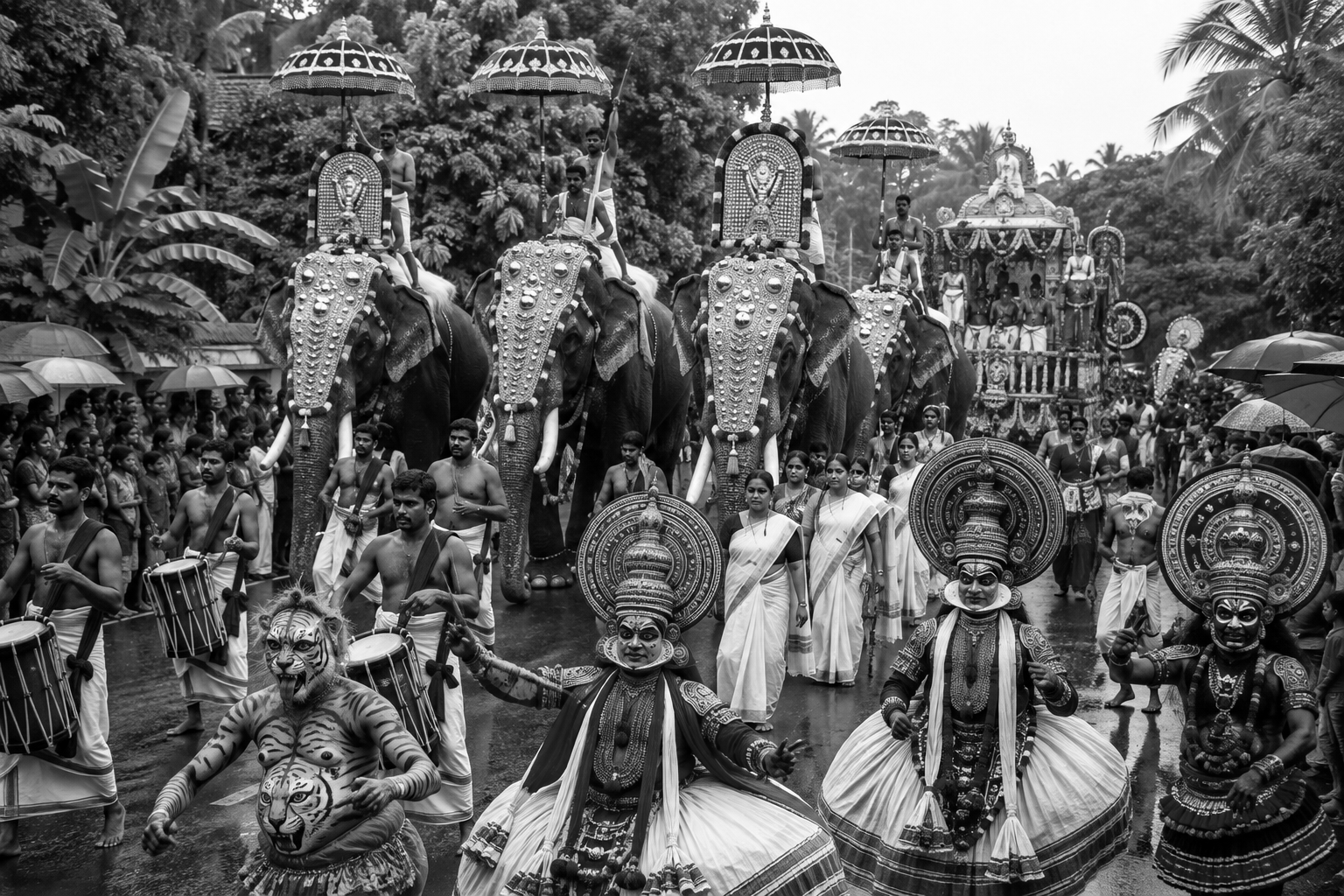
Kerala on Sunday ushered in its much-awaited 10-day Onam festivities with the colourful Athachamayam celebrations at Tripunithura, reviving a centuries-old royal tradition through a spectacular procession of caparisoned elephants, decorated floats, traditional percussion, folk arts and classical performances.
Held on Atham, the first day of the Onam period in the Malayalam month of Chingam, the celebrations drew thousands of people despite intermittent rain. People from different age groups and communities gathered along the procession route, while visitors, including foreigners, watched the colourful spectacle.
Kerala Chief Minister V D Satheesan officially inaugurated the celebrations and highlighted Tripunithura's long association with secularism, communal harmony and cultural heritage. He said people belonging to different religions and communities had participated in Athachamayam since the days of the erstwhile Kochi kingdom.
Satheesan called for the history and heritage of Tripunithura to be given greater prominence and urged that the historic town be developed as a heritage city. He pointed out that several historic castles and old structures had already been demolished, while others were gradually disappearing. He called for the remaining heritage buildings to be protected and noted that old structures are carefully preserved in several European countries. The Chief Minister also recalled attending the festivities since his childhood.
State Food and Civil Supplies Minister Anoop Jacob unfurled the Atham flag, formally marking the beginning of this year's celebrations. Malayalam film actor Jagadish later flagged off the procession from Atham Nagar in Tripunithura.
The procession featured a rich display of Kerala's traditional performing arts. Theyyam, Kolkali, Mayilattam, Ammankudam and Pulikali added colour and movement, while Kathakali represented the state's classical artistic heritage. Women dressed in traditional set mundu and children in colourful costumes also took part. The rhythmic sounds of chendamelam and panchavadyam, performed by percussionists, accompanied the procession, while caparisoned elephants and decorated floats added to its grandeur.
Athachamayam is deeply connected with the history of Tripunithura, which was once the capital and principal centre of the erstwhile Kingdom of Kochi. During the royal era, the Maharaja of Kochi traditionally participated in a grand procession from Tripunithura towards the Vamanamoorthy Temple at Thrikkakara as part of the Onam celebrations. The royal procession was accompanied by musicians, elephants, performers and members of the royal entourage.
The festival also carried an important social dimension. Historical accounts describe Athachamayam as an occasion when people belonging to different castes and communities could participate in the festivities associated with the royal centre. Over time, the event evolved from a royal ceremony into a large public celebration representing Kerala's cultural diversity and spirit of unity.
The traditional celebration was discontinued in 1949 following political changes after Independence and the formation of the Travancore-Cochin state. It was subsequently revived in 1961, when efforts were made to develop Onam as a major mass festival in Kerala. The modern Athachamayam procession no longer carries the same royal character, but it continues to preserve the memory of the Kochi kingdom while showcasing the state's cultural traditions.
There are several legends and historical accounts concerning the origin of Athachamayam. One prominent tradition connects the procession with the Kochi Maharaja's journey from Tripunithura to the Vamanamoorthy Temple at Thrikkakara for Onam celebrations. Another folklore tradition associates it with a military victory of the Kochi ruler. Different versions link the event to battles involving the Kochi kingdom and neighbouring powers. These accounts form part of the rich folklore surrounding the festival, although there is no single universally accepted explanation for its origins.
Whatever its precise historical beginning, Athachamayam has developed into a major celebration of Kerala's heritage, artistic traditions and religious harmony. Its transformation from a royal procession into a people's festival mirrors the wider evolution of Onam as a celebration open to everyone.
The festival also marks the beginning of the wider Onam season, which is closely associated with the enduring legend of King Mahabali. According to popular belief, Mahabali was a generous and just ruler whose kingdom was prosperous and peaceful. Lord Vishnu appeared before him in the form of Vamana and asked for three paces of land. When Vamana assumed a gigantic form and covered the earth and heavens in two steps, Mahabali offered his own head for the third. Pleased by his devotion, Vishnu allowed him to return to Kerala once every year to meet his people.
Mahabali's annual return forms the emotional and cultural heart of Onam. The festival celebrates the king's remembered reign of prosperity, equality and harmony, while also reflecting Kerala's traditional connection with the harvest season.
The 10-day Onam period begins with Atham and gradually builds towards Thiruvonam, the most important day of the celebrations. One of the earliest traditions is the creation of pookkalam, colourful floral carpets placed outside homes. The designs traditionally become larger and more elaborate as the days progress.
Families also prepare for Onasadya, the elaborate vegetarian feast traditionally served on banana leaves. The feast is one of the defining features of Onam and includes a variety of traditional dishes, accompanied by payasam.
Other celebrations during the Onam period include traditional games, cultural programmes, music and dance performances, Pulikali and Vallamkali, the famous snake boat races. Together, these traditions transform Onam into a festival that combines family celebrations, community participation, food, art and Kerala's distinctive cultural identity.
In 2026, Thiruvonam falls on August 26, bringing the 10-day festive period to its traditional culmination.
Athachamayam, therefore, represents much more than the opening procession of Onam. It brings together Kerala's royal history, folklore, religious harmony, traditional arts and the legend of Mahabali in a single public celebration.
The sight of caparisoned elephants moving alongside decorated floats, the sound of chendamelam and panchavadyam, and performances of folk and classical art forms give the celebration a distinctive character. At the same time, the participation of people from different communities reinforces the festival's message of inclusiveness.
For Tripunithura, Athachamayam is also a reminder of its historical identity as the former seat of the Kochi royal family. The call by V D Satheesan to preserve its remaining historic structures adds another dimension to this year's celebrations, linking the festival not only to Kerala's living traditions but also to the need to protect its physical heritage.
As Kerala enters the Onam season, the Athachamayam procession once again demonstrates how an event rooted in a royal past can evolve into a people's celebration of culture and togetherness. From the traditions of the Kochi Maharajas to the modern participation of thousands of residents and visitors, the festival continues to connect Kerala's past with its present.
With Atham celebrated on August 16, the state has now entered the festive countdown to Thiruvonam. Over the coming days, homes and public spaces across Kerala will fill with flowers, music, traditional food, cultural performances and family gatherings, culminating in the grand celebration of Onam on August 26.