
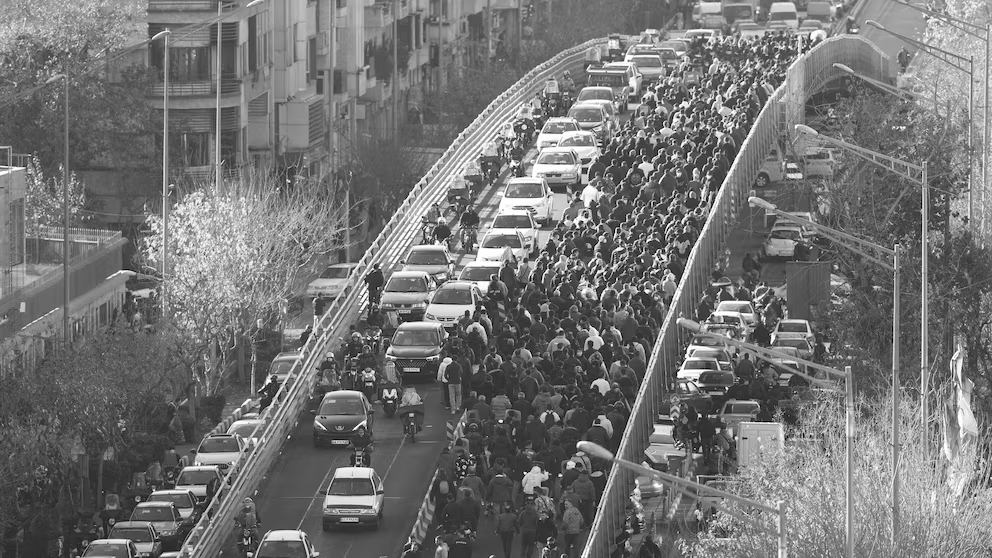
At least 35 killed, over 1,200 detained in Iran’s ongoing economic protests
The death toll in widespread economic protests across Iran has risen to at least 35 people , while more than 1,200 individuals have been detained , according to the US-based Human Rights Activists News Agency (HRANA) . The unrest, now in its ninth consecutive day , has spread to over 250 locations across 27 of Iran’s 31 provinces , highlighting the intensity and nationwide scale of public anger over economic hardship.
Of the fatalities, 29 were protesters , including four children , while two members of Iran’s security forces also lost their lives. Separately, the semiofficial Fars news agency , aligned with the paramilitary Revolutionary Guard, reported that around 250 police officers and 45 Basij volunteer militia members were injured in clashes with demonstrators.
The protests, triggered by rising inflation, soaring food and fuel prices, unemployment, currency devaluation, and perceived government mismanagement , have drawn participation from urban centres, smaller towns, and university campuses. Activists report that discontent has grown due to a combination of economic distress, inequality, and public frustration over restricted freedoms.
Authorities in Tehran have responded with a combination of mass arrests, deployment of security forces, and restrictions on social media and internet access to control the demonstrations. Observers say the government may also consider limited economic concessions or targeted interventions to ease tensions, though past experience suggests that heavy-handed crackdowns could escalate public anger.
Analysts warn that if the unrest persists, Iran could face heightened domestic instability , erosion of public trust in state institutions, and increased international scrutiny over human rights violations. The economic impact of ongoing strikes and street protests may further exacerbate hardships , creating a feedback loop that fuels continued demonstrations.
The HRANA, relying on activist networks inside Iran, has historically provided accurate reporting during periods of unrest, though figures from semiofficial agencies such as Fars often differ. The contrasting reports underline the difficulty of independent verification within the country.
As the protests continue, the situation remains fluid and unpredictable, with authorities balancing suppression and selective concessions, while citizens express mounting frustration over economic and social grievances. The coming days are likely to determine whether the unrest escalates further or prompts meaningful governmental action.