
Assam’s Border Disputes: Why Development, Demarcation and Dialogue Matter
Assam’s decades-old inter-state boundary disputes have taken a deadly toll, with 202 people from the state losing their lives in clashes along its borders with Nagaland, Meghalaya, Arunachal Pradesh and Mizoram since around 1989, according to official data. A durable solution will require more than policing. Economic development, negotiated demarcation, dialogue and stronger border-management mechanisms will be crucial to preventing further violence.
Security experts have argued that Central government-led economic activity in disputed areas, benefiting people on both sides, could reduce tensions. Jobs, markets, healthcare, education, tourism and livelihood programmes can make stability more valuable than confrontation, particularly in communities dependent on forests, farmland and local trade.
Joint infrastructure could reinforce that incentive. Where feasible, Assam and neighbouring states could develop roads, bridges, power links, telecom networks, drinking-water systems, health centres and markets together. Shared projects would require officials and communities from both sides to cooperate regularly, helping build trust.
However, development must involve local people. Village councils, traditional institutions and farmers should participate in project planning. This can reduce fears that infrastructure is being used to alter control or demographics in contested areas.
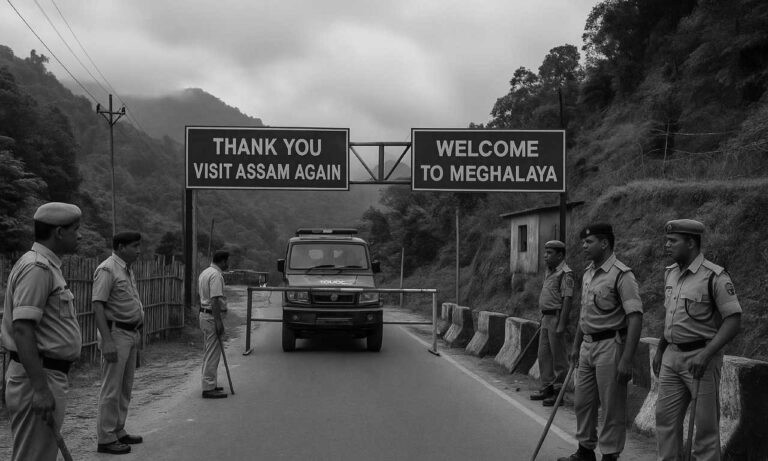
Security mechanisms must improve alongside development. Assam has 103 inter-state border police outposts and has proposed 50 more. Stronger coordination could include joint verification teams, rapid-response arrangements, direct communication between district officials, shared mapping, satellite imagery and joint investigation of alleged encroachment. Such measures could prevent a local dispute from escalating into a police confrontation.
Clear demarcation is equally important. The 2022 Assam-Meghalaya agreement showed the value of regional committees, local consultations and phased settlement. The Namsai Declaration with Arunachal Pradesh similarly moved negotiations towards village-level examination and joint resolution. Once areas are agreed upon, surveys, coordinates and boundary pillars can remove ambiguity.
A phased strategy may work best: settle manageable pockets first, physically mark them, develop shared economic projects, and then tackle more complex claims involving Nagaland and Mizoram.
The objective should not be to substitute development for legal settlement. Rather, it is to create conditions in which compromise becomes politically and economically viable. Development, dialogue, demarcation and deterrence offer Assam and its neighbours a stronger pathway to preventing future clashes while steadily resolving disputed areas.