
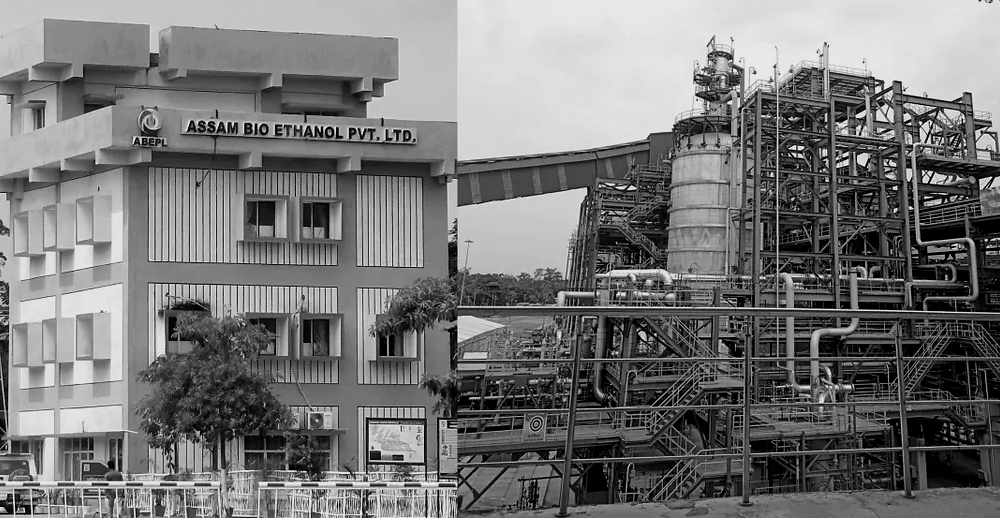
Assam’s bamboo based Bioethanol plant set to drive India’s green fuel transition
Assam Bio Ethanol Pvt Ltd (ABEPL) is preparing to scale up operations at the world’s only commercial second-generation bioethanol plant using bamboo , positioning Assam as a leader in sustainable fuel technology and rural industrial development .
The Rs 4,930-crore facility at Numaligarh in Assam’s Golaghat district was inaugurated in September last year by Prime Minister Narendra Modi . With an installed capacity of 49,000 tonnes of ethanol annually , the plant is currently in its stabilisation phase , expected to begin full commercial production shortly.
Unlike conventional ethanol plants that rely on sugarcane or maize, this unit uses bamboo , a fast-growing, non-food biomass abundant in the Northeast. Green bamboo is harvested, chopped into 25-mm chips , and converted into fermentable sugars through chemical and biochemical processes. These sugars are then fermented to produce fuel-grade ethanol with 99.7% purity , exceeding industry norms.
The facility operates as a zero-waste plant , utilising all bamboo components. In addition to ethanol, it will produce 19,000 tonnes of furfural , 11,000 tonnes of acetic acid , 32,000 tonnes of liquid carbon dioxide , and generate 25 MW of green power annually. These by-products feed pharmaceuticals, chemicals, food preservation, and industrial manufacturing , creating multiple revenue streams.
Ethanol will mainly be used for petrol blending under India’s national ethanol programme , reducing imported crude oil dependence and cutting carbon emissions . It also serves as a solvent, base chemical for pharmaceuticals and cosmetics, disinfectant, and feedstock for biodegradable plastics , strengthening its industrial significance.
To reach full capacity, the plant will require nearly five lakh tonnes of bamboo annually , sourced from 12,500 hectares using 60 lakh saplings over three years. ABEPL has registered over 4,200 farmers and plans to partner with more than 30,000 farmers across a 300-km radius , covering Assam, Arunachal Pradesh, Nagaland, and Meghalaya. Direct payments to farmers ensure transparency, and the project is expected to inject Rs 200 crore annually into the rural economy.
Bamboo’s high carbon absorption will help the plant move toward carbon neutrality , while avoiding pressure on food crops and utilising barren land . At scale, ABEPL will become the largest consumer of bamboo in the Northeast , transforming an underutilised resource into a high-value industrial input.
ABEPL is a joint venture of Numaligarh Refinery Ltd , Fortum 3 BV , and Chempolis Oy , combining Indian energy infrastructure with advanced European biorefinery technology . The plant demonstrates how green technology, farmer income, and regional development can integrate into a sustainable industrial ecosystem .