
Assam’s 1.6 lakh jobs claim vs Telangana’s 2 lakh promise: What really separates the two
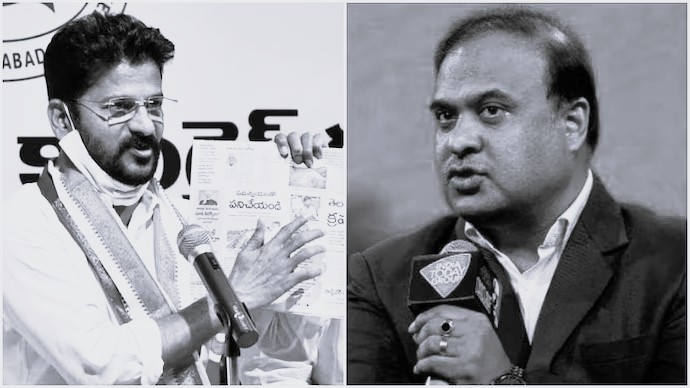
The political debate in Telangana over government jobs has sharpened as the BRS continues to attack the Congress for its pre poll promise of providing two lakh government jobs. The opposition argues that the figure is unrealistic and administratively unachievable. This criticism, however, now faces a serious counterpoint following Assam Chief Minister Himanta Biswa Sarma ’s statement that his government has recruited 1.56 lakh youth over the last five years and will complete the remaining appointments by February 10 , taking the total to 1.60 lakh before elections.
At face value, Assam’s numbers challenge the claim that mass government recruitment is impossible. According to the Assam government, these recruitments were carried out across a five year period, primarily through the Assam Direct Recruitment Examination , covering Grade III and Grade IV posts along with appointments in education, health, police, and other state departments. The figure of 1.60 lakh is not a one time drive but the cumulative outcome of multiple recruitment cycles conducted year after year.
A key distinction lies in the timeline. Assam’s recruitment averages roughly 30,000 to 32,000 jobs per year over five years. This steady pace allowed the state to manage finances, examinations, and appointments without overwhelming the system. In contrast, the Congress promise in Telangana was presented as a single headline figure during elections, without publicly outlining whether it would be achieved within one year, two years, or across the full five year term. This lack of clarity has fuelled the perception of delay and non performance.
Another critical factor is recruitment design. Assam centralised its recruitment process, reduced departmental discretion, and conducted exams through a common platform. The Chief Minister has repeatedly highlighted that the entire process remained litigation free, with no cases in the High Court. This is significant because recruitment related court cases are among the biggest reasons for delays in government hiring across states. Telangana, on the other hand, has a long history of recruitment processes getting stalled due to legal challenges, particularly in group services and education posts, making governments more cautious.
Vacancies alone do not guarantee immediate appointments. Posts must be sanctioned, rosters approved, budgets allocated, and exam processes completed. Assam addressed these issues gradually over its term, while Telangana is attempting to reorganise departments and revise staffing patterns after a change in government. Any rushed recruitment without procedural safeguards risks court intervention, which would halt the process entirely.
Financial sustainability is another aspect often overlooked in political arguments. Government jobs create long term salary and pension liabilities. Assam managed its recruitment by focusing largely on Grade III and Grade IV posts, which carry lower fiscal burden compared to higher services, and by spreading appointments over five years. Telangana’s promise of two lakh jobs would require an average of 40,000 recruitments per year if implemented over a full term, a higher annual target than Assam’s. This is not impossible, but it demands consistent fiscal planning and uninterrupted recruitment cycles.
Politically, Assam’s example weakens the argument that such numbers cannot be delivered at all. It proves that even a state with lower per capita income than Telangana can institutionalise large scale recruitment if it follows a phased, transparent approach. At the same time, it exposes the gap between electoral promise and administrative sequencing in Telangana. The Congress government now faces the challenge of clearly stating whether the two lakh jobs promise is a five year target and how many jobs will be filled annually.
For the BRS, the comparison offers short term political ammunition but also raises uncomfortable questions. If Assam could recruit 1.60 lakh youth in five years through a clean and centralised process, voters may ask why Telangana, with stronger revenues and administrative capacity, did not attempt a similar scale of recruitment during previous regimes.
Assam’s recruitment record shows that large scale government hiring is achievable, but only when spread over time, backed by institutional reform, and protected from litigation. Telangana’s Congress promise of two lakh jobs is not factually impossible, but its success depends on realistic timelines, transparent communication, and steady annual execution. Without these, the promise will remain politically vulnerable, regardless of intent.