
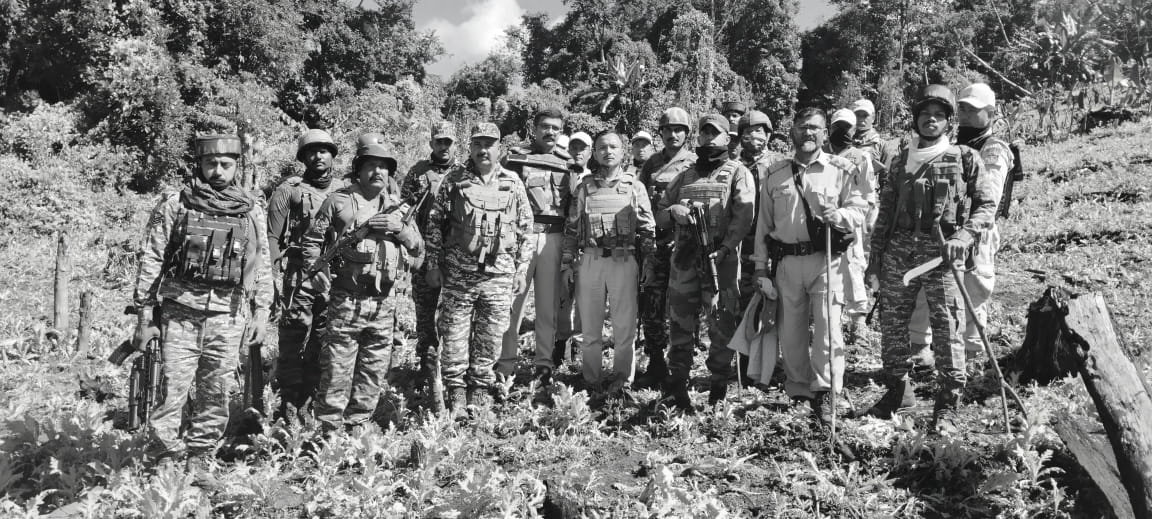
Assam rifles, CRPF, Manipur police destroy 25 acres of illicit poppy fields
In a major crackdown on narcotics cultivation, the Assam Rifles, Central Reserve Police Force (CRPF), and Manipur Police jointly destroyed nearly 25 acres of illicit poppy fields in Manipur’s Kangpokpi district, officials confirmed on Thursday. The operation was intelligence-led: inputs from local informers were corroborated by drone and ground reconnaissance, which pinpointed concealed clearings for verification. Coordinated surveillance and on-ground checks allowed the forces to carry out a dawn raid designed to maximize impact while limiting civilian harm.
The operation, conducted in the early hours of November 12, unearthed large-scale poppy cultivation and led to the demolition of eight makeshift huts allegedly used for processing and storage. Officials estimated that the destroyed fields could have yielded around 190 kilograms of opium, valued at several crores of rupees in the illegal drug market. A senior Assam Rifles officer said the drive demonstrates the combined forces’ determination to eradicate narcotics-linked activities and dismantle networks funding insurgent elements in the region.
Experts note that Manipur’s hills, including Kangpokpi, Churachandpur, and Ukhrul, offer ideal conditions for poppy cultivation. The loamy soil, moderate rainfall, and cool climate make the region naturally suited for opium crops. The mountainous terrain and dense forests also make it difficult for enforcement agencies to detect and access illegal farms. Additionally, Manipur’s proximity to the Myanmar border, part of the infamous Golden Triangle (Myanmar–Laos–Thailand), gives traffickers direct access to international smuggling routes. This geographical advantage, combined with limited police presence and difficult terrain, makes the region a hotspot for narcotics cultivation.
Officials and local sources note that many farmers turn to poppy cultivation out of economic necessity rather than criminal intent. In remote hill districts, widespread poverty, unemployment, and poor connectivity make legal farming unprofitable. Poppy, on the other hand, offers high returns with minimal maintenance — an acre can yield profits nearly ten times higher than crops like maize or ginger. Drug traffickers further entice farmers by offering instant cash payments directly at the fields, ensuring quick income. In some regions, insurgent groups also play a role, coercing or encouraging villagers to grow poppy and later taxing or purchasing the harvest to fund their operations. While this practice provides short-term financial relief, it ultimately traps farmers in cycles of illegal dependency, exposes them to law enforcement crackdowns, and worsens the region’s drug addiction crisis.
Security officials believe that insurgent outfits use narcotics trafficking to fund weapons purchases and sustain their movements. The money generated from poppy cultivation and opium sales is often funneled into militant networks, strengthening their influence in the border regions. By destroying poppy fields, the combined forces aim to strike at the economic base of these insurgent organizations, cutting off a key source of funding that fuels both militancy and the drug menace in Manipur.