
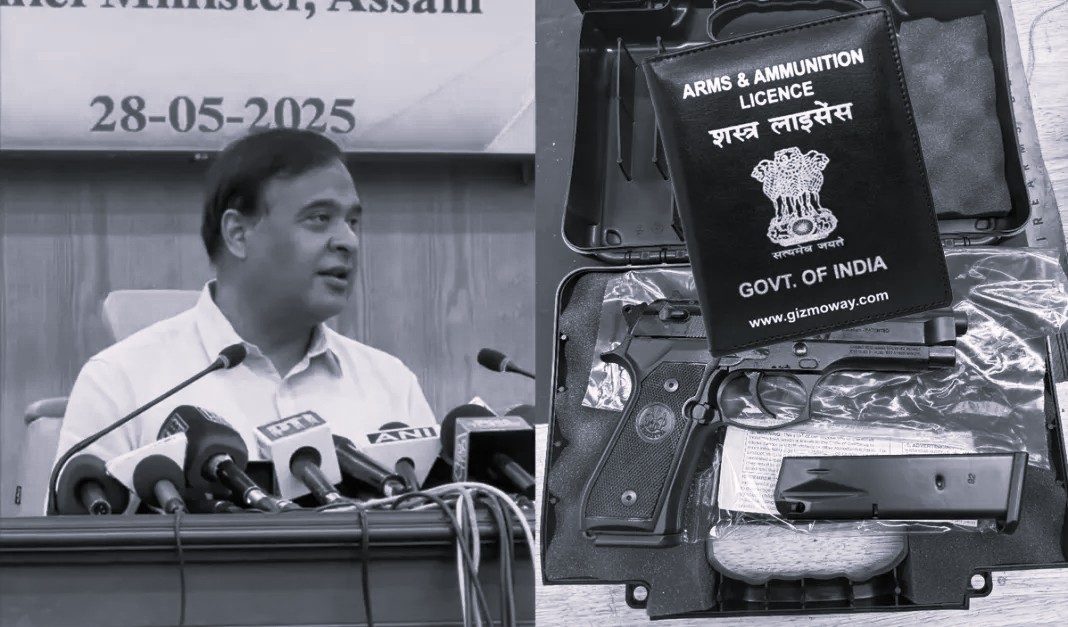
Assam govt to start issuing gun licenses in Feb 2026
Chief Minister Himanta Biswa Sarma on Sunday announced that his government will issue the first batch of firearm licenses in February 2026 to indigenous people living in "vulnerable and remote" areas. He stated that an economic shift is underway in Assam, with Muslims becoming more prosperous, which may indicate that the "surrender of Assamese people has begun." Sarma also mentioned that the state cabinet approved a bill to ban polygamy, with convicts facing up to seven years of rigorous imprisonment. Authorities have received many applications for firearm licenses from indigenous people and are currently scrutinizing them. Licenses will be issued very selectively and not everyone wanting a firearm will be permitted.
The first batch of licenses under this scheme will be issued in February. This decision is significant, as the state will hold assembly elections soon after the issuance of these licenses. The assembly elections for 126 constituencies are expected in March-April next year. On May 28, the Assam cabinet decided to grant firearm licenses to indigenous people living in "vulnerable and remote" areas to instill a sense of security. Minority-dominated districts such as Dhubri, Morigaon, Barpeta, Nagaon, South Salmara-Mankachar, and localities like Rupahi, Dhing, and Jania were identified as vulnerable and remote.
During the press conference, Sarma claimed that the Hindu population growth is declining while that of Muslims is increasing. He cited data from 2001 to 2011 showing this trend in every block of Assam. Sarma noted rapid demographic changes affecting the economy and described it as a chapter of the Assamese people's surrender beginning. The government is scrutinizing land sale permissions between Hindus and Muslims based on a directive issued last year. He pointed out that land sales from Hindus to Muslims are very high, whereas sales in the opposite direction are low.
Sarma emphasized that many permissions involve Assamese and indigenous Muslims and that the BJP-led government does not object to this. He pointed out a shift in wealth creation as well as population changes. The government had previously thought only numbers were increasing but now sees that wealth patterns are changing too. Sarma plans to hold a detailed press conference on this topic later. He warned that demographic changes can be accepted, but economic shifts signal complete destruction.
The Assam government mandated last year that consent from the Chief Minister’s office is required before land sales between Hindus and Muslims. Sarma also announced that the state cabinet approved a bill banning polygamy, with convicted persons facing up to seven years rigorous imprisonment. Some exceptions apply for Scheduled Tribes and Sixth Schedule areas. A new fund will be created to compensate women victims of polygamy to support their livelihood. The bill, called "The Assam Prohibition of Polygamy Bill, 2025," will be tabled in the assembly on November 25.
Anyone convicted under the polygamy law may get rigorous imprisonment up to seven years. The government will provide financial support to victimized women to prevent hardship in their lives. Details about compensation, including consideration of children, will be specified in the law’s rules. Polygamy will be a cognizable offense, and bail will not be granted immediately. The law excludes Scheduled Tribes because of their customs and initially will not apply in Sixth Schedule areas like Bodoland Territorial Region, Dima Hasao, and Karbi Anglong.
Muslims living in Sixth Schedule areas before 2005 will also be exempt from penalties under the polygamy law. The polygamy act will take effect from the date of notification after legislative passage but has no retrospective effect. This comprehensive approach seeks to address demographic, economic, and social concerns as Assam prepares for upcoming elections and social reforms.