
Asian Games 2026: India’s Medal Machine Slows After Hangzhou High - What Has Changed?
India entered the Aichi-Nagoya Asian Games 2026 carrying the weight of its best-ever Asian Games performance. At Hangzhou in 2023, India won a record 107 medals - 28 gold, 38 silver and 41 bronze. By the end of Day 7 in Japan, India had 30 medals - four gold, 12 silver and 14 bronze, placing it 10th on the medal table. The gap is striking, but the numbers need context: the 2026 Games are not a carbon copy of Hangzhou.
The first major change is the size of India's athlete pool. India sent 661 athletes to Hangzhou, but only 503 to Aichi-Nagoya, a reduction of 158 athletes, or nearly 24 per cent. The Indian contingent has 269 men and 234 women across 36 disciplines. This is not the smallest delegation at the Games, Japan has 919 athletes, China 803, South Korea 780, Thailand 682, Hong Kong 569 and Kazakhstan 547, but India's pool is considerably smaller than those of the three major Asian sporting powers. The smallest is the two-member Asian Refugee Team, followed by Brunei with six.
The Games themselves have also changed. Hangzhou had 40 sports and 482 events, while Aichi-Nagoya has 43 sports and 469 medal events. Some sports that contributed to India's Hangzhou tally, including chess, bridge, go, xiangqi, dragon boat racing, roller skating and marathon swimming, are absent. Newer or expanded disciplines such as MMA, surfing, padel and teqball have altered the medal landscape. A straight comparison of 107 medals with the current tally can therefore exaggerate the decline. The more useful test is what India is doing in sports available at both editions.
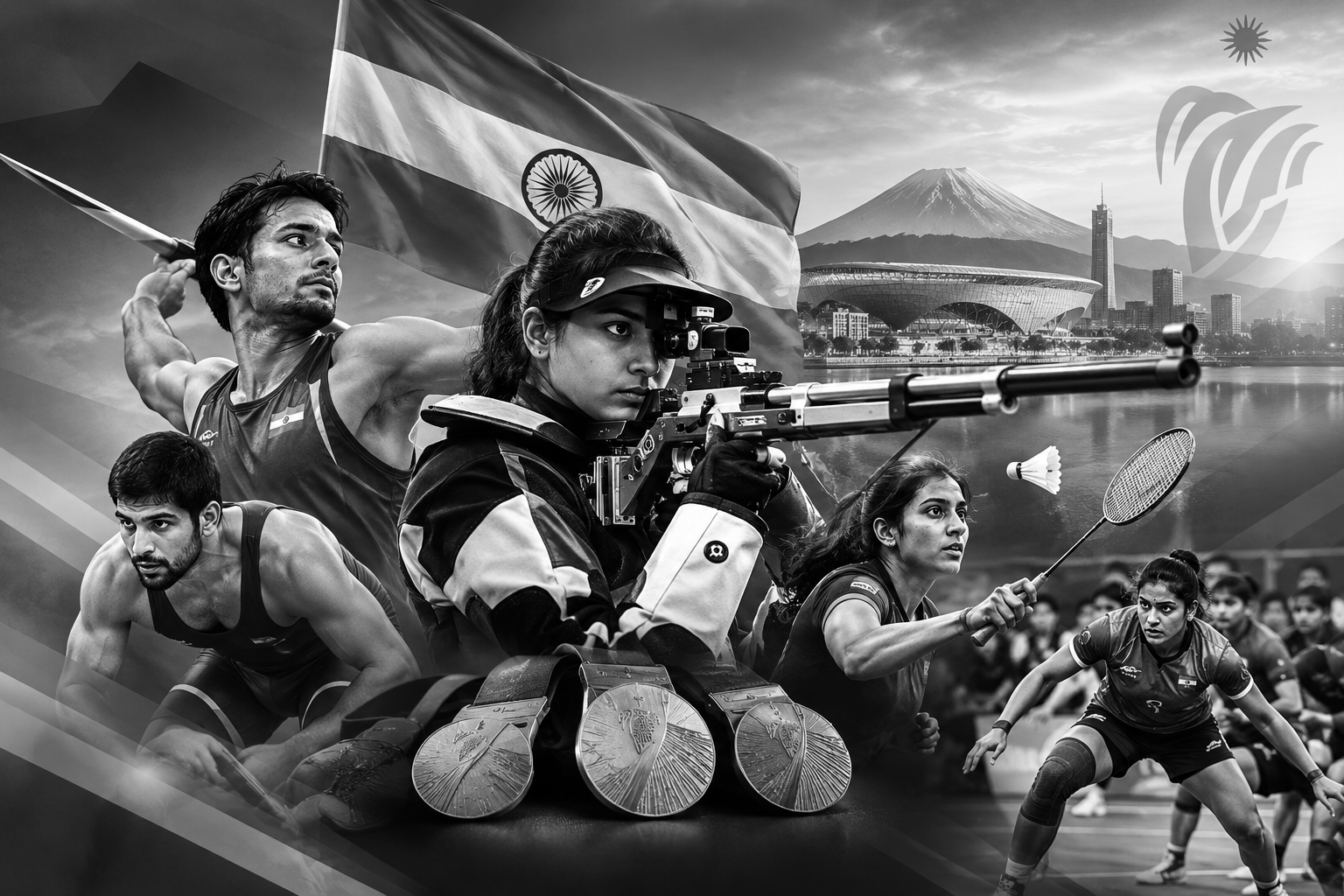
Shooting, India's biggest medal contributor at Hangzhou with 22 medals, including seven golds, remains productive but has not matched its gold-medal efficiency. India has already collected 10 shooting medals in Aichi-Nagoya, but only one is gold, alongside five silvers and four bronzes. Elavenil Valarivan, Himanshu Dhillon and Rudrankksh Patil have kept India on the podium, while Suruchi Singh and Kamaljeet delivered gold in the mixed 10m air-pistol event. The depth is still visible; the problem is converting that depth into gold.
Athletics presents a similar picture. India produced a remarkable 29 medals at Hangzhou - six gold, 14 silver and nine bronze. In Aichi-Nagoya, the medal flow has again been significant, with Gulveer Singh winning 10,000m silver, Sawan Barwal taking a historic marathon silver, Baranica Elangovan winning India's first Asian Games pole-vault medal, and Prachi Choudhary taking 400m bronze. Yet even established names have found the margins tighter: two-time defending champion Tajinderpal Singh Toor had to settle for silver in the shot put. The story is therefore less about an athletics collapse than about gold conversion and depth.
The biggest warning sign has come from badminton. At Hangzhou, Satwiksairaj Rankireddy and Chirag Shetty won men's doubles gold, the men's team took silver and HS Prannoy won singles bronze. In Aichi-Nagoya, the men's team managed bronze, while Satwik and Chirag suffered a first-round exit. Lakshya Sen has also failed to provide the expected singles medal route. This exposes how heavily India's badminton medal hopes remain tied to a handful of established players rather than a broad replacement pipeline.
There are, however, sports where India's competitive structure remains intact. Kabaddi is the clearest example. Both the men's and women's teams retained their Asian Games titles, beating Iran in their respective finals. The men's victory was India's ninth Asian Games kabaddi gold, while the women's triumph extended a dominance interrupted only by the 2018 Games.
Archery is another area where it is too early to judge India by the medal table. Dhiraj Bommadevara's 698-point recurve qualification score set an Asian Games qualification record, while Chikitha Taniparthi topped the women's compound qualification with 705. The medal rounds are still to come. Likewise, wrestling and much of boxing had not yet reached their decisive medal stages by September 26, while India's men's hockey campaign remained alive. Judging the final strength of these sports now would be premature.
Squash offers another reason not to read the current tally as a final verdict. India already has a mixed-doubles bronze, while Anahat Singh and Abhay Singh have reached their respective singles finals, keeping open the possibility of a significant late contribution.
The deeper issue is the transition between generations. Hangzhou benefited from a mature group of athletes who had already established themselves at world and Asian level. Aichi-Nagoya has brought a younger pool into the spotlight, but 314 of India's athletes are Asian Games debutants. That is valuable for the future, but debutants cannot automatically reproduce the medal output of an established generation.
India's challenge, therefore, is not simply to send more athletes. The 2026 numbers show a smaller contingent competing in a changed programme, while several established medal routes have weakened and others are yet to open. The medal machine has not stopped; it has become less predictable. Shooting and athletics still provide breadth, kabaddi remains exceptionally strong, archery and wrestling offer unfinished opportunities, but badminton and some individual events have exposed gaps in depth.
Hangzhou showed that India could build a broad medal base across multiple sports. Aichi-Nagoya is testing whether that base has become deep enough to survive retirements, injuries, early exits and changes in the Games programme. That, more than the simple distance from 107 medals, is the real measure of what has changed.