
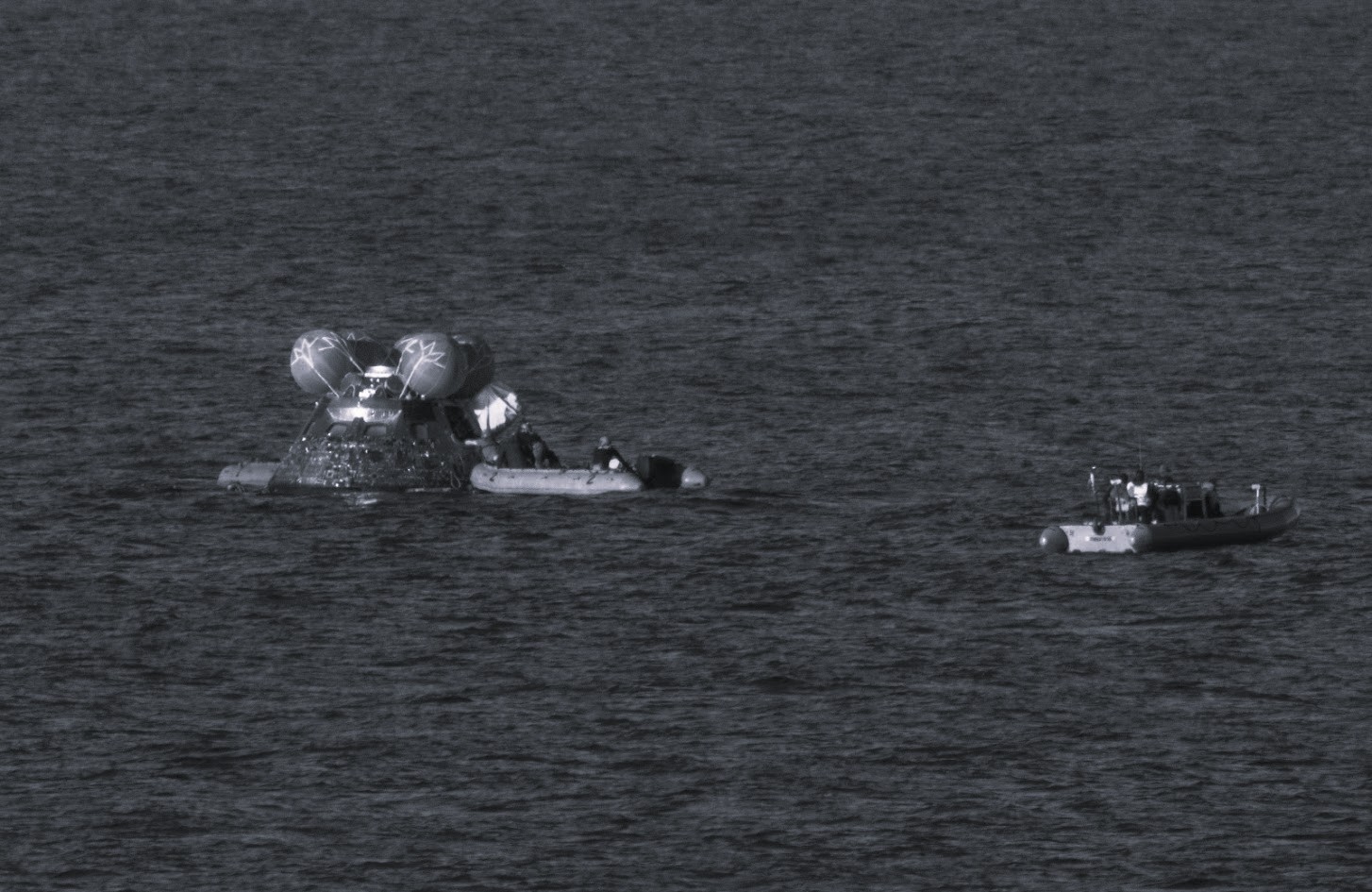
Artemis II Marks Historic Return to Lunar Exploration with Successful Splashdown
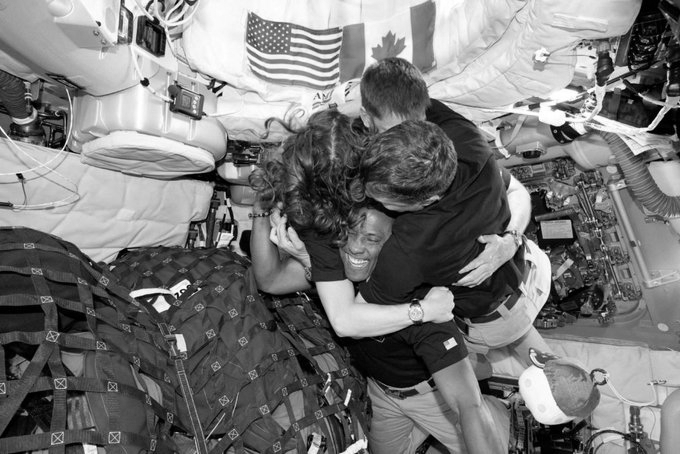
NASA’s Artemis II mission concluded with a dramatic splashdown in the Pacific Ocean , marking humanity’s first crewed journey around the Moon in more than five decades and signalling a strong comeback in deep-space exploration.
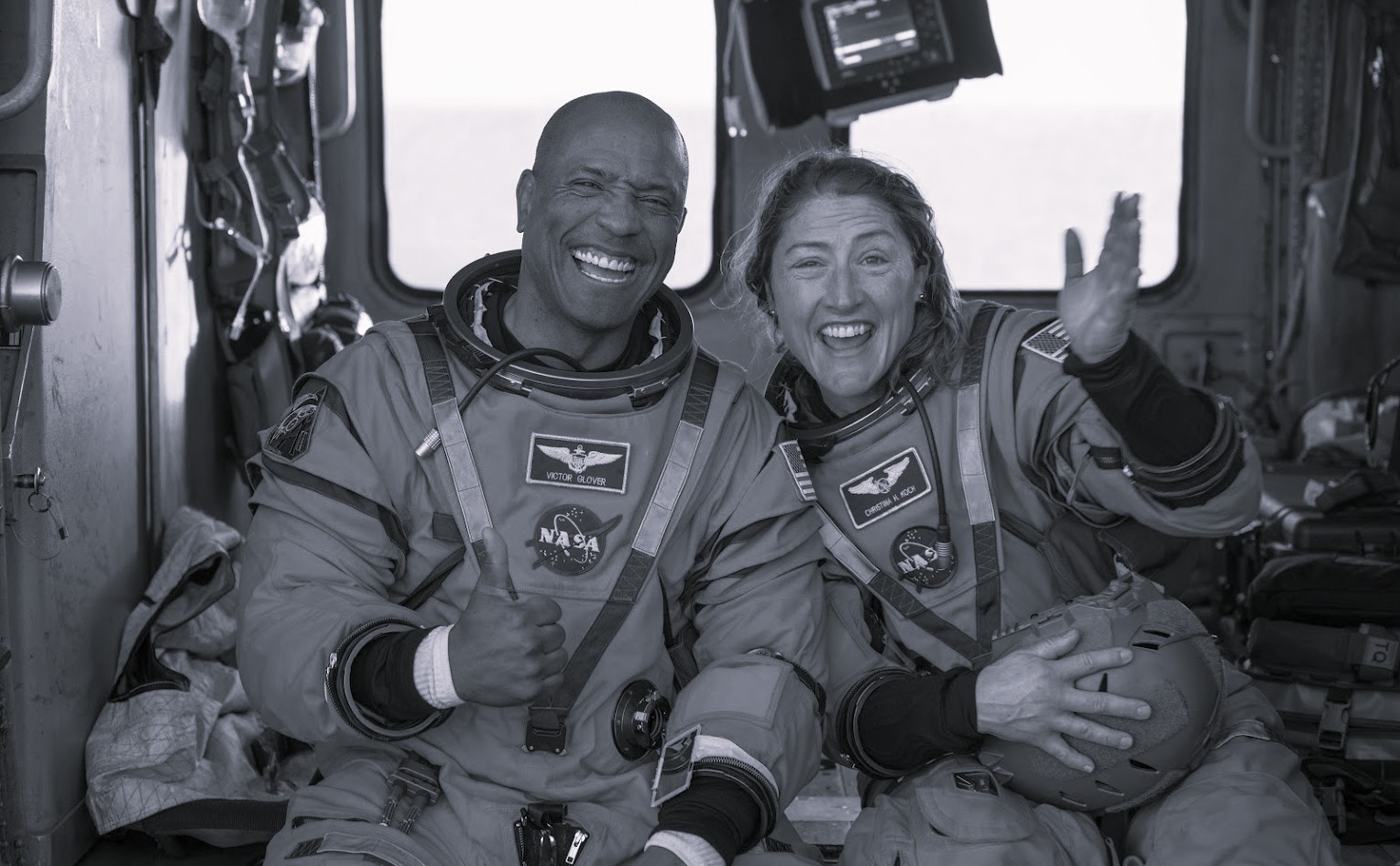
The four astronauts Reid Wiseman, Victor Glover, Christina Koch, and Jeremy Hansen returned safely after completing a record-breaking lunar flyby . Travelling at an intense Mach 33 during re-entry, their Orion capsule Integrity endured extreme temperatures and a tense six-minute communication blackout caused by plasma build-up.
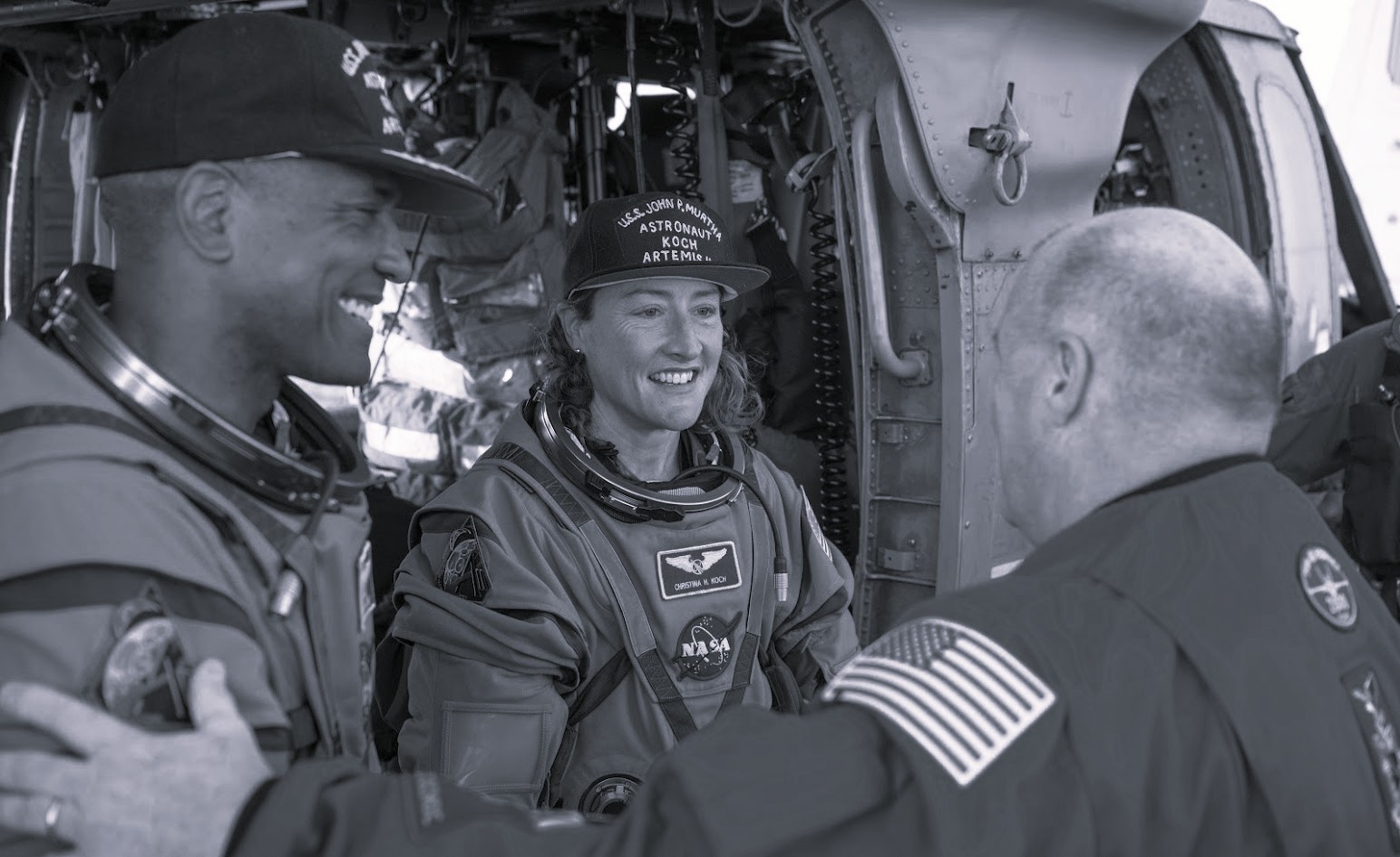
Mission Control closely monitored the spacecraft’s heat shield , a critical component designed to withstand thousands of degrees. Anxiety peaked during the blackout phase, but relief and cheers followed as communication was restored and the capsule executed a precise landing. The recovery ship, USS John P. Murtha, along with aircraft and helicopters, facilitated the safe retrieval of the crew off the San Diego coast.
Launched on April 1 under NASA’s Artemis Program, the mission achieved several milestones despite not landing on the Moon. It surpassed the distance record of Apollo 13, reaching 252,756 miles (406,771 km) from Earth, the farthest distance ever travelled by humans .
The crew documented never-before-seen views of the Moon’s far side and witnessed a rare total solar eclipse , an experience they described as breathtaking. In a poignant moment, the astronauts sought permission to name two lunar craters after their spacecraft and Wiseman’s late wife, adding a personal touch to the historic journey. Their imagery, including an “Earthset” reminiscent of Apollo 8’s iconic Earthrise, captivated audiences worldwide.
Despite its success, the nearly 10-day mission encountered technical glitches , including issues with the drinking water system, propellant valves, and a malfunctioning onboard toilet. However, the crew downplayed these setbacks, emphasising that risk and discomfort are integral to space exploration .
The mission also drew global attention, with praise from leaders and celebrities, including Donald Trump, Mark Carney, King Charles III, Ryan Gosling, Scarlett Johansson, and William Shatner.
NASA officials described Artemis II as a critical stepping stone toward future missions. The upcoming Artemis III will focus on docking operations in Earth orbit, while Artemis IV aims to land astronauts near the Moon’s south pole by 2028.
Crew members highlighted the broader message of the mission urging humanity to appreciate Earth’s uniqueness. The successful completion of Artemis II underscores the beginning of a new era in human space exploration , with long-term goals of establishing a sustainable presence on the Moon and beyond.