
AP Unveils Scientific Feed Pricing System for Shrimp Farmers
In a landmark move aimed at bringing greater stability to Andhra Pradesh's aquaculture sector, the state government has unveiled a comprehensive mechanism to regulate shrimp feed prices and improve transparency in the industry's pricing structure. The initiative is expected to provide significant relief to thousands of shrimp farmers who have been struggling with rising input costs and fluctuating market returns in recent years.
The government has constituted a high-level committee , chaired by the Commissioner of Fisheries , to monitor farm-gate shrimp prices and recommend a scientifically determined "fair price" for shrimp feed. The committee will assess factors such as raw material costs, manufacturing expenses, transportation charges, market trends, quality standards and commodity price indices before arriving at pricing recommendations.
According to a government order issued by B. Rajasekhar , Ex-Officio Special Chief Secretary of the Animal Husbandry, Dairy Development and Fisheries Department , the framework has been designed on the lines of pricing mechanisms followed in the poultry sector. The goal is to establish a transparent system that protects the interests of both aqua farmers and feed manufacturers while ensuring sustainable industry growth.
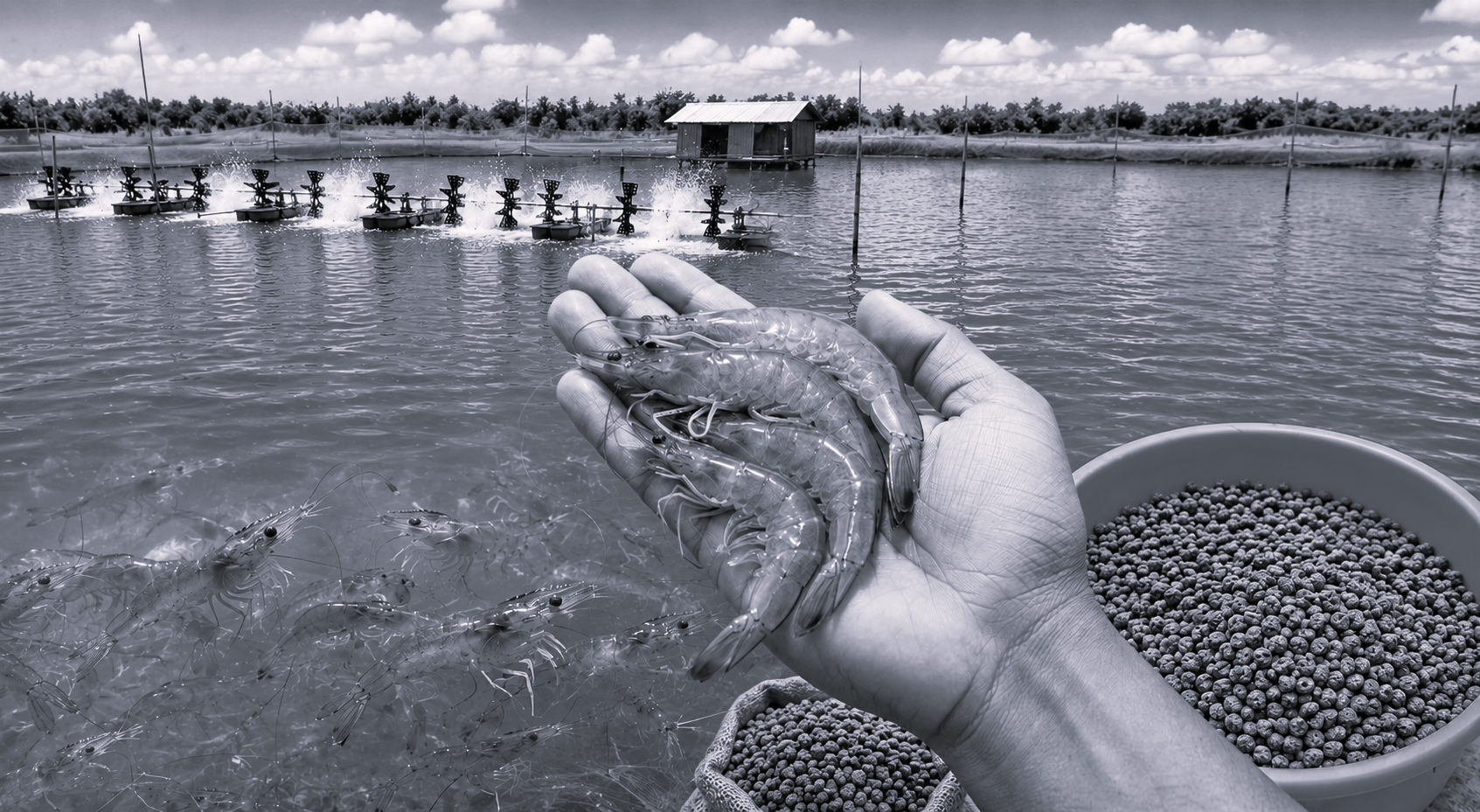
The move assumes significance because, unlike major agricultural commodities, shrimp has no Minimum Support Price (MSP) mechanism. Prices are determined entirely by domestic and international market forces, leaving farmers exposed to fluctuations in global demand, export orders and production costs. Feed alone accounts for nearly 50-60 per cent of shrimp farming expenses , making it one of the most critical factors affecting profitability.
The committee will rely on international benchmarks, market intelligence, expert consultations and data verification to formulate recommendations. It will collect and analyse shrimp procurement prices from domestic and overseas markets every fortnight and work with scientists, econometric experts and research institutions to forecast market trends. A digital application tracking shrimp purchase prices will also be strengthened to help farmers make informed stocking and harvesting decisions through scientifically derived baseline pricing models.
In a parallel initiative, the government has established the Andhra Pradesh Shrimp Feed Ingredients Price Monitoring Committee , which will monitor fluctuations in key feed ingredients such as fish meal and soybean meal . The committee will analyse national and international price movements, import-export trends and supply-chain developments that influence feed production costs.
Beyond pricing reforms, the government has directed the committees to promote antibiotic-free shrimp cultivation , strengthen compliance with the National Residue Control Plan (NRCP) and facilitate internationally recognised certifications. The focus will also be on encouraging exports of value-added seafood products , which command higher returns in global markets.
The decision carries added importance as Andhra Pradesh is India's leading shrimp-producing state , contributing the largest share of the country's aquaculture output and seafood exports. Although India's seafood exports have recorded steady growth over the past few years, the sector has faced mounting challenges from global oversupply, changing consumer demand and price volatility in major markets such as the United States, China, Japan and the European Union.
Industry stakeholders believe the state's latest intervention could emerge as a pioneering model for India's aquaculture industry, creating a reliable price-discovery mechanism where no MSP exists and helping farmers navigate increasingly uncertain global market conditions.