
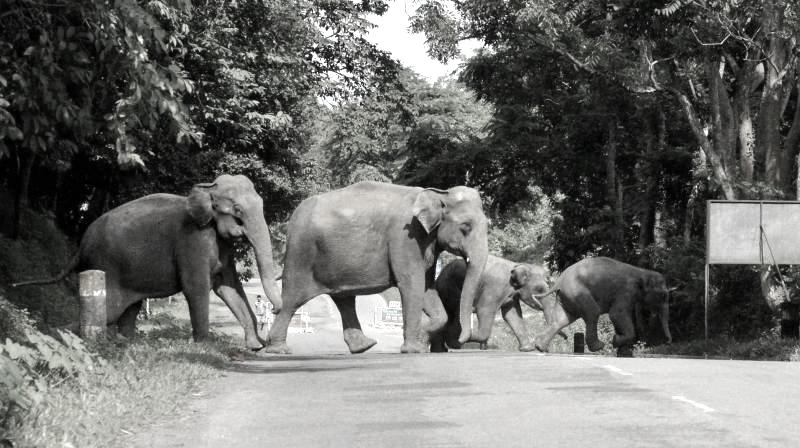
AP to track wild elephants with radio collars
Andhra Pradesh's forest department is taking a significant step to mitigate human-elephant conflict by introducing an advanced technological solution. Following the successful model used in West Bengal, the state is preparing to install radio collars with GPS devices on wild elephants to track their movements in real-time. This initiative is being financially supported by the Indian Oil Corporation.
The technology is straightforward yet effective: a radio collar is fitted to the lead elephant of a herd. The collar contains a GPS transmitter and a battery that can last up to two years. This device sends hourly location data back to a computer at the forest department office, giving officials a precise and up-to-the-minute understanding of the herd's whereabouts.
This real-time tracking will allow the forest department to be more proactive in its efforts to protect both human settlements and the elephants. Once elephant movements are detected near a village, staff can quickly alert residents and deploy trained "kunki" (tame) elephants to safely guide the wild herds back into their forest habitats.
The elephant menace has been a persistent problem in districts like Chittoor and Manyam, where herds have caused widespread crop destruction and even led to the loss of life and property. To address this, the government has already brought in four kunki elephants from Karnataka, which are undergoing special training at the Musalimadugu camp in Chittoor district.
Kunki elephants are essential to this strategy. They are specially trained to manage and control wild herds, using their calm demeanor and discipline to:
• Tame wild elephants and ease tensions.
• Chase away herds that have encroached on agricultural lands.
• Capture wild elephants for relocation or training purposes.
The process of creating a kunki elephant is a rigorous one. Young, healthy, and often male elephants are identified and captured from the wild. After their capture, they undergo intensive training to become reliable partners for forest officials.
This new technological approach, combined with the use of trained kunki elephants, is expected to provide a more efficient and humane way to manage human-elephant interactions. Palamaneru Forest Range Officer (FRO) Narayana stated that permissions are being sought from the government for the full-scale implementation of the system, which was first studied by wildlife biologist Rajesh Kalva in 2019.