
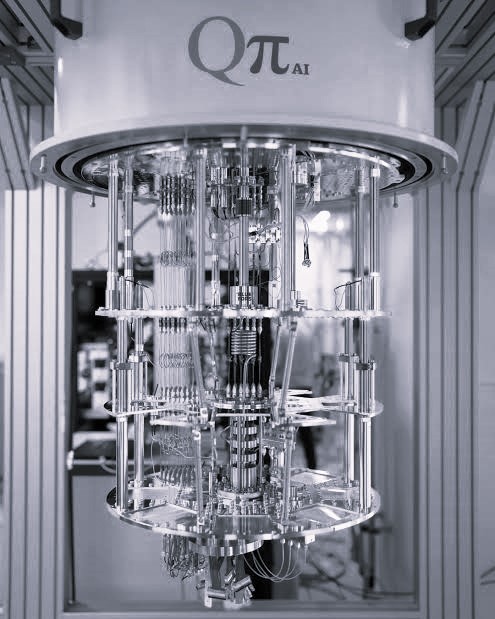
AP Takes Global Stage with Amaravati’s First Indigenous Quantum Testbeds
Amaravati is charting a new identity one that goes far beyond its role as a planned administrative capital. On April 14, coinciding with World Quantum Day , the city witnessed the launch of India’s first indigenous quantum computing testbeds , marking a significant leap into the future of next-generation technology . Chief Minister N. Chandrababu Naidu unveiled the twin systems, Amaravati 1S and Amaravati 1Q , under the ambitious Quantum Valley initiative , placing Andhra Pradesh firmly on the global innovation map.
Unlike conventional computers, quantum systems are designed to tackle problems of immense complexity, from advanced encryption to drug discovery and climate simulations . However, the path to building such systems is filled with technical challenges. This is where Amaravati’s new facilities come in. Developed as part of the Amaravati Quantum Reference Facilities , these testbeds serve as specialized environments where critical quantum components ,such as control systems, amplifiers, and cryogenic hardware , can be rigorously tested and validated under extreme conditions close to absolute zero temperature .
Spread across two key locations, the infrastructure reflects both scientific ambition and institutional collaboration. The 1Q system at Medha Towers focuses on advanced component testing, while the 1S system at SRM University operates under an open-access model , allowing researchers and innovators to directly use the facility. Together, they form the backbone of a growing ecosystem designed to accelerate quantum research and development in India.
What sets this project apart is its foundation in fully indigenous technology , developed in collaboration with premier institutions such as the Tata Institute of Fundamental Research , the Indian Institute of Science , and DRDO . At a time when most countries rely on a handful of global players for quantum infrastructure, Amaravati’s approach reflects India’s push for self-reliance in deep technology . It also aligns closely with the goals of the National Quantum Mission , which seeks to build a complete domestic quantum ecosystem.
The initiative is not limited to high-end research alone. By opening its doors to students, startups, and young innovators , the project aims to democratize access to cutting-edge infrastructure. IT Minister Nara Lokesh emphasized that this effort will create global career opportunities and nurture a new generation of quantum scientists and entrepreneurs. The scale of outreach is evident, with nearly 1.5 lakh students across the state set to witness the launch virtually, sparking early interest in frontier technologies.
As nations like the United States and China race ahead in quantum advancements, Amaravati’s entry into this domain signals India’s growing ambition to compete at the highest level. More importantly, it reflects a broader vision ,to transform the city into a global quantum hub , attracting research collaborations, investments, and innovation-driven industries.
With this milestone, Amaravati is no longer just a symbol of administrative planning; it is emerging as a world-class technology destination , where science, policy, and opportunity converge to shape the future.