
AP Red sand dunes gets International recognition
Red sand dunes (Erra Matti Dibbalu), a striking geological formation near Visakhapatnam, India, has been added to UNESCO's Tentative List of World Heritage Sites in 2025. This provisional inclusion signals a major step toward full World Heritage status, offering hope for enhanced protection of this rare site, which has long suffered from neglect, urbanization, and environmental degradation.
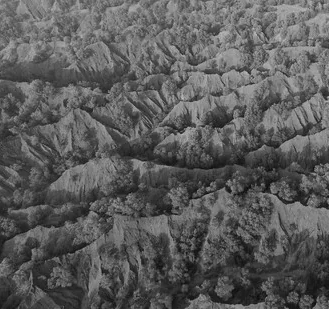
Natural wonder on the coast Erra Matti Dibbalu, meaning "Red Sand Hills" in Telugu, consists of dissected and stabilized coastal red sediment mounds spanning about 5 kilometers in length and 2 kilometers in width, located between Visakhapatnam and Bheemunipatnam along the Bay of Bengal. These parabolic dunes rise up to 60 feet (18 meters) high, their vivid red hues resulting from iron mineral oxidation creating a dramatic contrast with the adjacent blue sea and lush Eastern Ghats. One of only three such gullied red dune formations in Southeast Asia (alongside Teri Sands in Tamil Nadu, India, and similar sites in Sri Lanka), it represents a rare paleo-coastal phenomenon unique to low-latitude tropical regions.
Declared a National Geo-Heritage Monument by the Geological Survey of India (GSI) in 2014 and officially notified in 2016, the site covers approximately 483 acres (195 hectares) and harbors mesolithic and neolithic artifacts, providing the first such evidence in India from these ancient coastal dunes. Its addition to UNESCO's Tentative List, alongside sites like the Natural Heritage of Tirumala Hills, underscores its global geological value and has been hailed by environmentalists and archaeologists as a catalyst for safeguarding it from ongoing threats like encroachment and pollution.
History etched in Red sand Geologically, Erra Matti Dibbalu is not mere soil but a hardened composite of 40-50% sand, silt, and clay layers that solidified over millennia through permineralization, where sediments cemented into rock-like structures. The iconic red color stems from the oxidation of iron-rich minerals derived from Khondalite rocks in the Eastern Ghats. Formation occurred during the late Quaternary period, around 12,000 to 20,000 years ago, amid the Last Glacial Maximum, when sea levels were 5-10 kilometers lower, allowing mineral-laden streams from the Ghats to deposit sediments along an inland coastline. Subsequent sea-level rise, monsoon influences, wind erosion, and water gullies sculpted the dunes' intricate, maze-like gullies, preserving records of climate shifts, sea-level fluctuations, and early human activity.
First documented in 1886 by GSI official William King, who dubbed them "Badlands" for their rugged terrain, the site was later renamed Erra Matti Dibbalu following detailed studies of its mineral composition. (Note: While the original article's reference to 1886 aligns with historical GSI surveys, specific attribution to King requires further archival verification; the site's Quaternary significance is well-established.) As one of India's 34 national geo-heritage sites, it offers invaluable insights into Earth's climatic and geological evolution.
Path to preservation UNESCO's recognition could transform Erra Matti Dibbalu's future by integrating it into the World Heritage framework, emphasizing its themes of tectonic and coastal systems criteria that align strongly with UNESCO's selection standards. If inscribed, management would shift to a dedicated body under UNESCO guidelines, minimizing political interference and promoting sustainable geotourism, much like successful models in other global geoparks. Currently, India has 60 sites on the Tentative List, with Erra Matti Dibbalu among the top contenders from Andhra Pradesh. Globally, there are over 120 UNESCO Global Geoparks in 33 countries, and this status could elevate the site akin to protected heritage like Hyderabad's Salar Jung Museum.
Yet, preservation remains urgent amid escalating threats. Illegal sand mining, urban encroachments, and housing layouts have damaged portions of the dunes, with recent 2024 incidents involving heavy machinery for land leveling halted only after public outcry and interventions by local activists and officials like Bheemunipatnam MLA Ganta Srinivasa Rao. In January 2025, Jana Sena corporator Peethala Murthy Yadav filed a Public Interest Litigation (PIL) in the Andhra Pradesh High Court against excavation activities, seeking an environmental impact assessment and a mining halt to protect the site's ecological balance. Film shoots have caused further erosion, including a 2021 incident with earthmovers, while tourism brings plastic pollution and litter, exacerbating natural degradation in this fragile CRZ-I and CRZ-III zone. Despite a 2016 state buffer zone order, enforcement has been lax, leaving the dunes vulnerable.
Environmentalists advocate for clear boundary demarcation by the Visakhapatnam Metropolitan Region Development Authority (VMRDA), fencing, visitor tracks, and community-led cleanups to balance conservation with education. With UNESCO's spotlight, advocates hope for streamlined protections, turning this neglected gem into a beacon of sustainable heritage for future generations.