
AP launches ‘Raitanna… Meekosam’ program to support farmers
The Andhra Pradesh government has launched the “Raitanna… Meekosam” initiative to financially support farmers and ensure sustainable income sources. As part of the 2025-26 financial year, the second installment of the Annadata Sukhibhava scheme was directly credited to farmers’ bank accounts on November 19, 2025.
Chief Minister N. Chandrababu Naidu instructed officials that, from November 24 to 29, the program will reach all rural households across the state to showcase progress in agriculture and gather feedback and suggestions from farmers.
The initiative also includes a seven-day campaign called “Five Pillars of Agriculture”, which focuses on guiding farmers on best practices in areas such as water management, crop selection, agri-tech, food processing, and government support. Officials and representatives will visit farmer households during November 24-29, and follow-up workshops will be held at Raitu Seva Kendras (Farmer Service Centers) on December 3.
Dr. T. Damodar of the Department of Animal Husbandry, Andhra Pradesh, stated that the program will also educate livestock owners, poultry farmers, and animal rearers about various state schemes and programs, while collecting their suggestions for improving services. Farmers are encouraged to take advantage of this opportunity to better understand the government’s initiatives and provide feedback for enhanced support.
During the program’s inauguration, Agriculture Minister Kinjarapu Atchannaidu highlighted the five pillars - water security, demand-based cropping, agri-tech, food processing, and government support - as crucial measures to make farmers self-reliant and prosperous. He emphasized that despite financial challenges, farmer welfare remains a top priority, and consistent efforts have ensured adequate water supply to the Krishna Delta over the past decade.
Minister Atchannaidu added that the government’s comprehensive five-pillar strategy aims to strengthen agriculture and support farmers with practical solutions, ensuring steady income and sustainable growth for rural families.
The government aims for every farmer household in the state to achieve progress and self-sufficiency. Agriculture, being the backbone of the state’s economy, is given utmost priority. Programs are underway to boost farmer income, reduce investment costs, provide fair crop pricing, protect against natural disasters, stabilize markets, and offer technical guidance. Initiatives such as soil and water management, crop insurance, natural farming promotion, and strengthening Raitu Seva Kendras are part of these efforts.
Minister Atchannaidu also stressed that the five pillars will be explained to each farmer in person for at least 20 minutes, covering how these measures help ensure stable income, reduce risks, and make farming more profitable. He highlighted water management as a key factor, noting that adequate irrigation under the Chief Minister’s vision has enabled reliable cultivation in the Krishna Delta.
Farmers are encouraged to adapt to changing dietary trends and cultivate high-demand, nutritious grains like ragi, bajra, and jowar, to improve both yield and profitability.
Mechanization is highlighted as essential to reduce labor costs and improve efficiency. Tractor availability, use of advanced machinery, and drone-based crop management are emphasized to increase productivity while lowering expenses. The government is also promoting local food processing industries to maximize farmer profits.
Addressing political criticism, Minister Atchannaidu remarked that opposing the program is misleading and counterproductive, emphasizing that the current government has implemented multiple schemes to support farmers even during economic challenges. He challenged critics to openly discuss agriculture development rather than spreading misinformation.
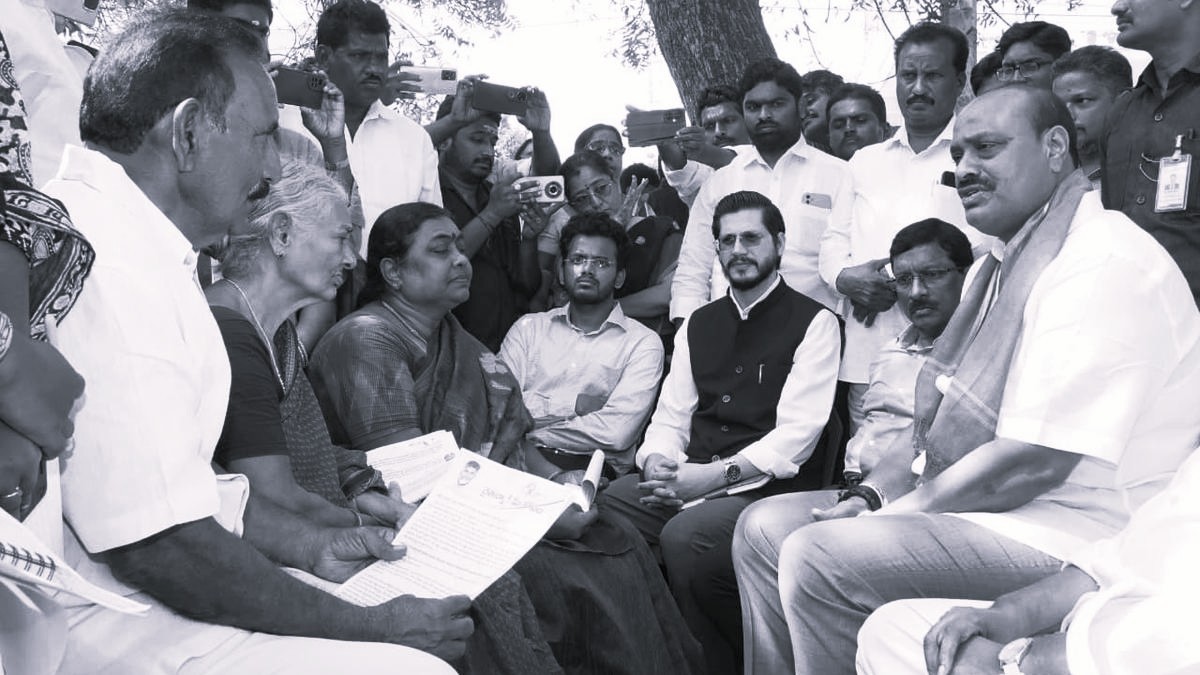
The program’s inauguration in Ghantasala village, Avanigadda constituency, was attended by local MLA Dr. Mandali Buddha Prasad, senior officials from the Agriculture Department, scientists from the Vignan Krishi Kendra, and local farmers.