
Antarvedi: The Sacred Edge Where Mythology and Moksha Unite
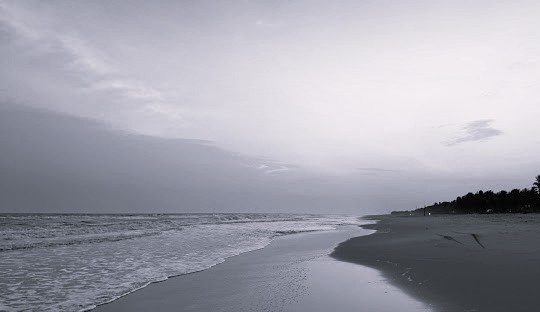
At the far edge of Andhra Pradesh’s Konaseema region, where land slowly gives way to water, there exists a place that feels both grounded and eternal. The air carries a mix of salt and sanctity, the sound of waves blends with temple bells, and the mighty Godavari after travelling hundreds of kilometres finally surrenders itself to the vast Bay of Bengal.
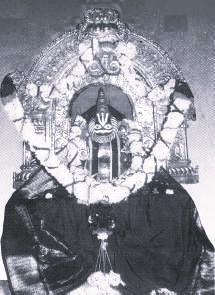
This is Antarvedi a sacred confluence not just of river and sea, but of mythology, history, and unwavering faith. Often called “Dakshina Kashi” , Antarvedi is more than a pilgrimage site. It is a spiritual threshold, believed to grant liberation to those who step into its waters and bow before its presiding deity, Lord Lakshmi Narasimha Swamy .
The Birth of a Sacred Land
The origins of Antarvedi are deeply rooted in ancient legend. It is said that Lord Brahma, seeking redemption for an offence committed against Lord Shiva, chose this very land to perform a powerful Rudra Yagna . Sage Vashishta, revered for his immense spiritual strength, guided the sacred waters of the Godavari also known as Gautami to merge with the sea at this point.
The site of the ritual, positioned like a sanctified altar between forces of nature, came to be known as “Antarvedi,” meaning the inner sacrificial platform . After the yagna, Brahma installed Lord Neelakantheswara here, marking the beginning of its spiritual prominence.
From that moment on, Antarvedi was no longer just land it became a space of divine purpose.
A Demon, A Boon, and a Cosmic Battle
But the sanctity of Antarvedi was not forged in peace alone.
In ancient times, a powerful demon named Rakthavilochana , the son of Hiranyaksha, performed severe penance on the banks of the Vashishta river. Pleased by his devotion, Lord Shiva granted him a dangerous boon every drop of blood that fell from his body would create another demon as powerful as himself.
What followed was devastation.
Empowered by this ability, Rakthavilochana turned tyrant, destroying rituals, tormenting sages, and spreading fear across realms. He was even provoked to attack Sage Vashishta’s family, leading to the killing of the sage’s sons in his absence.
Witnessing the destruction, Vashishta turned to Lord Vishnu for help.
The response was immediate and powerful.
Lord Lakshmi Narasimha , mounted on Garuda and accompanied by Goddess Lakshmi, descended upon Antarvedi. The battle that followed was unlike any other. Each strike against the demon multiplied the enemy, as drops of blood created new warriors.
Realising the nature of the threat, Narasimha manifested a divine force Maya Shakti to prevent the blood from touching the ground. The flowing blood was contained and transformed into what is now believed to be the Rakta Kulya River .
With the spread of evil halted, Narasimha finally destroyed Rakthavilochana and restored cosmic balance.
Sacred Geography and Spiritual Power
Antarvedi’s uniqueness lies not just in its stories, but in its geography. It is a rare place where five sacred elements converge :
• The Bay of Bengal , representing infinity
• The Godavari River , symbolising life and purity
• The Sangam , where river meets sea
• The Rakta Kulya stream , born from mythological transformation
• The Chakra Theertham , where Narasimha is believed to have cleansed his Sudarshana Chakra
Together, these form a powerful spiritual ecosystem. Devotees believe that taking a holy dip here removes sins and grants the same merit as performing ancestral rites in Gaya. For this reason, Antarvedi is revered as a Mukti Kshetra —a gateway to liberation.
Echoes of Devotion Across Time
Antarvedi’s story does not end with mythology. It continues through centuries of devotion.
Legends speak of Santhana Maharaja , who regained his lost divine status after worshipping here. Over time, however, the region turned into a dense forest, and the temple faded into obscurity.
It was rediscovered in the most humble way.
A cowherd named Kesavadasu noticed that one of his cows would release milk daily over a mound. Curious, he investigated, and through divine guidance in a dream, uncovered the buried idol of Lord Narasimha. The place came back to life, and the nearby village was named Kesavadasupalem in his honour.
Faith, once again, restored what time had hidden.
Rebuilding Through Faith and Miracles
As centuries passed, the temple underwent multiple phases of decay and revival.
A devoted patron, Narasimha Rao , once attempted to bring timber from Bhadrachalam for reconstruction. However, the Godavari ran dry, halting transport. Undeterred, he undertook a three-day fast, praying for divine intervention. Soon after, heavy rains filled the river, and the timber safely reached Antarvedi’s shores.
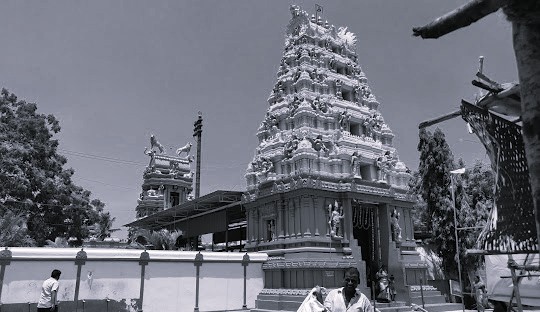
In another instance, a merchant named Adinarayana lost seven ships at sea. In despair, he vowed to build the temple’s gopuram if they returned safely. Within days, all ships arrived unharmed. True to his word, he funded the temple’s reconstruction in 1923 .
Such stories are not seen as coincidences here they are considered proof of divine presence.
The Kurma Salagram Mystery
Another fascinating legend speaks of a fisherman who caught a mysterious stone instead of fish in the Rakta Kulya river. Despite throwing it away multiple times, it kept returning to his net. Frustrated, he smashed it only to see it bleed.
That night, the deity appeared in his dream, revealing it as a Kurma (tortoise) avatar Salagram . Today, that sacred form is worshipped in the temple.
Festivals That Transform the Land
Antarvedi comes alive during its grand annual celebrations.
The Brahmotsavams , held from Magha Shuddha Saptami to Pournami, draw lakhs of devotees. The celestial wedding of the deity, the grand Rathotsavam on Bhishma Ekadashi, and the celebrations of Narasimha Jayanti turn the quiet coastal village into a vibrant spiritual hub.
During these days, Antarvedi is often described as a “Kaliyuga Vaikuntha.”
A Journey Worth Taking
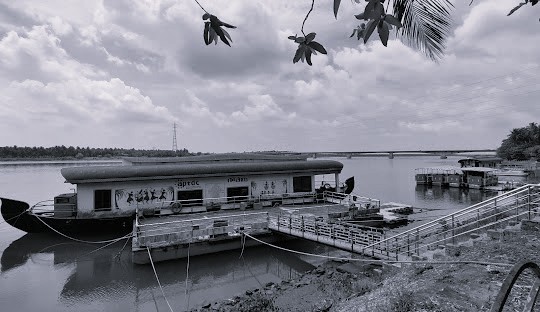
Located about 130 km from Kakinada and 100 km from Rajahmundry, Antarvedi is accessible by road, rail, and even ferry. The journey from Narasapuram by boat, crossing the Godavari, offers a unique and memorable experience.
Pilgrims are welcomed with simple yet comfortable accommodation options, including temple guest houses, TTD choultries, and local lodges.
Where Everything Comes Together
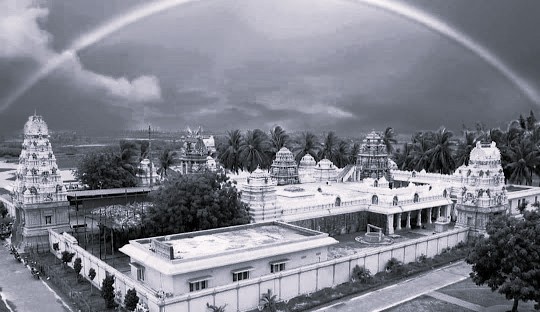
Spread across nearly four square miles, bounded by river, sea, and sacred streams, Antarvedi stands as a place where nature and spirituality coexist in harmony.
It is not just a destination it is an experience. A place where myths feel real, where faith feels alive, and where every wave seems to whisper something ancient.
Conclusion
In Antarvedi, the Godavari does not just meet the sea it completes its journey.
And for those who visit, perhaps something within them does too.
Because here, at the meeting point of elements and eternity, one truth quietly unfolds: