
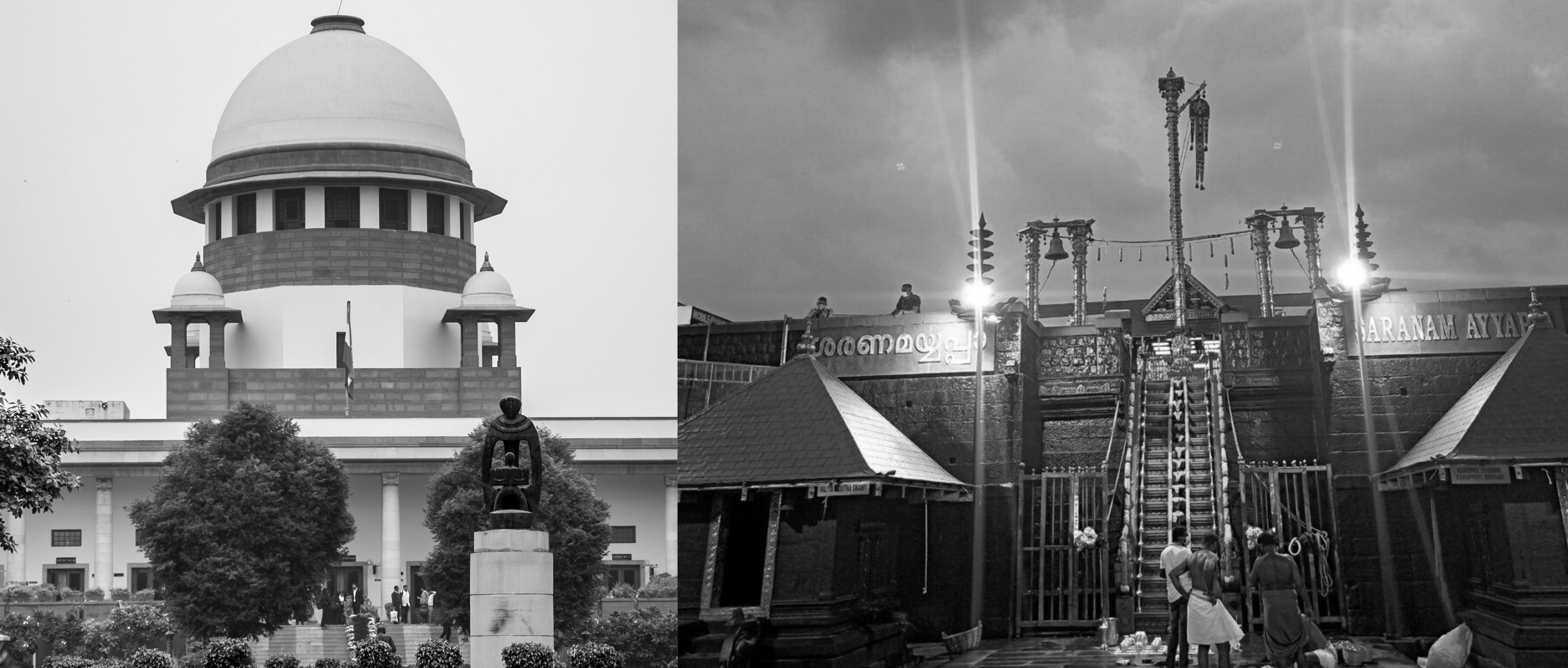
Another landmark ruling awaiting? 9-judge SC bench to hear women’s entry in religious places
The Supreme Court on Monday announced that a nine-judge bench will begin final hearings on petitions challenging restrictions on women at religious places , including the Sabarimala Temple in Kerala . The case raises critical questions about constitutional rights, religious traditions, and gender equality .
A bench comprising Chief Justice Surya Kant and Justices Joymalya Bagchi and Vipul M Pancholi said the full bench, to be constituted by the Chief Justice, will start proceedings on April 7, 2026 , with the hearing expected to conclude by April 22 . All parties have been asked to submit their written arguments by March 14 .
The petitions focus on whether excluding women of certain age groups from places of worship violates the Constitution , particularly Article 14 (equality before law) and Article 25 (freedom of religion). The case also examines the delicate balance between constitutional morality and religious practices , questioning if faith-based traditions can override women’s right to enter public religious spaces.
The Centre, represented by Solicitor General Tushar Mehta , supported the review petitions seeking reconsideration of the 2018 Supreme Court verdict in the Indian Young Lawyers Association (IYLA) case , which had allowed women of all age groups into Sabarimala Temple . That landmark ruling had overturned the centuries-old practice barring women between the ages of 10 and 50 from entering the temple during their menstrual phase , as Lord Ayyappa is considered an eternal celibate, citing constitutional guarantees of gender equality and non-discrimination .
The Supreme Court also outlined the hearing schedule in detail . The review petitioners and their supporters will present their arguments from April 7 to April 9 , followed by the parties opposing the review from April 14 to April 16 . Any rejoinder submissions will be heard on April 21 , with the final submissions by the amicus curiae on April 22 , marking the conclusion of the hearing. The court emphasized strict adherence to this schedule, reflecting the significance of the case in defining the relationship between constitutional rights and religious practices.