
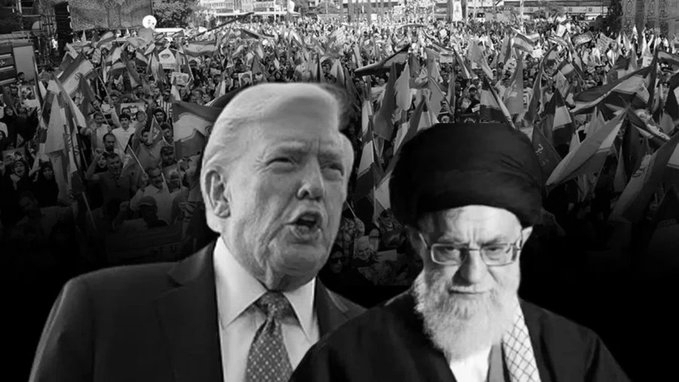
Another coup on the cards? Iran protests enter sixth day, Mossad role acknowledged
Iran’s protests have entered their sixth consecutive day , unfolding amid genuine public anger over runaway inflation and a collapsing currency , with the rial trading near 1.4 million to the US dollar . The economic distress is real, widely felt, and acknowledged even by Iran’s own leadership. Yet the direction, amplification, and international framing of the unrest increasingly raise questions about external engineering rather than a purely spontaneous domestic uprising .
While inflation, unemployment, and rising prices have triggered frustration, the manner in which the protests are being projected globally suggests a familiar pattern. Western governments and media have highlighted every local disturbance inside Iran as evidence of nationwide revolt , even as similar or larger protests within the United States have been managed through force deployments, including the use of the US National Guard , without comparable international scrutiny.
Suspicions of outside involvement were openly reinforced by former US secretary of state Mike Pompeo , who issued an unusually candid statement celebrating the unrest. In a post welcoming the protests, Pompeo wrote:
“Happy New Year to every Iranian in the streets. Also to every Mossad agent walking beside them.”
The remark was striking not merely for its tone, but for its explicit reference to foreign intelligence presence , effectively acknowledging what Iranian authorities have long alleged: that Israel’s Mossad , alongside the CIA , plays an active role in destabilisation campaigns. Both agencies have an extensive historical record of covert interventions, regime-change operations, and psychological warfare across West Asia and beyond.
The protests themselves continue to be driven, at street level, by economic grievances. President Masoud Pezeshkian has conceded government mismanagement, saying the public’s dissatisfaction stems from failures at home rather than foreign conspiracies. Yet the speed of mobilisation, coordinated messaging, and aggressive external amplification suggest that domestic discontent is being leveraged and steered rather than merely observed.
The contrast with the United States has not gone unnoticed. As Washington condemns Tehran’s security response, it simultaneously normalises heavy policing and military deployments to contain protests on its own soil. This double standard strengthens Tehran’s argument that the issue is less about human rights and more about strategic pressure .
Comparisons with Libya under Muammar Gaddafi loom large. There too, legitimate grievances were present, but external intervention transformed protests into a regime-change operation, leaving lasting instability. Iran’s leadership argues it is confronting a similar attempt: economic pain weaponised through intelligence-led escalation .
In essence, while inflation-driven anger in Iran is undeniable , the current phase of protests appears increasingly engineered, internationalised, and politically instrumentalised , with senior Western figures openly signalling encouragement. Pompeo’s public reference to “Mossad agents walking beside” protesters has moved such claims from allegation to acknowledged rhetoric , sharpening fears that Iran may be facing not just unrest but the early contours of another externally driven coup attempt.