
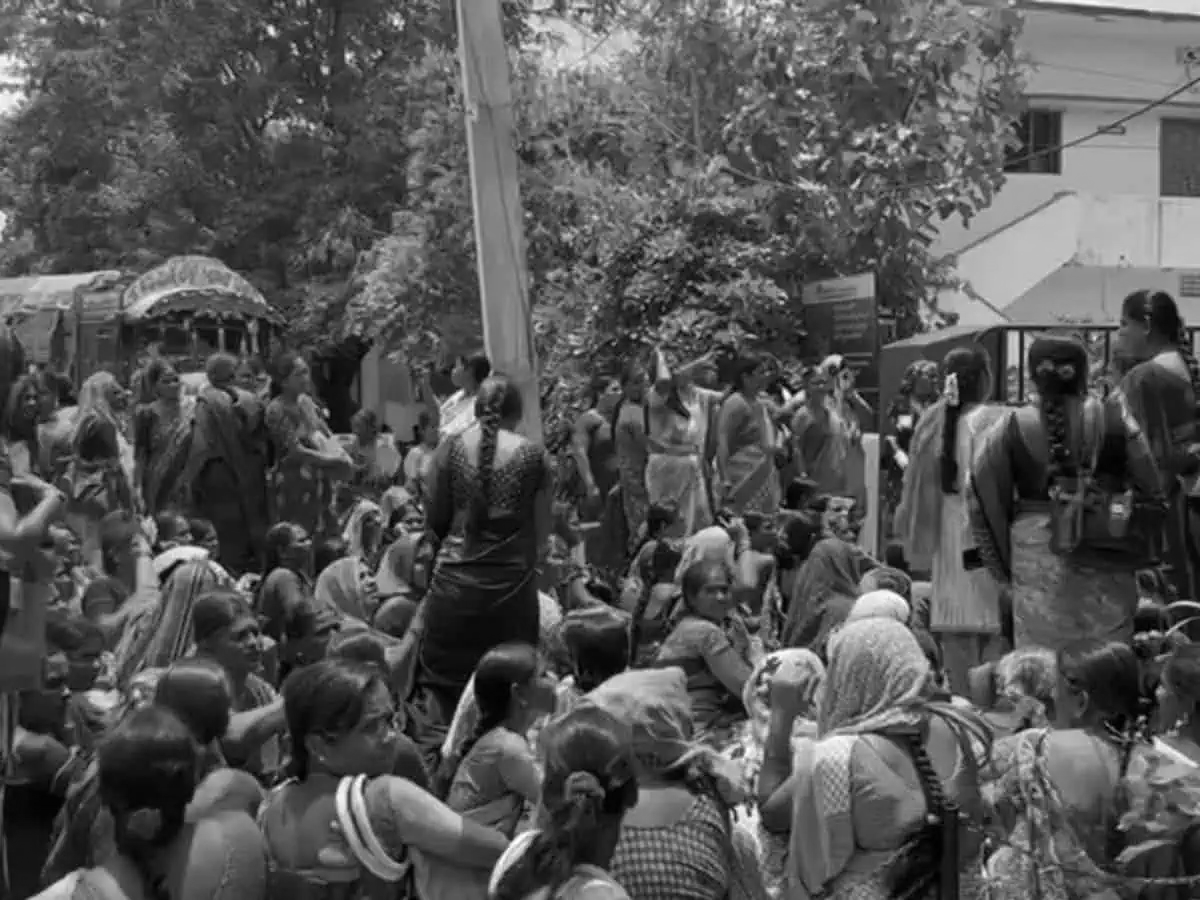
Anganwadi’s protest heat touches CM Revanth’s house
Anganwadi workers protested in front of Chief Minister Revanth Reddy's house in Kodangal, demanding the withdrawal of the pre-primary education policy. The government is known to be planning major changes in the education system, with the intention of introducing pre-primary education in government schools from the 2025-26 academic year. Efforts are underway to establish nursery, LKG, and UKG classes in government schools to compete with private and corporate schools. Orders have already been issued to start this system in 210 schools. However, there are concerns that this decision will weaken the Anganwadi system, leading to protests by Anganwadi workers. They stated that their centers would close and they would lose their jobs. The police took them into custody and moved them to the police station.
What are the issues faced by Anganwadi workers?
While the government claims that the new education policy will strengthen government schools and enable them to compete with private schools, it is evident that it will also impact the Anganwadi system. Currently, Anganwadi centers provide pre-school education, nutrition, and health services to children aged 3-6. With the introduction of pre-primary classes in government schools, the number of children attending Anganwadi centers may decrease. Experts warn that this could lead to the weakening of Anganwadis and harm the nutrition and health services for children in rural areas. Children from rural and poor families, in particular, rely on Anganwadis. These changes may disrupt the services they receive. Additionally, there is uncertainty surrounding the jobs and salaries of Anganwadi workers.
How does the government plan to address this?
Chief Minister Revanth Reddy has instructed officials to develop Anganwadis into a national model. Plans are being prepared to merge Anganwadi centers with vacant government schools and transform them into pre-primary hubs. Thirty-four schools have been identified as a pilot project in 21 districts. This indicates that the government intends to strengthen Anganwadis by integrating them with schools rather than closing them down. There are also proposals to expand education in Anganwadis up to the 3rd grade. To this end, there are suggestions to improve technology and infrastructure. The goal is to bring about these changes in line with the National Education Policy (NEP 2020) .
What will be the situation if the Anganwadi system is integrated?
The central government has issued guidelines for co-locating Anganwadis with schools instead of completely abolishing them. This would provide children with better education and nutrition services. In rural areas, vacant buildings will be used to convert Anganwadis into pre-primary centers. If successful, this move could increase the number of children enrolled and improve the quality of education. However, if the integration is carried out without proper training, services could be negatively impacted. Questions have also arisen about the status of the current Anganwadi staff and workers. The government plans to retain Anganwadi workers and helpers within the new system. They may be trained as pre-primary teachers in schools and then integrated. There have already been demands for increased salaries and retirement benefits. The government is expected to take measures to ensure job security and provide better salaries and facilities for them in the new reforms. However, it is necessary to hold discussions with the protestors and address their concerns. Will these changes strengthen the education system in Telangana or weaken Anganwadis? Is the biggest question ahead